
Washington's "economic D-Day" against Iran begins Monday, and oil markets are already pricing the fallout.
Washington's "economic D-Day" against Iran begins Monday, and oil markets are already pricing the fallout.
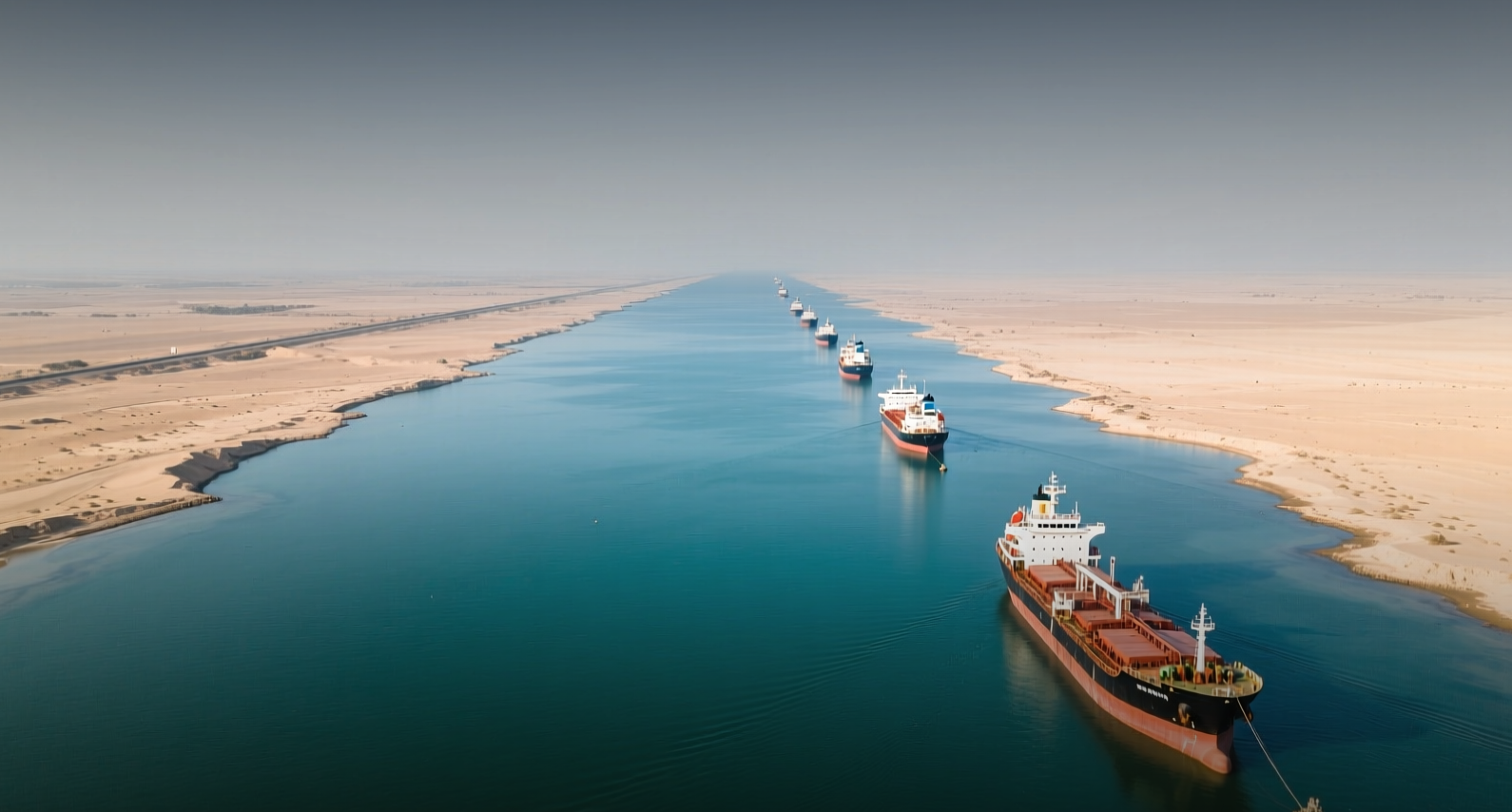
Treasury Secretary Scott Bessent unveils the largest sanctions package ever mounted against an adversary Monday, as Strait of Hormuz oil flows collapse to roughly 8 million barrels daily from more than 20 million before the conflict.
"We are going to have the toughest sanctions in history, and I will tell you, this will work," Bessent told CNBC's "Squawk on the Street" on Thursday. "It worked in Venezuela once we put up the blockade. It is working in Cuba right now, and it is going to work in Iran, and we are going to collapse this regime."
Brent crude settled at $94.39 per barrel Friday, with West Texas Intermediate at $87.06, a weekly gain of more than 5 percent. The 30-year Treasury yield rose to 5.273 percent while the 10-year climbed to around 4.734 percent, and U.S. stock futures slipped Sunday as longer-dated yields resumed their climb. Iran's Supreme National Security Council secretary Mohsen Rezaei warned that "not a single drop of oil will be exported through the Strait of Hormuz" if the economic war continues.
The sanctions package, scheduled for a 2 p.m. Eastern press conference, carries direct consequences for China, which purchased more than 80 percent of Iran's seaborne oil exports in 2025, according to Kpler data. Secondary sanctions targeting Chinese independent refineries — which account for a quarter of China's refining capacity — represent Washington's most potent option but risk retaliation from Beijing, with President Xi Jinping expected to visit the United States in September.
Bessent framed the campaign in an op-ed published in the Financial Times, invoking the 1943 Tehran Conference when Allied leaders discussed how to "apply maximum pressure on the enemy" before the Normandy landings. He warned that countries and entities maintaining economic relations with Tehran face exclusion from the international financial system, citing Pascal's Wager to argue that nations must calculate the cost of choosing wrongly.
"Any country that becomes a 'blood vessel' for Iran's economy should expect to find itself isolated as well," Bessent wrote.
Iran has responded forcefully. Parliament's National Security and Foreign Policy Committee approved a draft toll scheme for the Strait of Hormuz, requiring foreign vessels to pay fees for maritime services, environmental protection, insurance, and security. Iranian President Masoud Pezeshkian publicly acknowledged severe economic hardship and called for a diplomatic exit, while hardliners within the security establishment continue to oppose dialogue.
Brett Erickson, head of risk advisory firm Obsidian Risk Advisors, said entity-based sanctions alone have not changed Iran's behavior because Tehran continually establishes new entities to replace sanctioned ones. The Treasury's Office of Foreign Assets Control has already imposed secondary sanctions on entities in mainland China and Hong Kong for processing billions of dollars in Iranian oil payments.
The last time Washington pursued maximum-pressure sanctions against Iran, oil prices spiked above $100 per barrel in 2019 after the U.S. ended waivers for Iranian crude buyers. The current escalation has already compressed Hormuz traffic to roughly 8 million barrels daily, according to U.S. Energy Secretary Chris Wright, with only a small number of authorized Iraqi tankers and cargo ships passing through.
Regional fallout is spreading. Iraqi President Nizar Amidi confirmed at the Baghdad Dialogue that Iran has facilitated passage for some tankers carrying Iraqi oil, warning that "Iraq will be among the most affected countries after Iran." Pakistan's army chief Asim Munir is scheduled to visit Tehran on Monday for diplomatic mediation, while French President Emmanuel Macron and Saudi Crown Prince Mohammed bin Salman are expected to discuss alternative trade routes including expanded pipelines and greater use of Omani ports.
Brent's weekly gain of more than 5 percent reflects a risk premium for supply disruptions rather than a direct reaction to the sanctions themselves, with the crude complex pricing in the potential for further Hormuz disruption. If Washington follows through on secondary sanctions against major Chinese banks, the deterrent effect could ripple across the global financial system — but the diplomatic calendar surrounding Xi's September visit may constrain the administration's options.
This article is for informational purposes only and does not constitute investment advice.
