

AMD raised its AI market estimate to $3 trillion by 2030 from roughly $2 trillion, sending shares up 6.45 percent to $508.38.
AMD raised its AI market estimate to $3 trillion by 2030 from roughly $2 trillion, sending shares up 6.45 percent to $508.38.
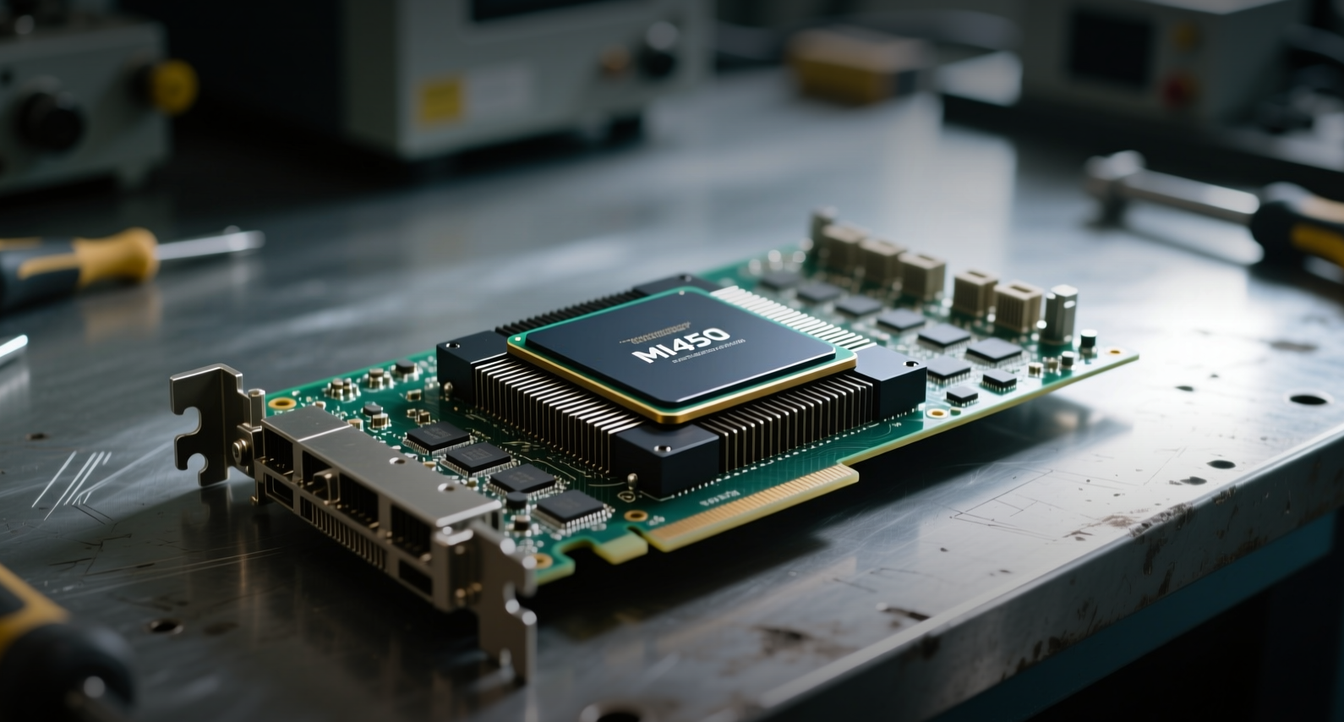
AMD now sees a $3 trillion AI market by 2030, up from roughly $2 trillion, sharpening its challenge to Nvidia as inference workloads overtake model training as the primary driver of AI compute demand.
"This AI super investment cycle is at the very beginning, and over time, we're going to continue to see strong demand for AMD's product," Chief Financial Officer Jean Hu said at a conference Tuesday.
Shares rose 6.45 percent to $508.38, extending year-to-date gains past 120 percent. Hu said the revised figure reflects demand across GPUs, CPUs and AI-enabled PCs. AMD expects its data center business to more than double next year, with the MI450 GPU launching this quarter and production ramping through the fourth quarter into 2027. Server CPU supply constraints have eased, supporting growth of more than 80 percent in the second half versus the same period in 2025, and over 70 percent next year.
The TAM revision strengthens AMD's position as a credible second source to Nvidia's data center accelerators, backed by a 6-gigawatt GPU agreement with OpenAI and Helios rack-scale systems where Meta Platforms and two unnamed AI labs have raised demand forecasts above initial purchase agreements. AMD shares carry an average analyst price target of $613.84, with 41 buy ratings and no sell ratings.
Inference Shift Drives the Revised Outlook
According to a Citi summary of the event, AMD management said inference has become the majority driver of AI computing over the past 12 months, with workloads moving beyond chatbots toward autonomous AI systems. That shift favors AMD's architecture, which has emphasized memory bandwidth and system-level integration for serving trained models rather than raw training throughput — the metric where Nvidia's H100 and B200 accelerators have historically led.
AMD's Helios rack-scale systems are central to this strategy. Meta Platforms and two unnamed AI labs serve as anchor customers, and all three have provided demand forecasts above their initial purchase agreements. Helios volume expectations for 2027 have already exceeded initial projections, while AMD sees additional demand from newer "neo-cloud" providers. Data center GPUs currently generate profit margins below AMD's corporate average, but growth in higher-margin server and embedded businesses has helped offset that pressure, with strong double-digit growth expected in the second and third quarters.
MI500 and MI600 Pipeline Extends the Roadmap
AMD is developing its MI500 and MI600 accelerators with its three leading customers and has disclosed a partnership with Cerebras to target the low-latency inference market. The company's data center revenue grew 107 percent year over year, supported by the OpenAI agreement for 6 gigawatts of GPU capacity. The MI450 ramp this quarter marks the first step in a cadence that management expects to sustain through 2027, with each successive accelerator generation designed to close the gap with Nvidia's data center lineup on both performance and total cost of ownership.
Risks remain. AI accelerator export controls could restrict AMD's ability to sell into key markets, and memory supply constraints and tariffs add cost pressure. The Gaming segment continues to drag, with revenue down 31 percent year over year to $779 million. Shares have fallen nearly 5 percent over the past week and about 6 percent over the past month, even as the stock has gained more than 230 percent over the past year.
AMD trades with 41 buy-equivalent ratings from analysts (five strong-buy, 36 buy) and 10 holds, with no sell ratings. The average price target of $613.84 implies roughly 21 percent upside from Tuesday's close. Nvidia, by comparison, continues to command the dominant share of AI accelerator revenue, and AMD's ability to convert its expanded TAM estimate into sustained share gains will depend on execution of the MI450 ramp and the MI500/MI600 cycle through 2027.
This article is for informational purposes only and does not constitute investment advice.
