

ZTE Corp. entered the humanoid robotics market at the World Artificial Intelligence Conference in Shanghai, unveiling a 30-kilogram full-size robot that it claims is the lightest in its class.
ZTE Corp. entered the humanoid robotics market at the World Artificial Intelligence Conference in Shanghai, unveiling a 30-kilogram full-size robot that it claims is the lightest in its class.
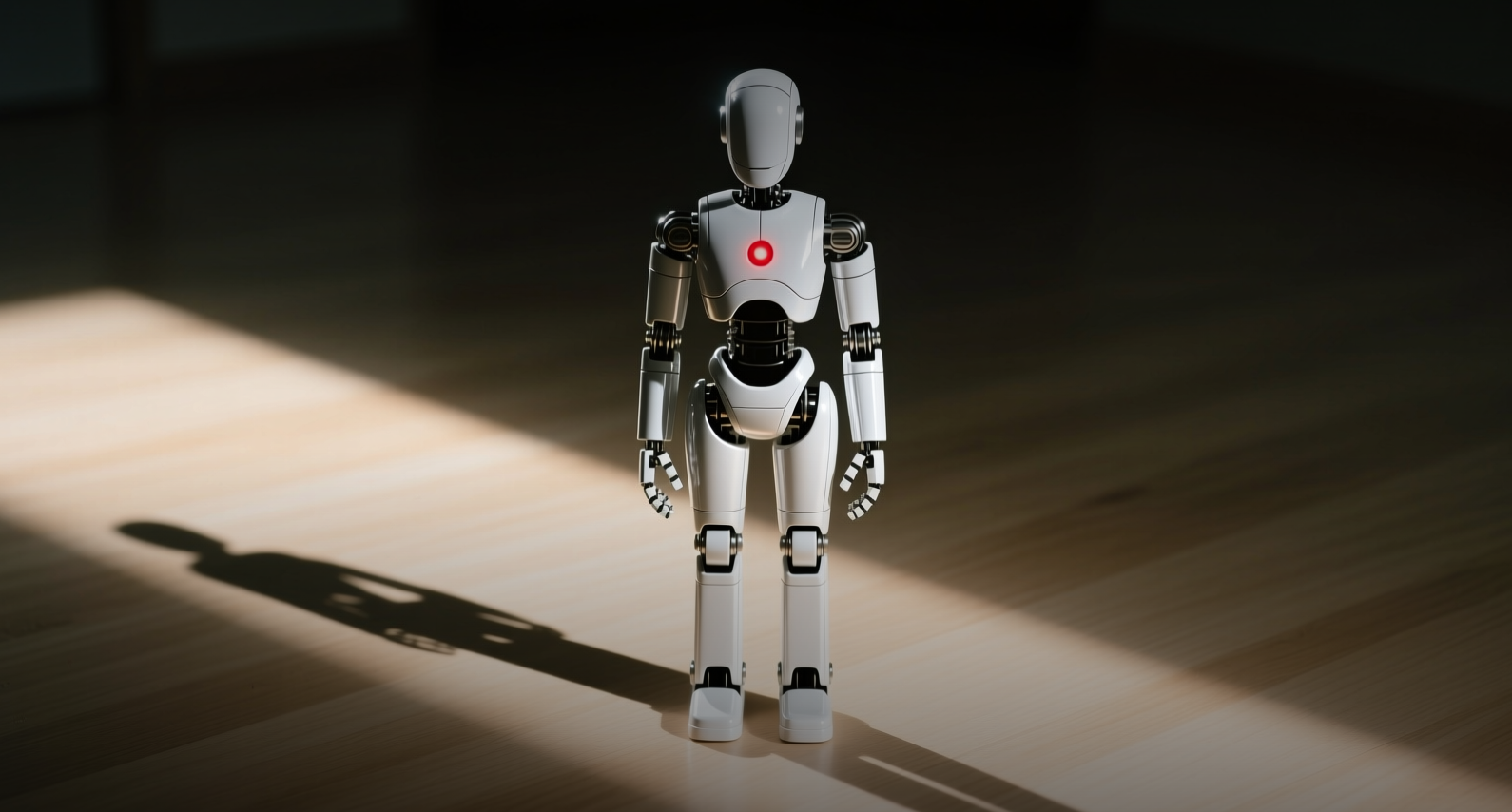
ZTE Corp. entered the humanoid robotics market at the World Artificial Intelligence Conference in Shanghai, unveiling a 30-kilogram full-size robot that it claims is the lightest in its class.
ZTE Corp. jumped into the humanoid robotics race at the World Artificial Intelligence Conference in Shanghai, unveiling a 30-kilogram full-size robot that undercuts rivals on weight by at least 40 percent — a move that positions the telecom equipment maker in a market where Chinese companies shipped roughly 90 percent of global humanoid units last year.
"The Xingzai is designed for commercial service scenarios where weight directly affects deployment cost and safety," Ni Fei, president of ZTE, said at the launch. "At 30 kilograms, it can operate alongside humans without the floor-loading constraints of heavier systems."
The robot, named ZTE Xingzai, stands 1.6 meters tall and weighs about 30 kilograms — roughly 40 percent lighter than Unitree's H1 at 47 kilograms and less than half the weight of Tesla's Optimus Gen 2 at 63 kilograms, according to published specifications from those companies. ZTE did not disclose battery life, payload capacity, or pricing. The company also introduced a broader Star Series lineup and embodied intelligent solutions, though it provided no production timeline or target volume.
The launch comes as China's humanoid robot sector accelerates toward government-set deployment targets of 10,000 units in the field by year-end 2026, according to industry data. ZTE, which trades on the Shenzhen Stock Exchange, generated about 124 billion yuan ($17 billion) in 2025 revenue from its core telecom infrastructure business. The robotics push diversifies ZTE beyond a maturing telecom equipment market where Huawei Technologies Co. holds a commanding domestic lead.
The Xingzai's weight advantage addresses a practical constraint in commercial robotics: heavier humanoids require reinforced flooring, limit deployment to ground-floor environments, and pose greater kinetic energy risks in human-collaborative settings. At 30 kilograms, the ZTE robot falls into a weight class that building managers typically classify as equivalent to a large piece of office equipment rather than industrial machinery, potentially lowering adoption barriers for retail, hospitality, and healthcare settings.
ZTE enters a crowded field. The Embodied Intelligence Pavilion at WAIC 2026 hosts 161 companies and 314 exhibits, with more than 300 physical robotic units operating on site. Unitree Robotics, which shipped the majority of China's estimated 9,000 humanoid units in 2025, unveiled its unmanned robot factory at the conference — a facility operated entirely by autonomous systems. Agility Robotics globally debuted six new products. SenseTime demonstrated humanoid robots managing an operational retail store through its SenseMart Go system.
The competitive picture mirrors the broader pattern at WAIC 2026, where Chinese companies dominate the hardware showcase. More than 100 companies are exhibiting domestic GPU architectures at the Zhangjiang Science City venue, and China's AI-related industry exceeded 1 trillion yuan ($147 billion) in 2025, according to the National Development and Reform Commission.
For investors, ZTE's robotics push carries both opportunity and execution risk. The company has no disclosed track record in electromechanical actuation, battery integration, or motion control — the core competencies of humanoid robotics. Unitree, by contrast, has shipped production units since 2023 and demonstrated its manufacturing capability with the unmanned factory. ZTE's advantage lies in its existing supply chain relationships and manufacturing scale as a major telecom equipment producer, which could translate to cost advantages in component procurement and assembly. ZTE shares trade at about 14 times forward earnings, a discount to the Shenzhen composite's 18 times, reflecting the market's uncertainty about the robotics venture's near-term revenue contribution.
This article is for informational purposes only and does not constitute investment advice.
