

Kong Tao, who led ByteDance's robotics team, joined Xiaomi last summer to run its base model unit, bringing several former colleagues with him.
Kong Tao, who led ByteDance's robotics team, joined Xiaomi last summer to run its base model unit, bringing several former colleagues with him.
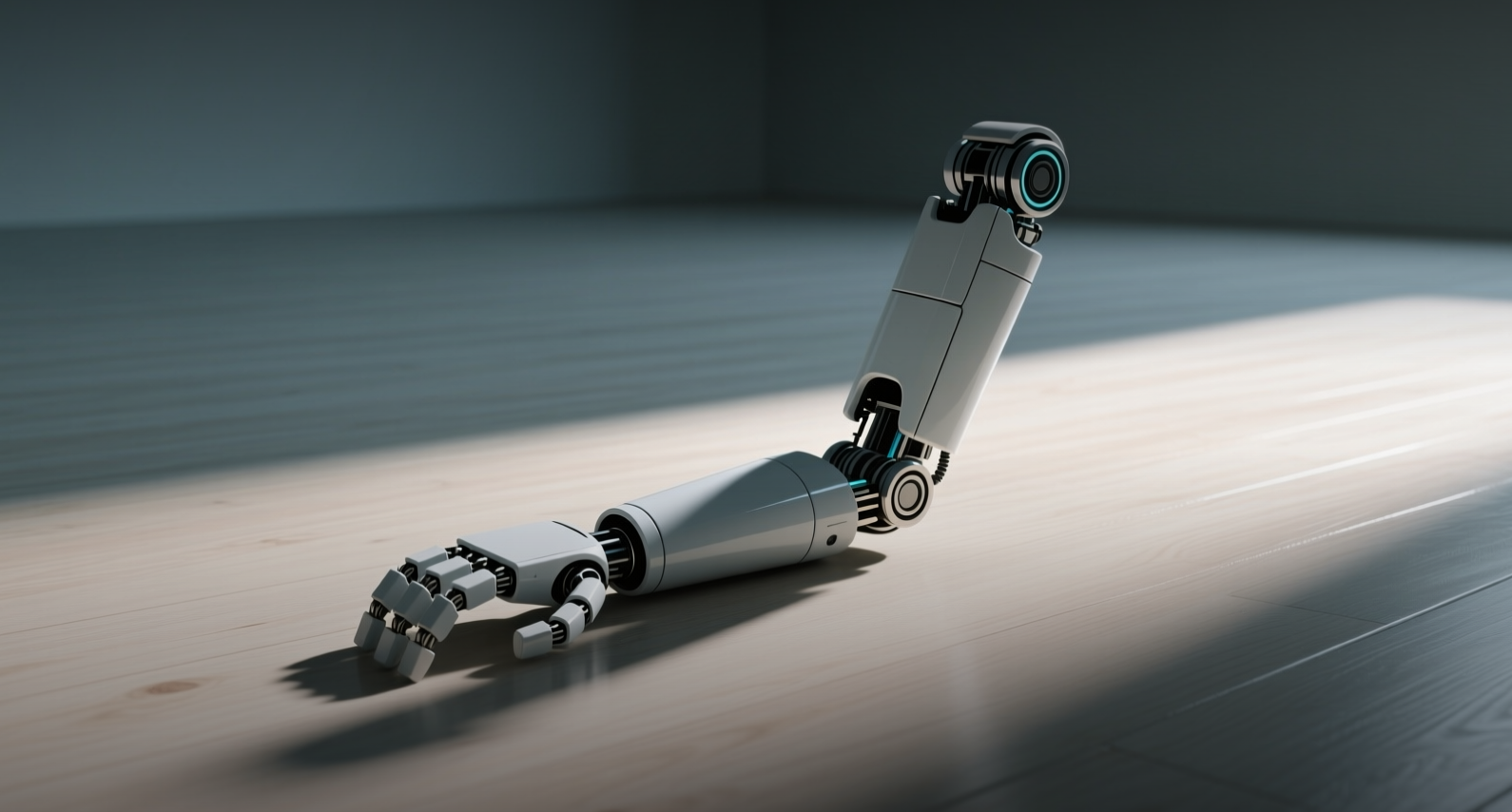
Xiaomi hired Kong Tao, former head of ByteDance's robotics team, to lead its base model unit, deepening the talent war in China's embodied AI sector as funding tops $3.3 billion in a quarter.
"Chinese labs have closed the gap to roughly six to twelve months," Demis Hassabis, CEO of Google DeepMind, said in January, cautioning they have yet to push beyond the frontier. The embodied AI race is where that gap matters most, with China's sector raising about $3.3 billion in the first quarter of 2026, according to industry data.
Kong Tao joined Xiaomi in summer 2025 and brought several former ByteDance employees with him, according to multiple independent sources. Xiaomi's base model team operates from a separate, highly confidential office, with Kong Tao reportedly not even required to appear in Xiaomi executives' Feishu meetings. The robotics division is kept under strict internal secrecy.
The hire comes as Xiaomi, best known for smartphones and EVs, moves into the humanoid robotics race. Chinese robotics maker Unitree shipped roughly 36 times more humanoid units in 2025 than American rivals Figure and Tesla combined, and China controls an estimated 60 percent of global rare earth supply and about a quarter of global actuator production.
The base model team Kong Tao now leads is the software brain of Xiaomi's robotics push. Base models in robotics refer to the AI systems that let a robot perceive its environment, plan actions, and execute them — the "world models" that ByteDance has named its top technical priority. Language models train on text the internet already digitized for free, but world models need real physical data, and China's permissive real-world deployment environment generates exactly that data at a pace simulation alone cannot match.
The distinction matters because the durable prize in AI is not intelligence in the abstract — digital intelligence is easy to copy and distribute for free. The durable prize is the physical form factor intelligence eventually inhabits. A humanoid robot in someone's home cannot be pirated the way a model checkpoint can. That logic explains why Chinese tech giants from Xiaomi to ByteDance are pouring resources into robotics base models rather than competing purely on chatbot benchmarks.
Xiaomi's move also reflects a broader consolidation of robotics talent. Kong Tao's arrival follows a pattern of senior AI researchers and engineers moving between China's largest tech firms, a flow that recent US immigration policy is only accelerating. China launched its K visa in the same season the US imposed a $100,000 fee on new H-1B visa petitions, a policy that reportedly contributed to a 38.5 percent drop in FY2027 H-1B registrations.
The hardware evidence already backs the scale of China's robotics bet. Unitree shipped roughly 36 times more humanoid units in 2025 than Figure and Tesla combined, and it is now targeting a $7 billion IPO. China controls an estimated 60 percent of global rare earth supply and roughly a quarter of global actuator production, both critical to robot manufacturing. Component lead times from Chinese suppliers have reportedly fallen from around 14 weeks to as few as three, the same manufacturing compression that made China's EV industry hard to compete with.
For Xiaomi, the hire is a bet that it can close the gap in robotics software even as it builds out hardware. The company's robotics division operates under strict internal secrecy, a sign of how competitive the space has become. Investors watching Xiaomi's stock will be looking for signs that the base model team can translate into a commercial robotics product, a market that remains wide open globally.
Xiaomi's shares, which trade on the Hong Kong exchange, have been supported by its EV business and AI ambitions. The robotics hire adds a new dimension to that story, though the market has yet to price in a specific robotics product timeline. The broader embodied AI sector, which raised $3.3 billion in Q1 2026, remains in its early innings, with no clear global leader in humanoid robotics software.
This article is for informational purposes only and does not constitute investment advice.
