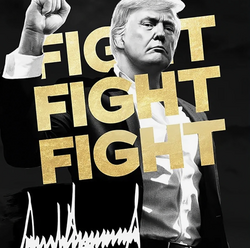
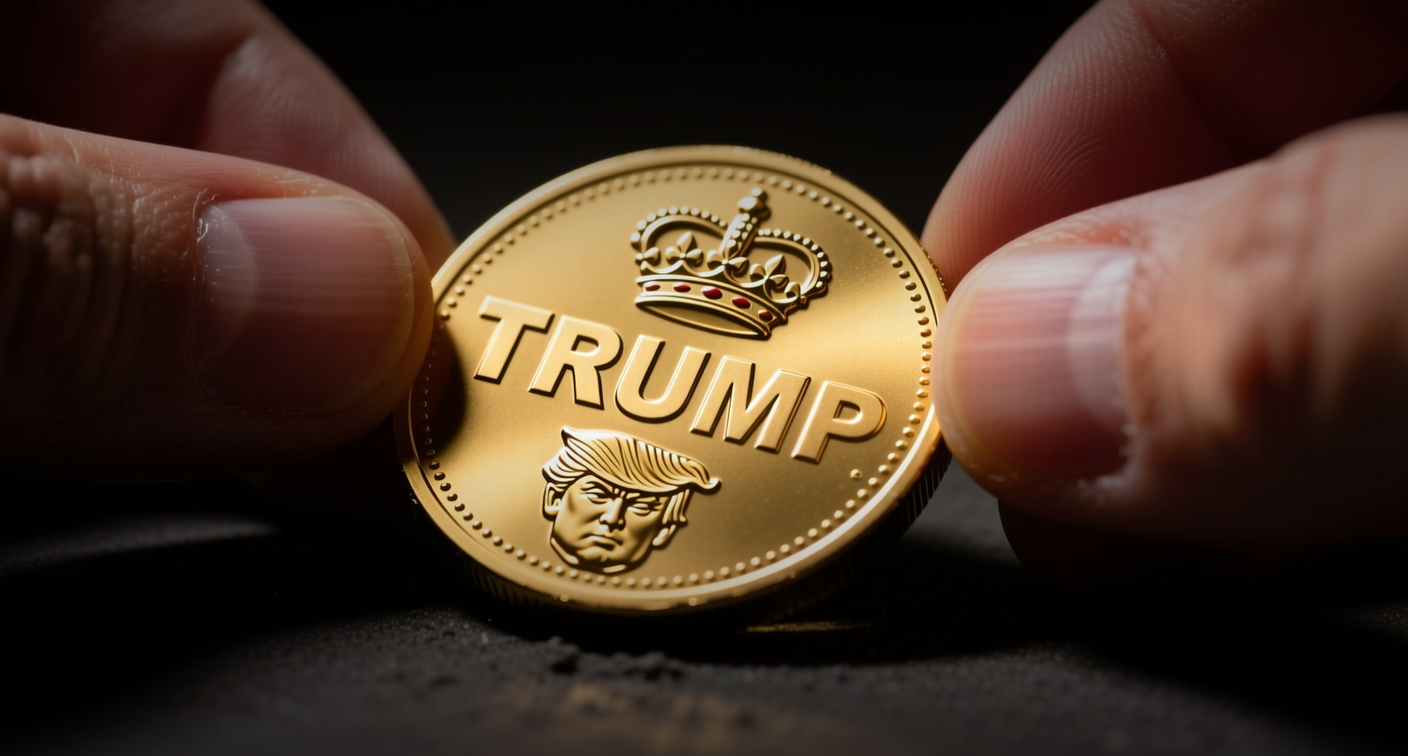
Two Senate Democrats are pressing the SEC to determine whether President Trump's memecoin constituted an illegal scam that left nearly one million retail investors holding $3.8 billion in losses.
Democratic Sens. Elizabeth Warren and Richard Blumenthal called on the Securities and Exchange Commission to investigate President Trump's $TRUMP memecoin, arguing the token's collapse from a $9 billion peak to under $400 million may constitute fraud or unjust enrichment.
"We are concerned that President Trump's memecoin scheme may constitute an illegal scam," Warren and Blumenthal wrote Monday to SEC Chair Paul Atkins in a letter shared first with CNN.
The token, 80 percent of which was held by Trump Organization affiliates, reached roughly $9 billion in market value on Jan. 19, 2025, before crashing. Buyers at the top face losses of approximately 97 percent, according to CoinMarketCap data. Research by crypto analytics firm Nansen, cited by The New York Times, estimated nearly one million investors lost a combined $3.8 billion through the end of June.
The letter arrives as the SEC's February 2025 guidance stating memecoins are not securities faces its first major test. The guidance explicitly carved out products "disguising a product that would otherwise constitute a security," leaving room for case-by-case evaluation — a door Warren and Blumenthal are pushing open.
The rug pull question
The senators specifically raised the possibility that the memecoin effort could constitute a "soft rug pull" — a scheme where insiders gradually withdraw price support rather than vanishing outright, leaving retail holders absorbing the losses.
TRM Labs, a blockchain intelligence firm, concluded in January 2025 that the project "does not have the hallmarks of a rug pull." Ari Redbord, a former federal prosecutor and US Treasury official who now serves as global head of policy at TRM Labs, told CNN that assessment still holds. But he added that the concentration of supply creates a troubling picture.
"Eighty percent of supply sitting with a small group of investors and close to a million retail buyers absorbing the losses is going to look worse with time, not better, whether it was a rug pull or not," Redbord said.
Trump made nearly $636 million in royalty and licensing fees related to "Celebration Coins" last year alone, according to his 2025 annual financial disclosure. In a CNBC interview last month, Trump defended his crypto earnings, saying he followed the law and that his son Eric oversees his personal financial interests while he serves as president.
Regulatory stakes
The SEC's February 2025 staff guidance stated that "neither meme coin purchasers nor holders are protected by the federal securities laws." But the agency also said the guidance does not apply to products labeled memecoins "in an effort to evade the application of the federal securities laws by disguising a product that would otherwise constitute a security."
Warren and Blumenthal argue Trump's coin falls into that exception. "The SEC must be willing to enforce the law even when potential wrongdoers include those with powerful political connections," they wrote.
The White House referred questions to the Trump Organization. The SEC declined to comment.
The outcome carries implications beyond the $TRUMP token. A formal SEC investigation would signal that the agency's memecoin guidance has limits, potentially affecting the broader memecoin sector — which has seen hundreds of celebrity and political tokens launch since the 2024 election cycle. If the SEC declines to act, it would effectively cement the February 2025 guidance as a blanket exemption for politically connected token issuers.
This article is for informational purposes only and does not constitute investment advice.