


Volkswagen's board on Sept. 3 backed cutting 50,000 jobs and trimming its model range, the latest response to Chinese EV makers squeezing legacy automaker margins.
Volkswagen's board on Sept. 3 backed cutting 50,000 jobs and trimming its model range, the latest response to Chinese EV makers squeezing legacy automaker margins.
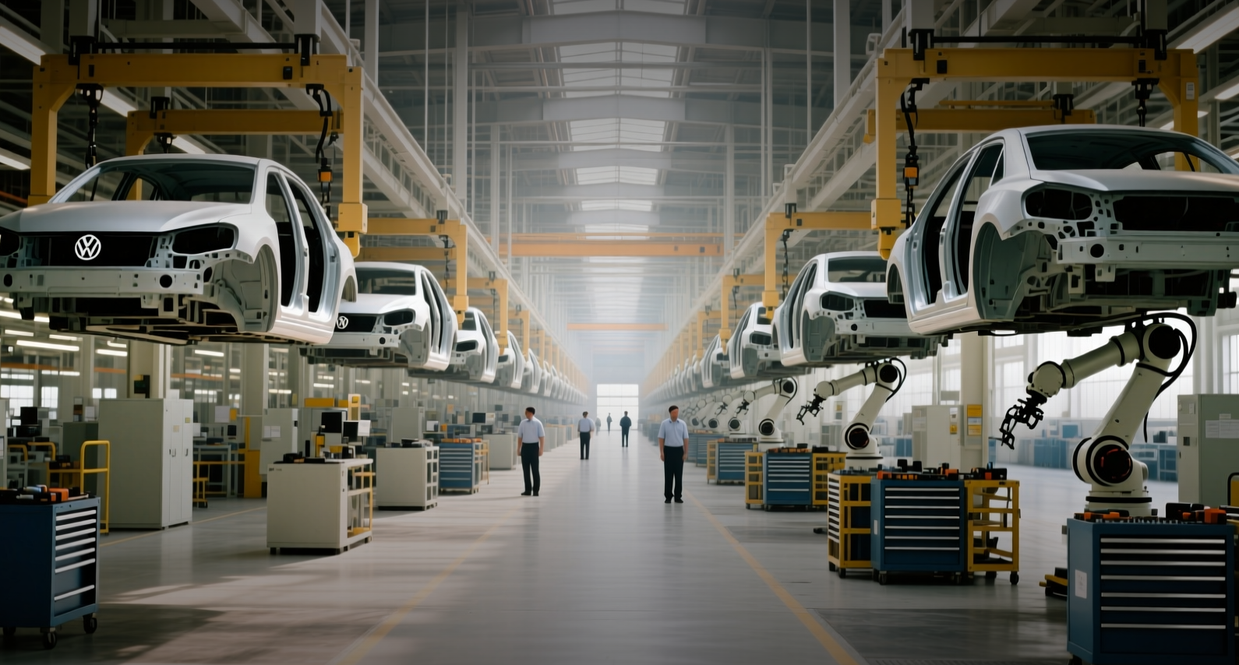
Chinese EV makers' price and software edge is forcing Europe's legacy automakers into structural cost cuts, with Volkswagen's board approving a plan to shed 50,000 workers and slim its model lineup.
The Sept. 3 decision follows a year in which Chinese manufacturers reshaped global auto competition. China shipped 8.32 million vehicles to more than 200 countries and regions in 2025, and Chinese companies have invested in manufacturing projects across more than 80 markets, according to official data cited by Reuters. BYD, the sector's biggest exporter, has led the push abroad as intensifying competition at home squeezed domestic margins.
The squeeze reaches well beyond Volkswagen. Honda, Japan's second-largest automaker, aims to save 1.5 trillion yen ($9.4 billion) by 2030 and has told suppliers to cut prices by 30 percent across three parts categories, according to internal documents reviewed by Reuters. The maker of the CR-V sport-utility vehicle expects EV-related losses to total more than $12 billion and reported its first-ever annual loss as a publicly traded company in May. "The automaker was working with suppliers globally to improve competitiveness and reduce costs, including through the use of standardized parts," a Honda spokesperson said.
Software deals spread as rivals pool spending
Chinese manufacturers built their edge on battery technology and software that incumbents are still catching up on, at prices that undercut Western and Japanese rivals. That has pushed legacy automakers to consolidate development spending. Nissan and Honda agreed this week to jointly develop standardized electronic control units and software for software-defined vehicles, targeting market entry in fiscal 2029, according to AP. The two Japanese automakers ended merger talks last year that would have created one of the world's largest carmakers.
European manufacturers are pursuing similar consolidation. Volkswagen, BMW, Mercedes-Benz and Stellantis are working together on software development to share a common operating system, per AP reporting. Toyota, the top Japanese automaker, is developing software with group affiliate Subaru and U.S. autonomous-driving company Waymo.
Honda's program shows how deep the cuts run. Managers met suppliers this spring at a convention center north of Tokyo and presented company-specific reduction targets, with the automaker also looking to source more components from Chinese suppliers, Reuters reported. The targets were "extremely large" and it was not clear whether they would be achievable, one person familiar with the matter said.
What the cuts mean for investors
For investors, the restructuring wave marks a shift in how legacy automakers are valued. Volkswagen's 50,000-worker reduction is a defensive move to protect margins that Chinese competition has eroded, rather than a growth bet. Honda's projected $12 billion in EV losses shows the cost of the transition for incumbents that bet early on battery-electric vehicles, a bill that is now forcing suppliers across Japan and Europe to absorb price cuts of their own.
The competitive pressure is unlikely to ease. Beijing this week issued new guidelines urging Chinese automakers to avoid "disruptive competition" and base overseas pricing on costs and market conditions, a sign regulators are watching how the export push plays out abroad. For legacy manufacturers, the restructuring responds to a structural shift in the industry's cost curve that shows no sign of reversing.
This article is for informational purposes only and does not constitute investment advice.
