
Tether's dollar-pegged stablecoin is becoming a de facto digital dollar across four economies where local currencies are losing value and physical dollars are scarce.
Tether's dollar-pegged stablecoin is becoming a de facto digital dollar across four economies where local currencies are losing value and physical dollars are scarce.
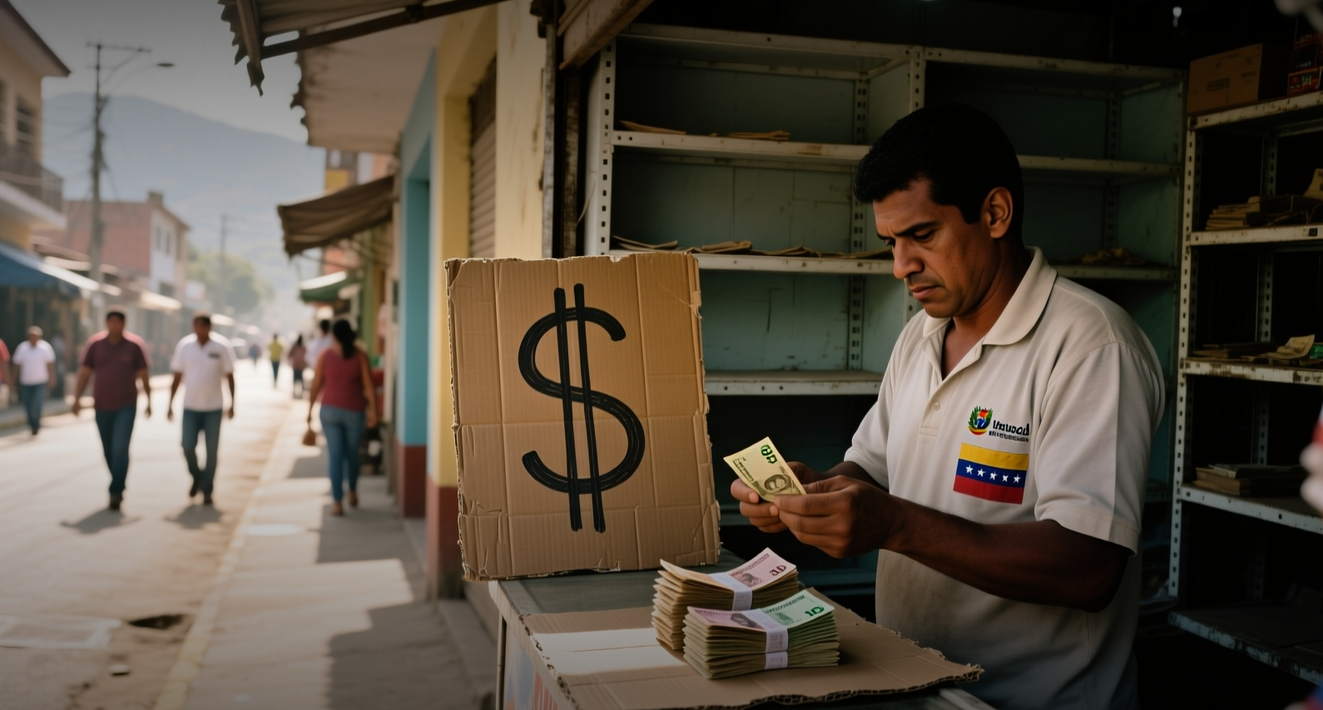
Tether's dollar-pegged stablecoin is becoming a de facto digital dollar across four economies where local currencies are losing value and physical dollars are scarce.
Tether Chief Executive Paolo Ardoino said Aug. 23 that USDT adoption is accelerating in Venezuela, Argentina, Bolivia and Turkey, where residents are turning to the stablecoin as local currencies depreciate and access to physical dollars tightens.
"The economies of several developing countries rely heavily on USDT, both for domestic and foreign trade," Ardoino said in a post on X, describing Tether's financial-inclusion mission as increasingly central to its business.
In Venezuela, businesses use USDT to settle import and export payments; in Bolivia, for commercial transactions; in Argentina, for peer-to-peer transfers; and in Turkey, as a hedge against inflation-driven declines in asset values.
The adoption reinforces Tether's dominance in the stablecoin market, where USDT supply reached a record $188 billion during 2026, and extends its reach into real-economy payments and savings across markets with weak banking infrastructure.
Currency instability drives demand
USDT is designed to track the U.S. dollar, letting users hold digital-dollar exposure without a U.S. bank account. It appeals to people whose local currencies are losing purchasing power and offers an alternative when physical dollars are scarce or cross-border bank transfers are slow and costly.
Turkey's consumer inflation fell from 49.4 percent in September 2024 to 30.9 percent in December 2025, according to an International Monetary Fund review, which projected 23 percent inflation by the end of 2026. Argentina reported monthly inflation of 3.4 percent in March 2026 after currency depreciation and weaker demand for pesos.
Chainalysis ranked Turkey 14th, Venezuela 18th and Argentina 20th in its 2025 Global Crypto Adoption Index; adjusted for population, Venezuela ranked ninth worldwide. The firm measured nearly $1.5 trillion in Latin American crypto activity from July 2022 through June 2025, with Argentina accounting for an estimated $93.9 billion, Venezuela $44.6 billion and Bolivia $14.8 billion. Centralized exchanges processed 64 percent of that regional activity.
Bolivia signals official recognition
Bolivia offers the clearest official signal of stablecoin integration. The Central Bank of Bolivia publishes a reference USDT exchange rate based on weighted peer-to-peer activity on Binance, with data showing the stablecoin trading at a premium to the country's official dollar rate. Its January financial stability report flagged foreign-currency restrictions, higher inflation and low international reserves as continuing risks.
Bolivia has moved toward recognizing USDT within its national payment system, and local banks already provide some USDT services. The government has not completed a national framework making USDT equivalent to legal tender, so any description of formal payment status remains forward-looking.
The shift extends beyond Tether. Dollar stablecoins accounted for 40 percent of purchases by Bitso users during 2025, compared with 18 percent for Bitcoin, according to the exchange that operates across several Latin American markets. Tether says its products served more than 570 million people by March 2026, a company-supplied estimate rather than a count of identified individual users because one person can control several blockchain addresses.
Users still face issuer, regulatory, wallet and network risks: USDT represents a claim supported by Tether's reserves, not a bank deposit, and availability can change when governments or exchanges introduce new stablecoin rules. The next test for Tether is whether Bolivia completes its payment framework and whether other inflation-hit economies follow, which would cement stablecoins as a settlement layer for trade and savings rather than a trading instrument.
This article is for informational purposes only and does not constitute investment advice.
