

UBS names AI stock leadership returning as its top theme, arguing that upcoming earnings season may prove investors have been too pessimistic on the sector.
UBS names AI stock leadership returning as its top theme, arguing that upcoming earnings season may prove investors have been too pessimistic on the sector.
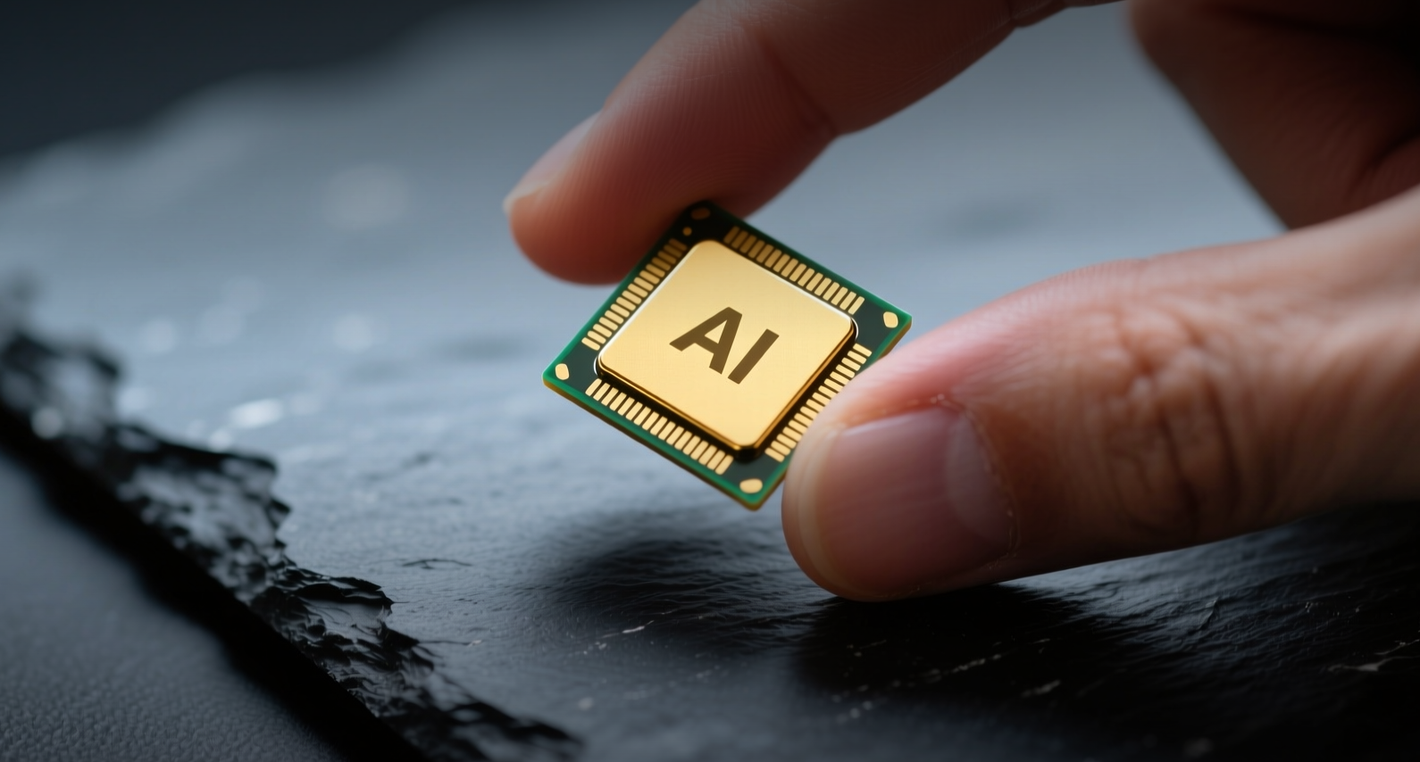
UBS has named the return of artificial-intelligence stock leadership as its top theme, arguing that the upcoming earnings season may prove investors have been too pessimistic on the sector even as a record 82% of fund managers flag the AI trade as the most crowded in the market.
"The bull market rally — one driven by broadening earnings, not multiple expansion — will continue, though the grind higher may be bumpier as risk mounts," UBS strategists led by Amr Hanafy wrote in a note. The call comes as the S&P 500 Information Technology sector has gained 23% this year, outpacing the broader index by roughly 10 percentage points.
The entrenchment on both sides of the AI debate is deepening. Bank of America's latest fund manager survey showed that while 82% of respondents consider AI the most crowded trade — a record high — roughly half still say the market is not in a bubble. The divergence reflects what Reuters columnist Jamie McGeever described as a paradox: "the fog of uncertainty surrounding AI's ability to deliver sky-high profits is thickening, yet AI bulls and bears alike seem to be doubling down on their convictions."
The numbers driving the divide are staggering. The Magnificent Seven hyperscalers have spent $234 billion in capex this year, yet their stocks have barely risen as investors anticipate free cash flow turning negative for the first time in at least two decades, according to Bank of America strategists. Those vast sums are flowing to semiconductor companies in what BofA calls a "generational transfer" of free cash flow from hyperscalers to chipmakers.
Compute capex in the first half of the year accounted for a larger share of U.S. GDP than at any point in history, with overall tech-related investment up 30% from a year ago, according to analysts at Carlyle. All other capex fell, producing a record divergence. AI now accounts for almost all U.S. net investment.
The Philadelphia Semiconductor Index has surged 75% year to date, though last month's retracement showed how quickly sentiment can shift. Volatility in stocks central to the AI story — Intel, Qualcomm, and Oracle — has exploded to historic levels recently, BCA Research data shows.
For investors, the question is whether the $234 billion in hyperscaler spending translates into sustainable revenue growth for AI beneficiaries or whether the cost of compute proves too high. Bears argue that demand for the most expensive AI models will fall or shift toward cheaper open-source alternatives, most likely from China, making the return on unprecedented investment disappointing. Bulls counter that earnings for AI beneficiaries have exceeded all expectations so far, and the bar for even higher profits is being raised.
The next reveal comes in the coming weeks as second-quarter earnings season begins. If AI-related companies deliver results that beat elevated expectations, UBS's call for renewed leadership may prove prescient. If they fall short, the crowded trade could unwind quickly — South Korea's KOSPI, even more concentrated in AI names than the S&P 500, has already suffered its three biggest single-day drops since the 2008 financial crisis this year alone.
This article is for informational purposes only and does not constitute investment advice.
