


Uber's launch of Baidu's fully driverless Apollo Go in Dubai marks the first time the ride-hailing giant's multi-partner autonomous vehicle strategy operates on public roads.
Uber's launch of Baidu's fully driverless Apollo Go in Dubai marks the first time the ride-hailing giant's multi-partner autonomous vehicle strategy operates on public roads.
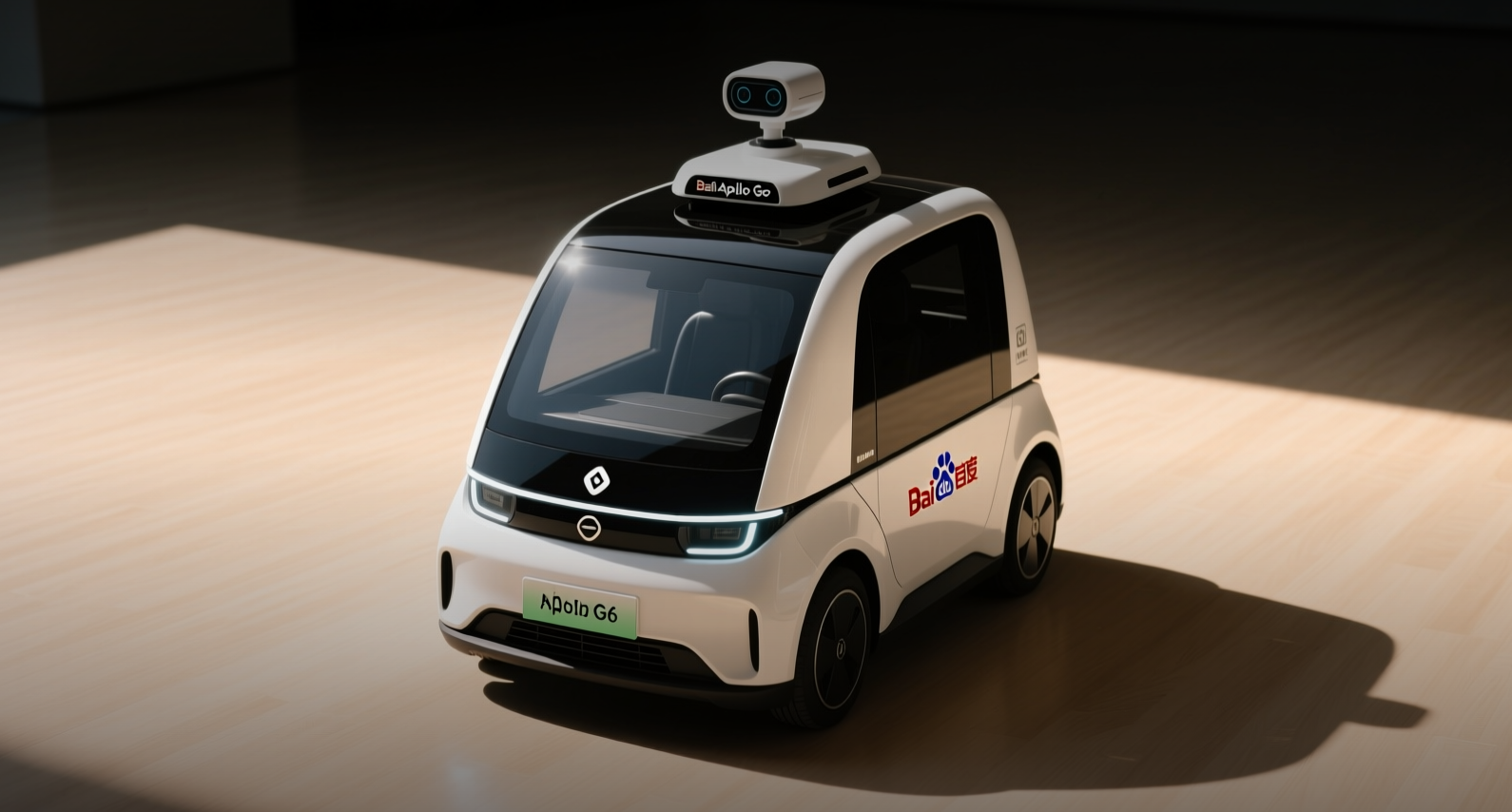
Uber brought Baidu's fully driverless Apollo Go robotaxis onto its Dubai platform, establishing the first multi-partner autonomous network with 28-city coverage and 350 million autonomous kilometers of accumulated fleet experience.
"Launching in Dubai marks the first time our multi-partner vision comes to life on public roads, demonstrating how combining advanced autonomous technology with our global marketplace can accelerate an electric, shared, and autonomous future," Sarfraz Maredia, Global Head of Autonomous at Uber, said.
Riders in select areas of Umm Suqeim and Jumeirah can be matched with an Apollo Go vehicle when booking UberX or Uber Comfort, or by selecting the dedicated "Autonomous" option in the app. The service uses Apollo Go's sixth-generation RT6, a fully electric robotaxi with more than 30 sensors and capacity for three passengers. New Horizon Luxury Transport operates the fleet.
The launch is the first deployment under a multi-year partnership announced in July 2025 that aims to bring thousands of Apollo Go vehicles to Uber's platform across global markets. For Uber, the move strengthens its position as the aggregator of autonomous ride-hailing with more than 30 AV partners. For Baidu, Dubai is the first international city where Apollo Go operates through both its own app and a third-party platform.
Dubai is Apollo Go's first market to operate through both a self-operated app and a third-party platform partnership. In March 2026, Apollo Go began offering commercial fully driverless rides through its own app in the emirate, following receipt of Dubai's first-ever driverless testing permit for fully autonomous vehicles without a safety driver in January 2026. The dual-model approach gives Baidu two distribution channels in the same city, allowing it to compare customer acquisition costs and operational efficiency across both platforms.
Apollo Go's fleet has accumulated over 350 million autonomous kilometers, including more than 240 million fully driverless autonomous kilometers. As of the end of June, its fully driverless vehicles recorded an average of approximately one airbag deployment every 14.4 million kilometers, according to Baidu. The safety record is a key selling point as regulators worldwide evaluate whether to permit driverless operations on public roads.
The Dubai launch puts Uber's multi-partner strategy in contrast with Waymo, which operates its own ride-hailing service in the US, and Tesla's planned robotaxi network. Uber's approach differs by partnering with multiple AV technology providers rather than building its own fleet. The company says it completes millions of autonomous trips annually across its network, and its hybrid model keeps human drivers and robotaxis operating side by side.
For Baidu, the partnership provides a pathway to international expansion beyond China, where Apollo Go has been the dominant robotaxi operator. The company's dual-model approach in Dubai — operating both its own app and through Uber — allows it to test different go-to-market strategies in overseas markets. Nan Yang, Vice President of Baidu and General Manager of the Overseas Business Unit for the Intelligent Driving Group, said Dubai serves as the launchpad as the partnership grows its footprint.
The competitive dynamics in the autonomous ride-hailing sector are shifting as more players enter the market. Waymo has expanded its service areas across multiple US cities, while Chinese operators like Pony.ai and WeRide have also been pursuing international expansion. Uber's strategy of aggregating multiple AV partners rather than developing its own technology positions it differently from these vertically integrated competitors.
The partnership aims to scale thousands of Apollo Go vehicles across Uber's global network, with Dubai serving as the launchpad. Uber said all autonomous vehicles on its platform must comply with its safety guidelines before operating. The company has not disclosed a timeline for expanding the service beyond the initial Umm Suqeim and Jumeirah zones.
For investors, the autonomous ride-hailing market represents a potential long-term margin improvement for Uber if robotaxis reduce driver costs. Baidu's successful international deployment could support its AV segment valuation, with the company trading on both NASDAQ and HKEX. Uber shares trade on the NYSE. The Middle East has been actively promoting smart city and autonomous driving policies, making Dubai a strategic entry point for Chinese autonomous driving companies seeking overseas expansion.
This article is for informational purposes only and does not constitute investment advice.
