

Key Takeaways: Uber has switched on autonomous rides in Europe for the first time, putting Pony.ai-powered robotaxis on its app in Zagreb as part of a plan to deploy more than 2,000 vehicles across the continent.
Key Takeaways: Uber has switched on autonomous rides in Europe for the first time, putting Pony.ai-powered robotaxis on its app in Zagreb as part of a plan to deploy more than 2,000 vehicles across the continent.
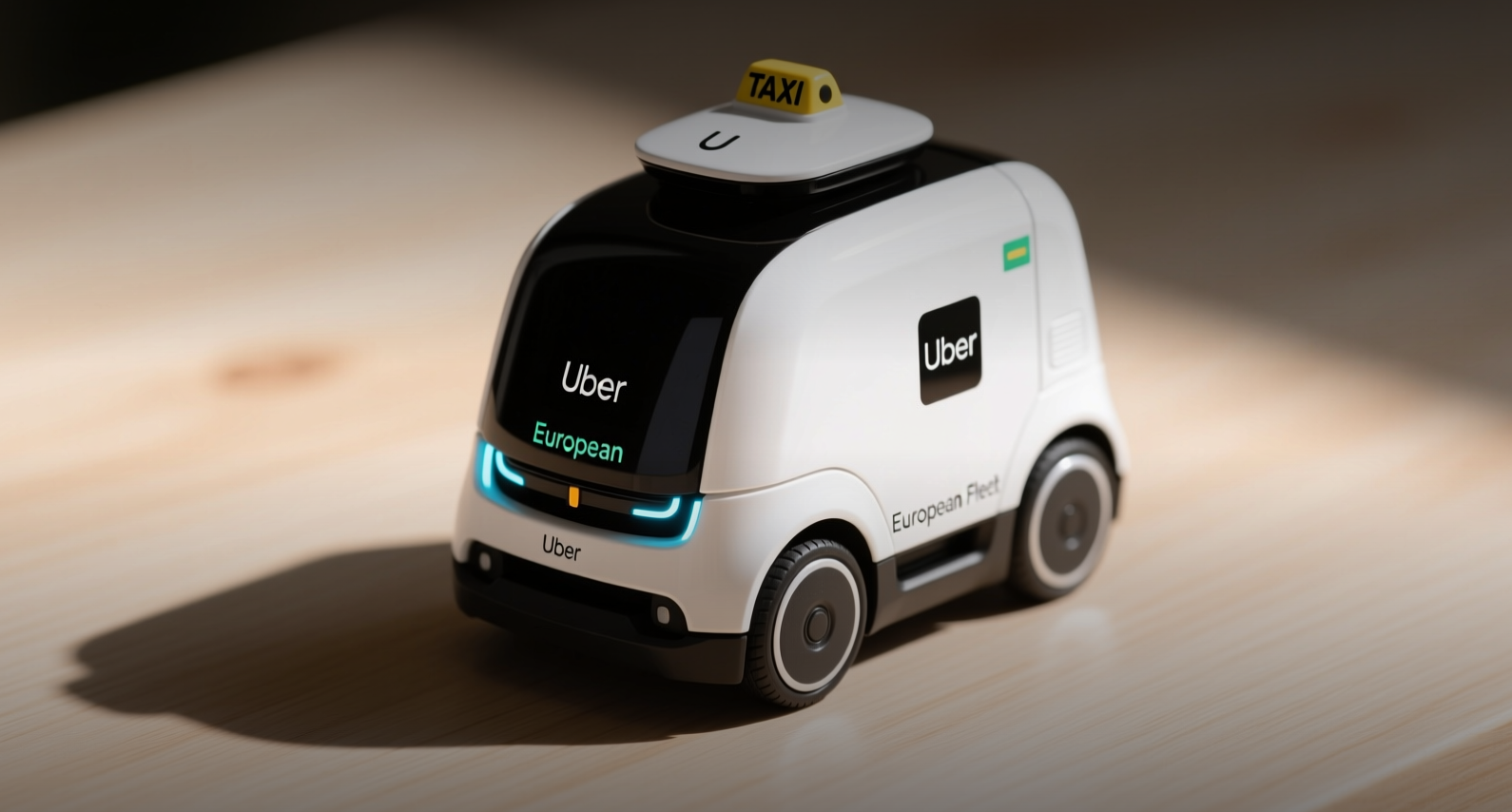
Uber launched autonomous rides in Zagreb on Wednesday, the first European city to offer self-driving vehicles through its app, part of a plan to deploy more than 2,000 robotaxis across four additional European cities.
"Today marks a major milestone for autonomous mobility in Europe," Annie Duvnjak, global head of autonomous mobility operations at Uber, said. "By bringing together Pony.ai's proven autonomous-driving technology, Verne's operational expertise and Uber's global platform, we're making it simple for riders to access autonomous rides through the Uber app."
The service uses Pony.ai's Gen-7 robotaxi system, with Verne owning and operating the fleet. At launch, a licensed safety operator sits behind the wheel, with fully driverless operations planned once regulatory and technical requirements are met. The service covers key areas of Zagreb including the city centre, with coverage set to expand. Verne launched Europe's first commercial robotaxi service in the city in April and says it has completed thousands of rides since.
The launch is the first step in a broader expansion. Pony.ai and Uber plan to deploy more than 2,000 robotaxis across four additional European cities, with the next markets to be announced later this year. The partnership also covers planned deployments in the Middle East. Pony.ai already operates paid, fully driverless services in Beijing, Shanghai, Guangzhou and Shenzhen, where it says it has achieved city-level breakeven unit economics.
The three-way structure splits responsibilities: Pony.ai supplies the autonomous driving technology, Verne handles fleet ownership and day-to-day operations, and Uber provides the customer-facing platform with booking, payments and support. The model is designed to be replicated across markets, with local partners handling vehicle financing and operations in each city.
The approach contrasts with competitors building their own full stacks. Uber sold its self-driving division in 2020 and has since pursued a partnership strategy, acting as the neutral marketplace for autonomous rides. The company has signed similar deals with Waymo in the United States and WeRide in Europe and the Middle East.
WeRide, another Chinese autonomous driving company, announced plans with Uber earlier this year to launch commercial robotaxi services in the Greater Zurich region and Madrid. Since December 2024, WeRide and Uber have operated services in Abu Dhabi, Dubai and Riyadh.
For Pony.ai, the Zagreb launch extends its international footprint beyond China. The company, listed on NASDAQ and the Hong Kong Stock Exchange, has been expanding its "Virtual Driver" technology across Europe, Asia and the Middle East. In June, it launched a pilot program in Luxembourg with Stellantis and Bolt using Level 4-capable Peugeot e-Traveller vehicles.
A fleet of more than 2,000 autonomous vehicles would put the Pony.ai-Uber partnership on a substantially larger scale than most European robotaxi pilot programs. Rather than treating each city as an isolated project, the joint-deployment model is designed to make autonomous ride-hailing easier to replicate across different markets.
Regulatory approval will be a key factor in determining the timing and scale of each launch. Europe's approach has generally kept a human in the loop for longer than the United States, which fits the safety-operator model on show in Zagreb. The companies have not disclosed which four additional cities will follow or when the full fleet will be operational.
Uber shares trade at 2.44x forward price-to-sales, a discount to its industry, according to Zacks data. The company's partnership-driven approach to autonomous vehicles avoids the massive research and development costs of building self-driving systems in-house, while giving it access to proven technology from multiple providers.
For Pony.ai, the European expansion provides a path to scale beyond its home market. The company says it has achieved city-level breakeven unit economics in multiple Chinese cities, which it says supports the commercial viability of its model at scale.
Uber expects autonomous vehicles and human drivers to coexist for the foreseeable future, with many journeys still requiring human drivers. Riders in Zagreb can request an UberX or Comfort trip as normal, and the app will show when an autonomous vehicle is available. The next milestones will be the announcement of the four additional European cities, regulatory approvals and the start of commercial deployments beyond Zagreb.
This article is for informational purposes only and does not constitute investment advice.
