

TSMC's July revenue jumped 44.7% to NT$467.58 billion ($14.5 billion), confirming AI infrastructure spending is still accelerating despite equity market volatility.
TSMC's July revenue jumped 44.7% to NT$467.58 billion ($14.5 billion), confirming AI infrastructure spending is still accelerating despite equity market volatility.
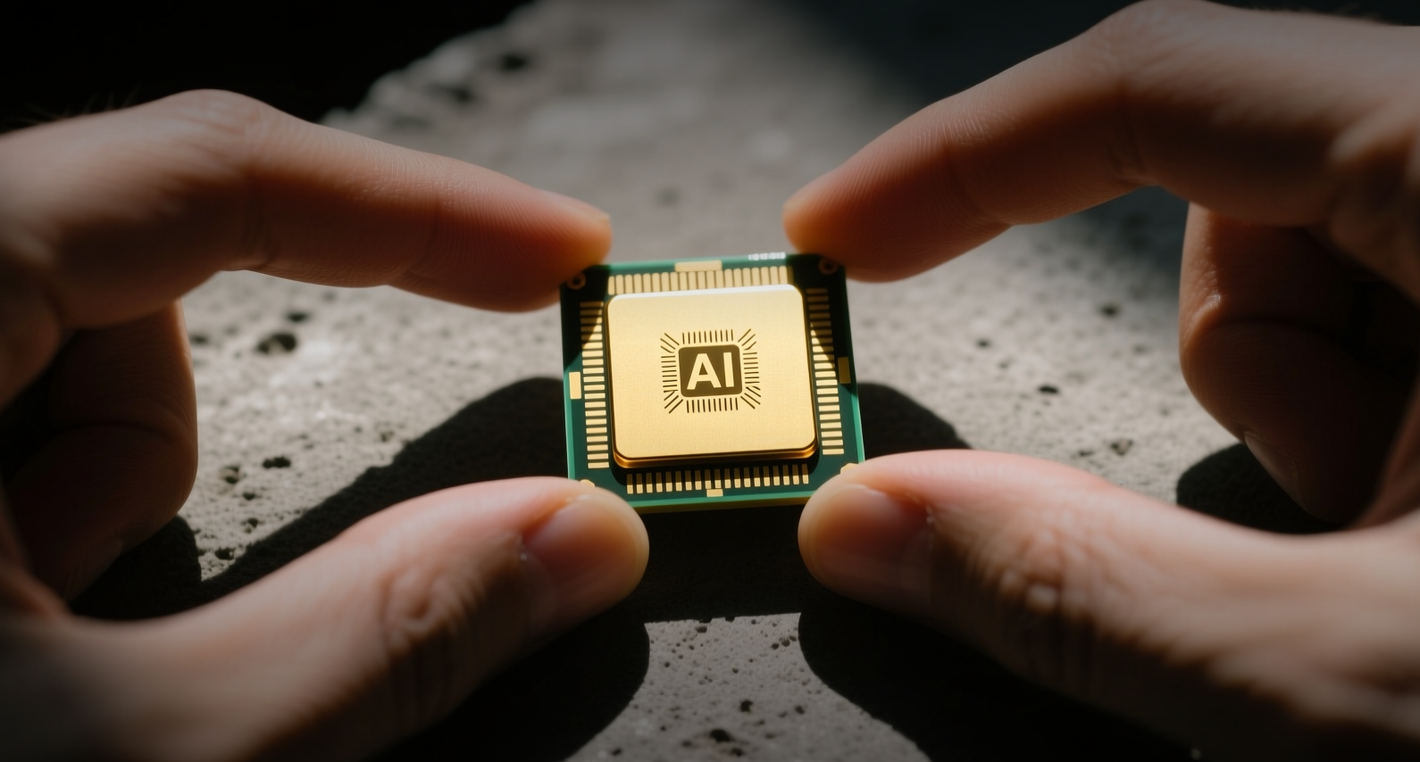
TSMC's July sales rose 44.7% to NT$467.58 billion ($14.5 billion), confirming that hyperscaler AI infrastructure spending continues to outpace supply even as equity markets question the long-term monetization of generative AI models. The monthly figure smashed analyst expectations and marks the latest in a string of record months for the Taiwanese foundry.
"The demand for advanced silicon continues to outpace supply, and TSMC remains the single point of constraint for the entire AI hardware build-out," Neil Campling, technology analyst at Bloomberg, said.
The world's largest contract chipmaker generated the revenue from chips for Nvidia, Apple, Broadcom, and Qualcomm. Analysts on average expect a 46.8% increase in Q3 sales. TSMC raised its 2026 capital expenditure forecast to a record $60-64 billion and projects full-year revenue growth slightly above 40% in U.S. dollar terms. The company's July performance follows a June report that already showed sales running well ahead of the prior year, with momentum carrying into the current quarter.
The results confirm the roughly $800 billion in AI-related investments that cloud providers Alphabet, Amazon, and Microsoft have committed for 2026. TSMC controls about 70% of the global dedicated foundry market, making its production capacity the gating factor for AI accelerator supply. Every advanced AI chip from Nvidia's data center GPUs to Apple's A-series mobile processors flows through TSMC's fabs in Hsinchu, Tainan, and Taichung.
Samsung Electronics has improved its yield for advanced HBM4 memory to nearly 80%, well ahead of original late-2026 targets, according to industry data. The optimization matters because TSMC packages high-bandwidth memory with its processors — faster HBM supply means faster AI accelerator shipments, directly feeding the revenue surge. Samsung's progress also pressures SK Hynix, the current HBM market leader, to accelerate its own yield improvements or lose share in the memory chips that pair with TSMC's advanced nodes. The HBM4 supply chain is a critical constraint: AI accelerators require multiple stacks of high-bandwidth memory per chip, and any shortfall in memory production delays entire server shipments. TSMC's CoWoS advanced packaging capacity remains another bottleneck, with the company expanding production to keep pace with Nvidia's Blackwell and Rubin platform ramps.
Sony Group and TSMC announced a plan to spend about ¥1 trillion ($6.32 billion) to jointly manufacture next-generation image sensor chips. A joint venture owned 60% by Sony and 40% by TSMC will begin commercial production as early as 2029 in southern Japan's Kumamoto prefecture. The deal extends TSMC's global expansion strategy, which already includes new fabrication plants in the United States and Europe, as the company works to reduce its concentration risk in Taiwan. The Kumamoto site already hosts TSMC's first Japan fab, which began volume production of 12nm and 16nm chips in late 2024.
TSM shares rose 0.6% in premarket trading Monday and are up 39% year to date, compared with an 80% gain for the iShares Semiconductor ETF (SOXX) over the past year. The stock's relative underperformance versus the sector ETF suggests investors are pricing in geopolitical risk around Taiwan, even as fundamentals strengthen. The company's global expansion is designed to mitigate that single-point-of-failure risk, but the bulk of advanced node capacity remains on the island. For investors, the July sales data reinforces that AI hardware demand is not slowing — the constraint is physical production capacity, not customer appetite. Downstream, the tight supply chain means premium pricing for AI-capable servers persists, affecting data center operators from North America to emerging markets that depend on imported silicon. The supply-demand imbalance also keeps entry-level smartphone costs elevated in developing markets, where telecom operators financing device adoption face higher hardware procurement bills.
This article is for informational purposes only and does not constitute investment advice.
