

Tesla's recall of 20,349 vehicles over blinding headlights adds to a regulatory pile-up spanning suspension, steering, and driver-assistance systems.
Tesla's recall of 20,349 vehicles over blinding headlights adds to a regulatory pile-up spanning suspension, steering, and driver-assistance systems.
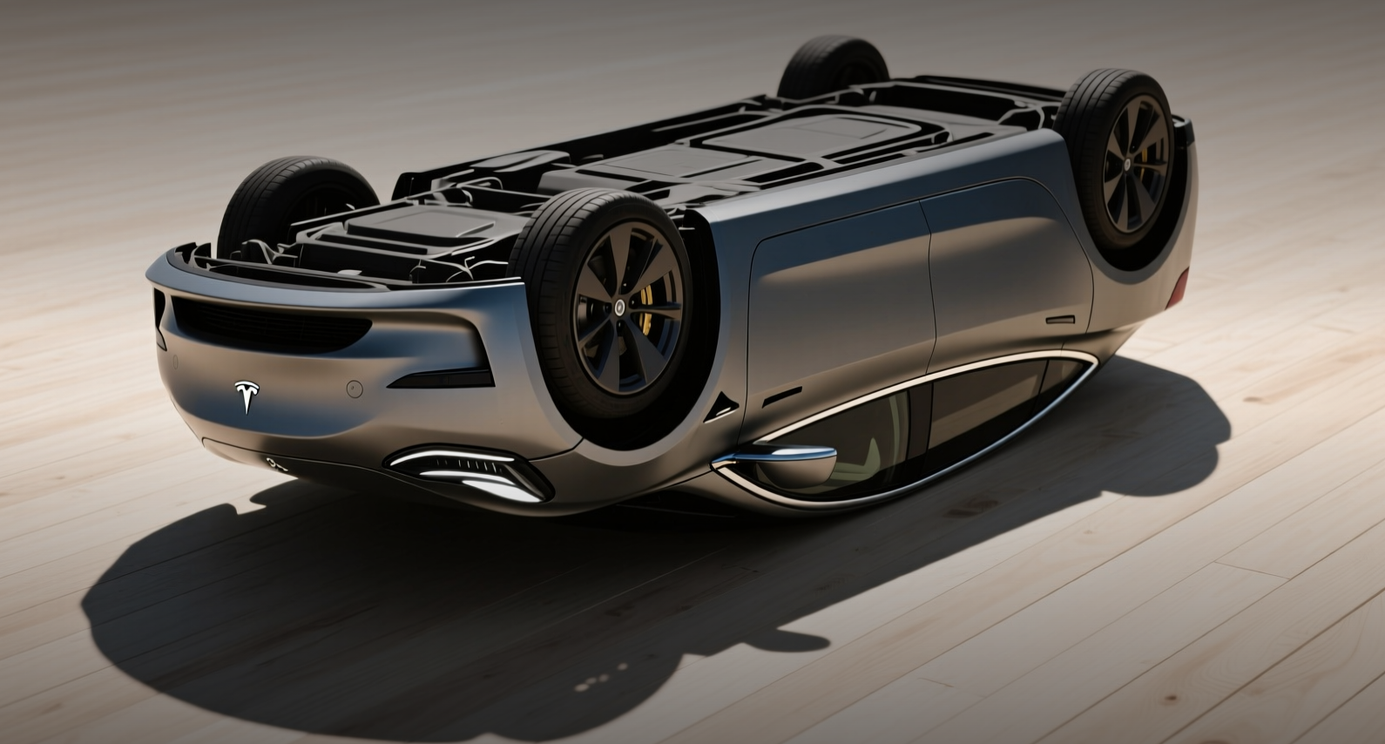
The National Highway Traffic Safety Administration ordered Tesla to recall 20,349 Model 3 and Model Y vehicles whose low-beam headlights exceed federal brightness limits, rejecting the automaker's petition to call the violation inconsequential.
The agency said the headlights produce excessive glare in specific zones, impairing visibility for oncoming drivers and increasing collision risk, according to the NHTSA filing. Tesla has not yet finalized a remedy, leaving affected owners without a timeline for correction.
The recall covers 2017-2023 Model 3 and 2020-2023 Model Y units. It follows a July NHTSA preliminary investigation into roughly 1.2 million Tesla vehicles over suspension failures that could cause loss of steering control. Earlier this year, the agency recalled 218,868 Tesla vehicles for a rearview camera software defect, and closed an engineering analysis into power steering loss affecting about 376,241 Model 3 and Model Y vehicles from the 2023 model year.
The compounding regulatory actions carry financial weight for a company with a $1.31 trillion market capitalization. Tesla's trailing P/E of 306.37 sits far above its five-year median of 107.37, and GuruFocus data values the stock at $332.55 against a current price of $330.88 — a 0.5 percent discount. The recall also raises questions about Tesla's quality-control trajectory as it pushes toward Full Self-Driving approval in China, where regulators have set new mandatory standards for L3 and L4 autonomous systems that Tesla's current L2-plus FSD does not yet meet.
The headlight recall marks the third distinct safety issue the NHTSA has pursued against Tesla in 2026. The rearview camera defect, addressed through an over-the-air software update, affected 218,868 vehicles. The power steering investigation, which the agency closed after Tesla issued a recall in early 2025, covered 376,241 Model 3 and Model Y vehicles. The suspension probe now under preliminary investigation spans 1.2 million vehicles — roughly 73 percent of the 1.64 million vehicles Tesla delivered globally in 2025.
Tesla's Autopilot system has been linked to hundreds of crashes and dozens of deaths, resulting in hundreds of millions of dollars in legal settlements, according to Reuters reporting. The company's legal and regulatory exposure has grown as federal scrutiny has expanded from software to physical components. Toyota also issued recalls in the same week, with combined U.S. recalls from the two automakers exceeding 528,000 vehicles, according to CBT News.
The recall also carries implications for Tesla's international ambitions. China published its first mandatory standards for autonomous driving systems this month, setting requirements for L3 and L4 self-driving functions. Tesla's FSD operates at L2-plus, which does not meet China's new standards, according to The News International.
The recall highlights a broader challenge for the EV sector as automakers race to scale production while maintaining quality control. Legacy manufacturers like Toyota and Ford have decades of experience managing complex supply chains and regulatory compliance, while newer entrants face growing pains as they ramp up volume. Tesla's 1.64 million deliveries in 2025 represent significant scale, but the company's recall rate relative to its production volume has drawn scrutiny from safety advocates.
For investors, the pattern is clear: each recall adds to Tesla's regulatory cost base and erodes the brand's quality perception. Insider activity reflects this caution — insiders sold $2.4 million worth of shares over the past three months with no buying, and among 19 investment gurus holding TSLA, 11 trimmed positions while 10 added. The stock trades near its GF Value of $332.55, but the regulatory overhang suggests the market has yet to price in the full cost of compliance. Tesla's GF Score of 90 out of 100 reflects strong growth potential, yet its profitability rank of 6 out of 10 reflects the margin pressure that regulatory and legal costs could compound. With the NHTSA yet to determine a fix for the headlight defect and the suspension investigation still in its preliminary phase, the near-term path for Tesla's stock remains clouded by regulatory uncertainty.
This article is for informational purposes only and does not constitute investment advice.
