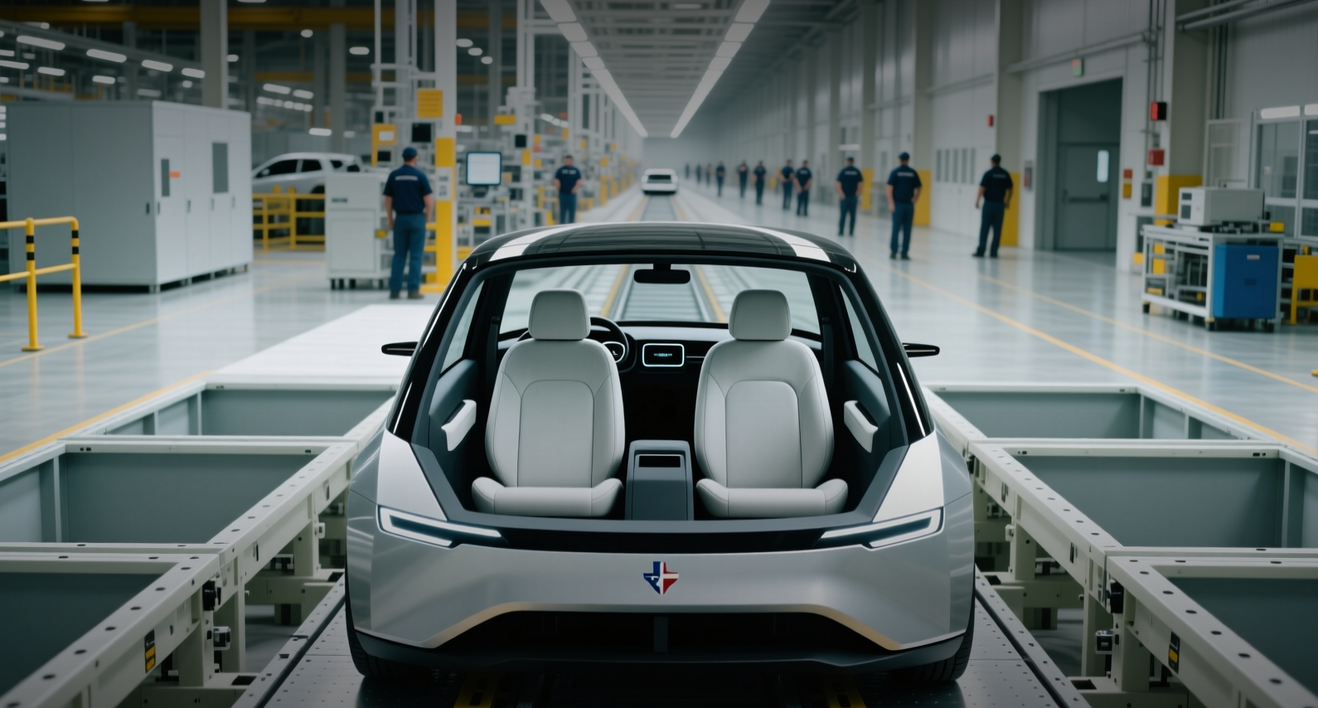
Tesla's autonomy bet faces its biggest test yet when the Cybercab debuts Sept. 3.
Tesla shares jumped 5.5% to $367.95 on Monday, their highest close since July 22, as investors positioned ahead of the Sept. 3 Cybercab launch event in Austin, Texas. The rally extended August gains to 18.23% and came as the S&P 500 and Nasdaq Composite both closed lower.
"The event likely won't bring much new information, but Tesla's showcase events tend to generate excitement and boost the share price," Dan Levy, analyst at Barclays, said in a client note.
Volume reached 60.9 million shares, roughly 46% above the three-month average of 41.6 million, underscoring the intensity of interest in the unveiling. Tesla was the second-largest gainer in both the S&P 500 and Nasdaq-100 on Aug. 31, according to Dow Jones Market Data, while Rivian Automotive closed essentially flat at $16.06 and Lucid Group fell 3.19% to $4.85.
The reveal tests whether Tesla's autonomy-driven valuation can hold. The stock's market capitalization sits near $1.45 trillion, yet shares remain down 15.9% year to date and roughly 24.8% below the 52-week high of $489.88 set in December 2025.
Cybercab Moves From Concept to Fleet
The invite-only event is expected to showcase the two-seat Cybercab, a purpose-built autonomous vehicle with no steering wheel or pedals that relies on Tesla's AI4 computer. Production began at Gigafactory Texas in February 2026, with engineering test vehicles hitting public roads by late June, and employee rides started at the factory in July.
Tesla already operates a driverless ride-hailing service in seven U.S. markets using Model Y vehicles, with cumulative paid mileage reaching roughly 2.4 million miles. Nevada recently approved up to 5,000 autonomous taxis for Las Vegas, one of the largest single-market permits in the country. Musk has said the Cybercab would sell for under $30,000 as production scales, though prediction markets assign only an 18% probability the price comes in at or below that threshold.
The event arrives as the broader market slipped, with the S&P 500 and Nasdaq closing lower on renewed geopolitical tensions and rising oil prices. Tesla's options market shows calls dominant over puts, with a put/call volume ratio of 0.73, while implied volatility of 45.05% sits at just the 8th percentile over the past year — a sign traders do not view Sept. 3 as a binary outcome.
Analysts Split on the Autonomy Thesis
Wall Street consensus remains cautious, with analysts assigning a Moderate Buy rating based on 11 Buys, 14 Holds, and three Sells over the past three months. The average price target of $385.05 implies roughly 5% upside from current levels, though targets range from $125 to $600.
Wedbush's Dan Ives holds the highest target at $600, arguing Tesla should be valued as a physical AI platform rather than an auto stock. JPMorgan's Rajat Gupta maintained a $445 target and Neutral rating, while GLJ Research reiterated a Sell with a $200 target, citing concerns that FSD takeover frequency cannot support a price-to-earnings ratio above 100 times.
Levy cautioned that Tesla's robotaxi progress "remains slower than many originally expected," with analysts projecting meaningful Cybercab revenue only by 2027. History offers a cautionary tale: when Tesla first unveiled the Cybercab concept in October 2024, the limited detail sent shares tumbling roughly 9% the following session.
Beyond the Cybercab, Tesla has other catalysts on the horizon, including production of its Optimus humanoid robot at the Fremont factory and a Semi investor event scheduled for Sept. 24. For investors, Thursday's reveal represents the next fundamental test of whether the autonomy narrative can sustain the stock's August rebound, with $366 serving as the immediate technical hurdle.
This article is for informational purposes only and does not constitute investment advice.