
SpaceX is moving beyond satellite internet to acquire terrestrial spectrum, setting up a direct clash with the largest US wireless carriers.
SpaceX is moving beyond satellite internet to acquire terrestrial spectrum, setting up a direct clash with the largest US wireless carriers.
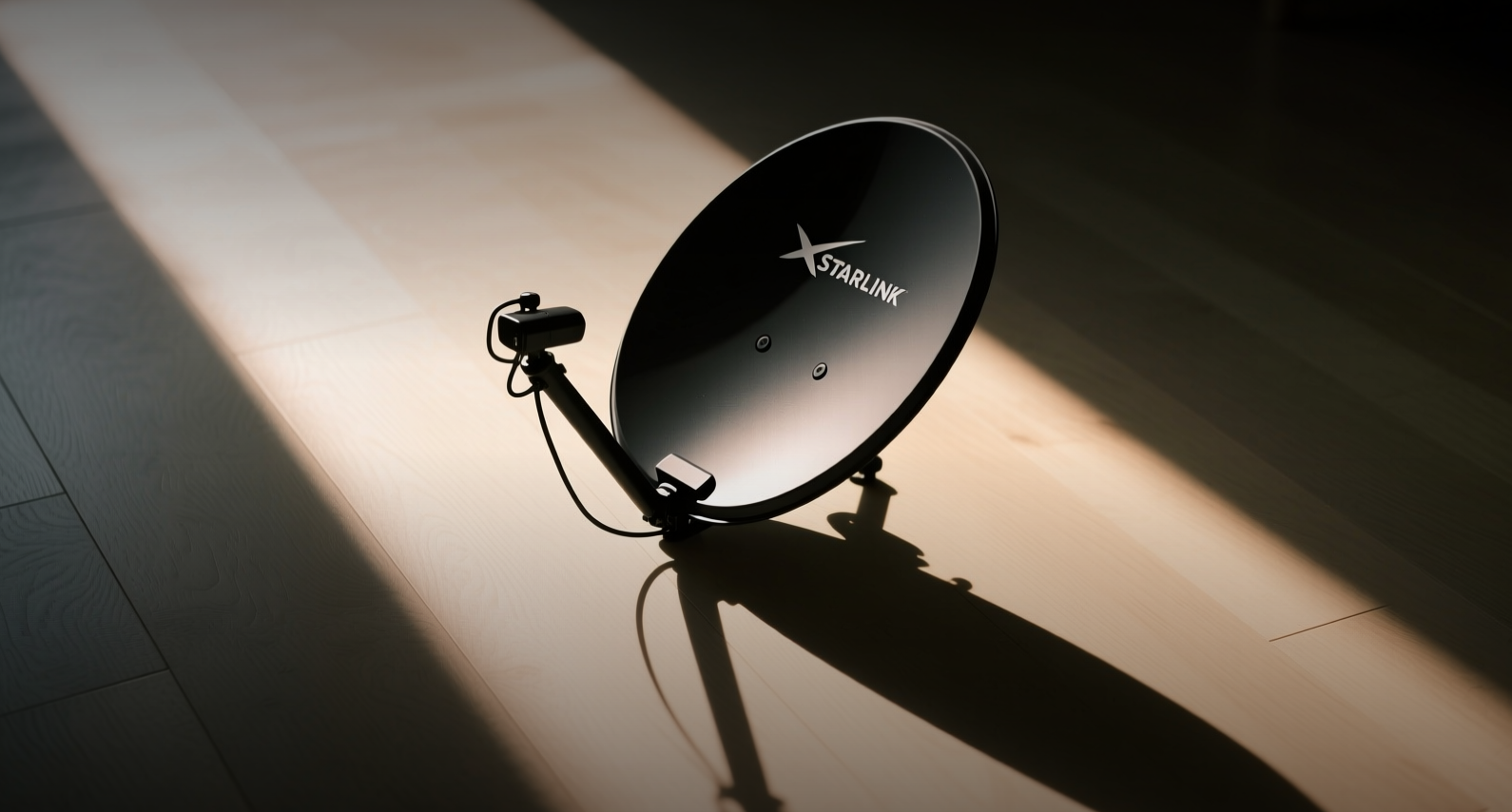
SpaceX is moving beyond satellite internet to acquire terrestrial spectrum, setting up a direct clash with the largest US wireless carriers.
SpaceX on July 30 disclosed plans to acquire terrestrial spectrum licenses and participate in upcoming government auctions, extending its reach beyond satellite broadband into the $200 billion-plus US wireless market.
The filing positions SpaceX to compete directly with AT&T, Verizon and T-Mobile US, which in May formed a joint venture to pool spectrum and develop common direct-to-device integration standards. All three carriers retain existing satellite partnerships — T-Mobile with SpaceX, AT&T with AST SpaceMobile, and Verizon with both AST SpaceMobile and Skylo — but the JV was a defensive move before any single satellite operator gained structural leverage over the carrier relationship layer.
SpaceX already operates more than 10,000 Starlink satellites in low Earth orbit, according to FCC filings, and received approval in January to expand its Gen2 constellation from 7,500 to 15,000 spacecraft. The company has separately filed for authorization to operate up to 1 million satellites — a request Amazon has formally asked the FCC to reject. Adding terrestrial spectrum would give SpaceX the ability to offer wireless services through traditional cell towers in addition to its satellite direct-to-cell service, which has been commercially available on T-Mobile since July 2025.
The strategic logic is clear: terrestrial spectrum gives SpaceX a path to serve urban and suburban customers where satellite signals face building penetration challenges, while its satellite network covers rural and remote areas. If successful, SpaceX would become the first company to own both a nationwide terrestrial spectrum portfolio and a global satellite constellation — a structural advantage no current carrier can match. The FCC has not yet set a date for the spectrum auctions SpaceX seeks to participate in.
SpaceX enters a spectrum market already in flux. Amazon's Project Kuiper subsidiary on July 24 filed for a separate 5,105-satellite direct-to-device constellation, using L-band and S-band spectrum acquired through its $11.57 billion purchase of Globalstar. That deal, expected to close in 2027, gives Amazon purpose-allocated Mobile Satellite Service licenses covering more than 120 countries — a global right to transmit to phones without negotiating carrier-by-carrier spectrum sharing agreements.
Rocket Lab on June 29 agreed to acquire Iridium Communications for $8 billion, adding the legacy LEO satellite phone operator's L-band spectrum to its portfolio. Amazon's FCC filing for its D2D system explicitly seeks access to frequencies in the 1,618.725–1,621.25 MHz range currently associated with Iridium outside the United States, setting up a potential spectrum conflict if Rocket Lab completes its acquisition.
AST SpaceMobile received FCC commercial authorization on April 21 for a 248-satellite direct-to-cell constellation using 700 MHz and 800 MHz low-band spectrum licensed by AT&T, Verizon and FirstNet.
Starlink's direct-to-cell service currently operates under the FCC's Supplemental Coverage from Space framework, borrowing T-Mobile's licensed terrestrial spectrum. That approach requires a separate spectrum-sharing deal with a licensed carrier in each country — a constraint that has slowed international expansion. Owning terrestrial spectrum outright would eliminate that dependency, allowing SpaceX to offer wireless services in any market where it holds licenses without a carrier partner.
The financial implications are significant. The global satellite direct-to-device services market is projected to reach 411 million monthly active users and approximately $11.99 billion in revenue by 2030, according to a March 2026 forecast from research firm Omdia, representing annual growth rates of more than 80 percent for users and nearly 50 percent for revenue from 2026 levels. Terrestrial spectrum would let SpaceX capture a share of the broader US wireless market, which generates more than $200 billion in annual service revenue.
This article is for informational purposes only and does not constitute investment advice.
