
Romania's first maritime drone engagement by fighter aircraft marks an escalation in Russia's hybrid campaign against NATO's eastern flank.
Romania's first maritime drone engagement by fighter aircraft marks an escalation in Russia's hybrid campaign against NATO's eastern flank.
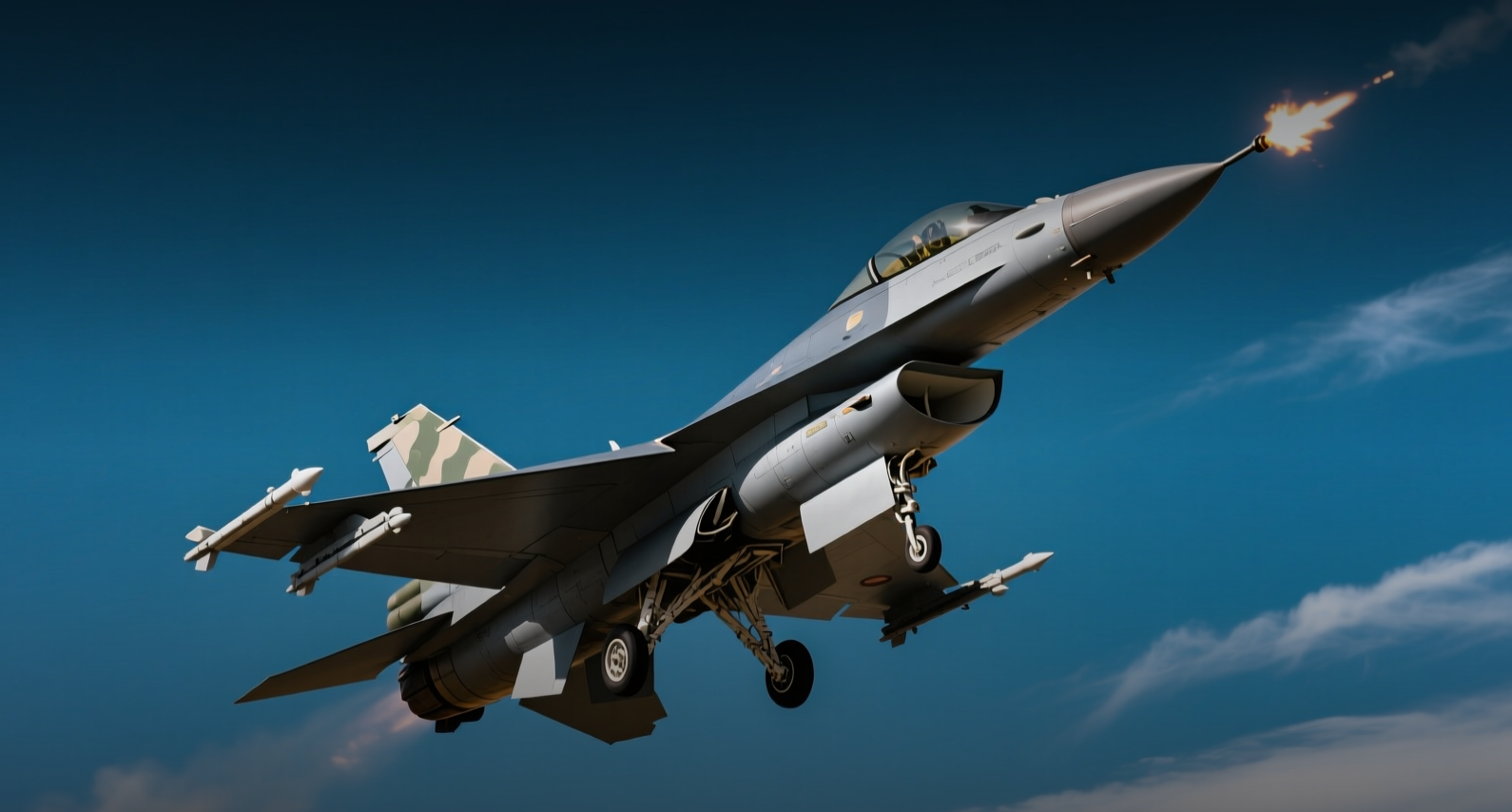
Romania deployed two F-16s Thursday to destroy an explosive naval drone drifting 80 miles east of Constanța near the Neptun Deep gas platform, the first maritime engagement by Romanian aircraft.
"The decision was made to destroy the drone to protect the lives of the several hundred people working on the platform and secure the critical infrastructure," Radu Miruță, Romania's interim defense minister, said.
The drone was first reported by a commercial vessel at 6:28 a.m. local time. Two F-16s scrambled with authorization to fire; one aircraft engaged the target with its onboard cannon, damaging but not destroying it. A Coast Guard vessel later located the damaged drone — initially believed to be a second device — and explosive ordnance disposal personnel destroyed it completely. Ukraine confirmed through a recently established direct communication channel that the drone was not of Ukrainian origin.
The Neptun Deep project, co-owned by OMV Petrom and Romgaz, holds roughly 100 billion cubic meters of recoverable gas — about 30 times Romania's annual domestic demand — and is slated to begin production in 2027, positioning Romania as the EU's largest gas producer. The incident highlights the security threat to the Black Sea, a critical corridor for global grain trade and European energy security.
President Nicușor Dan condemned Moscow, saying "I strongly condemn the intensification of these types of irresponsible incidents on the part of the Russian Federation." European Commission President Ursula von der Leyen described the attack as "hybrid warfare," pointing to the bloc's Readiness 2030 agenda, which mobilizes up to EUR 800 billion for defense capabilities, including the European Drone Defence Initiative and Eastern Flank Watch.
The incident came hours after an aerial drone entered Romanian airspace near Galați and crashed in an unpopulated area near Grindu, Tulcea County. Two Spanish F-18 aircraft and a Romanian IAR-330 SOCAT helicopter were deployed during that incident, while residents received an RO-Alert warning.
Thursday's engagement follows a pattern of drone activity around the Neptun Deep project in recent weeks. On August 11, Romanian Naval Forces divers destroyed two Gerbera-type drones of Russian production near the same site through controlled detonation. On August 16, an explosive ordnance disposal team recovered a drone wing roughly 83 nautical miles east of Constanța. Romanian pilots first destroyed a drone over national territory on July 24.
The escalation mirrors broader patterns across NATO's eastern frontier. Last week, NATO scrambled four fighter jets to shoot down a drone that entered Latvia's airspace, which that country's defense ministry attributed to Russian electromagnetic warfare. NATO jets earlier this month also pursued drones that entered Romanian airspace near the Ukrainian border.
The June incident at the port of Constanta, where a Ukrainian naval drone exploded after drifting to Romania's coast, prompted Bucharest to request that Kyiv program its drones to self-destruct near Romanian waters. That request now appears insufficient as Russia's spoofing and jamming networks across its western military district continue to disrupt Ukrainian long-range strike drones, pushing them into NATO airspace.
The Neptun Deep project is Romania's first deep offshore development, with recoverable volumes of approximately 100 billion cubic meters of natural gas. Located in shallow waters, the site is slated to start producing gas from next year. European energy prices have already moved higher because of the Iran war, and the gas project would strengthen Europe's supplies, which have been strained since Russia's full invasion of Ukraine in 2022.
A NATO official said the alliance was aware of Thursday's incident and that the drone's destruction by an F-16 "demonstrated continued readiness to respond to any potential threat."
The Black Sea remains a hub for global grain trade and Ukraine's lifeline to the world economy. Attacks by Russia and more recently Ukraine have set ships and port infrastructure ablaze at both ends of the sea, an ominous sign for global food supplies. Germany's top military officer recently told The Wall Street Journal that Russia has been systematically using drones to probe air defenses in Europe, looking for weaknesses to exploit in an intensifying gray-zone campaign aimed at destabilizing the continent's governments and institutions.
This article is for informational purposes only and does not constitute investment advice.
