Qualcomm expects to more than double revenue to $100 billion by fiscal 2029 as it expands beyond smartphones into data centers, automotive and edge AI.
Qualcomm expects to more than double revenue to $100 billion by fiscal 2029, taking on Nvidia and Intel in data center AI chips, automotive processors and edge computing — markets where it had little presence two years ago.
"We're building a diversified edge-to-cloud infrastructure leader, and the non-handset opportunity alone is $40 billion by 2029," the company said at its investor day, projecting earnings per share above $18.
In its fiscal first quarter, total revenue fell 3% year over year to $10.6 billion, while adjusted earnings dropped 7% to $2.65 a share — declines driven by weakness in the handset business. Non-handset segments, however, posted a combined 20% revenue increase. Automotive revenue surged 38%, backed by $65 billion in design wins. The company expects to exit the current fiscal year with $6 billion in annualized auto revenue.
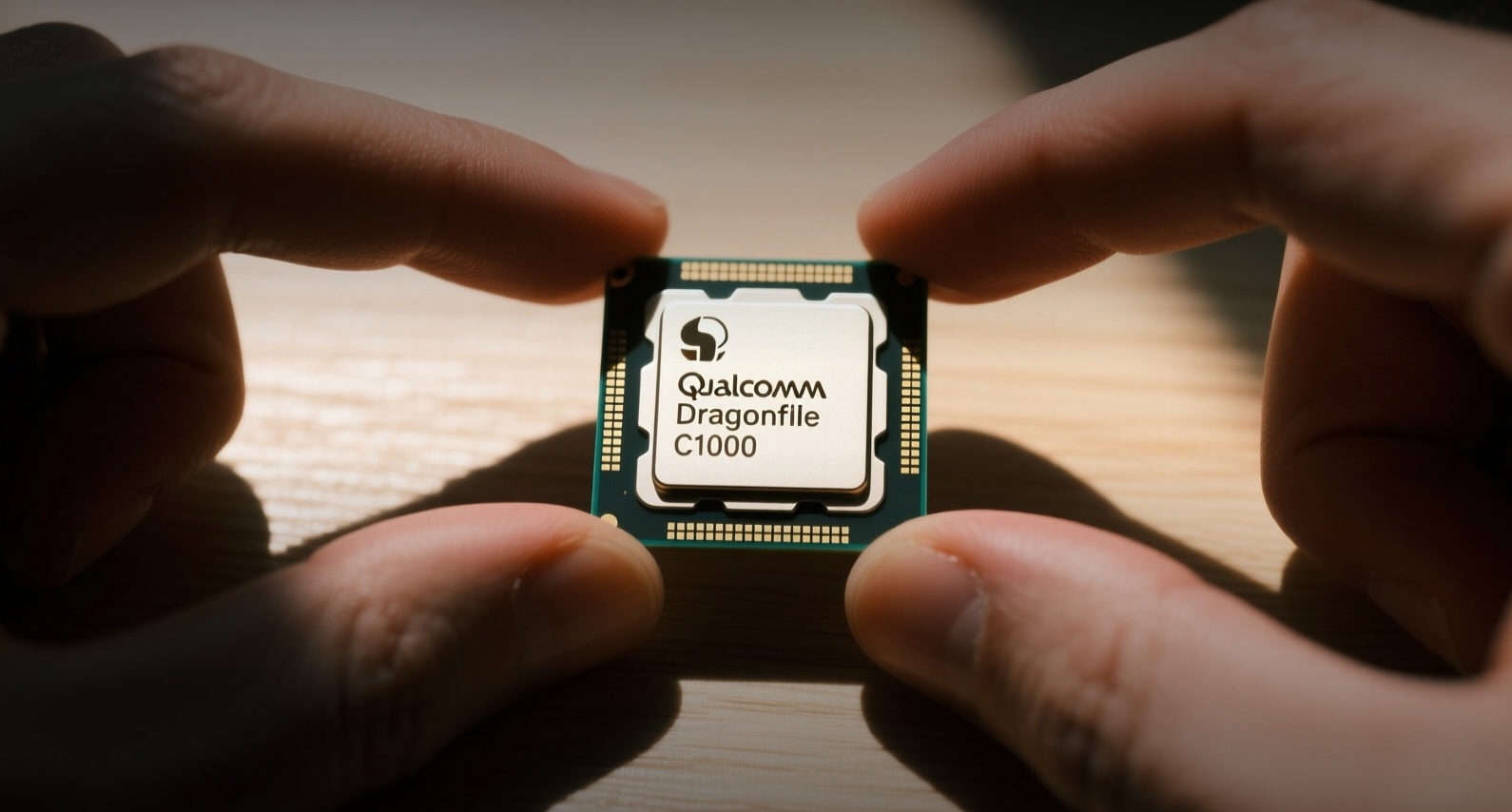
The data center push is the most consequential piece. Qualcomm expects data center revenue to reach roughly $5 billion by fiscal 2027 and $15 billion by fiscal 2029, up from effectively zero a year ago. The company has already secured design wins with Microsoft's Azure and Meta Platforms, which will use Qualcomm's Dragonfly C1000 CPU in its new server fleet. Qualcomm claims its hardware delivers four to eight times more computing performance per watt than existing GPU architectures, addressing the AI industry's power cost challenge.
Data Center Wins Reshape the Competitive Map
Qualcomm's entry into AI data centers comes as the global AI processor market is projected to grow from $58 billion in 2025 to $146 billion by 2029, according to Precedence Research. The company would need to capture about one-tenth of that market to reach its $15 billion data center target. Its Dragonfly AI300 inference accelerator, introduced last month, was designed specifically for agentic AI workloads — a segment expected to grow from $8 billion to $32 billion by 2029.
The design wins with Microsoft and Meta are the first major confirmation of Qualcomm's approach. Microsoft's Azure will use Qualcomm's high-bandwidth compute chips alongside the AI200 and AI250 accelerator cards beginning next year. Meta committed to a multi-generation collaboration using the Dragonfly C1000 CPU. Both companies cited power efficiency as the deciding factor: Qualcomm's architecture connects processing cores directly to high-bandwidth memory, reducing the energy overhead of traditional GPU designs.
Automotive and IoT Provide a Second Growth Engine
Qualcomm's automotive business is on track to more than double, with $65 billion in design wins spanning infotainment, advanced driver-assistance systems and cockpit processors. The company expects to exit the current fiscal year with $6 billion in annualized auto revenue. Its IoT segment — covering wearables, robotics, industrial automation and security systems — is also expected to grow at a similar pace, contributing to the $40 billion non-handset revenue target.
Qualcomm shares trade slightly down year to date, while Nvidia has gained about 11% and Intel has nearly tripled. The divergence creates a valuation gap: the consensus analyst price target of $228.57 implies 33% upside from current levels, according to FactSet data. If Qualcomm hits its $100 billion revenue target, the stock would trade at roughly 10 times that figure — a discount to Nvidia's forward multiple. The risk is execution: Qualcomm must prove it can win share against entrenched competitors with years of data center relationships.
This article is for informational purposes only and does not constitute investment advice.