
Temasek and Seraphim co-led Pixxel's $100 million Series C, the largest single funding round by an Indian space-tech company, taking total capital to $195 million.
Temasek and Seraphim co-led Pixxel's $100 million Series C, the largest single funding round by an Indian space-tech company, taking total capital to $195 million.
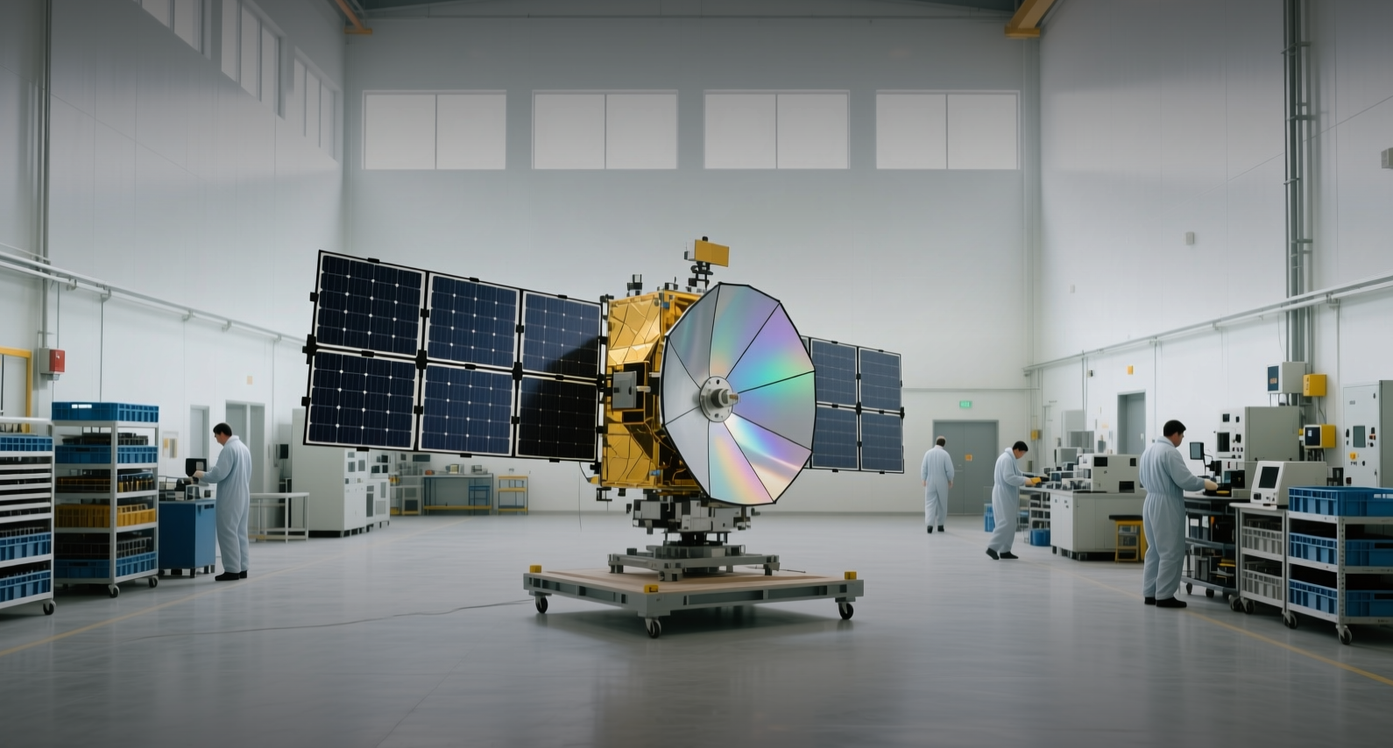
Pixxel has become the best-funded private space company in India after closing a $100 million Series C co-led by Temasek and Seraphim, the largest single round the country's space-tech sector has seen.
"Years ago, we set out to build a health monitor for the planet. Hyperspectral imaging gave us a fundamentally new way to see Earth. This new investment gives us the scale to turn that vision into planetary infrastructure," Awais Ahmed, founder and chief executive officer of Pixxel, said.
The round drew new investors 360 ONE Asset and IMM Investment alongside existing backers Radical Ventures and growX Ventures, taking Pixxel's total funding to $195 million. Media reports value the Bengaluru startup at roughly $450 million to $500 million in the deal. Google, Lightspeed, Blume Ventures and Glade Brook Partners are among earlier investors, having put in $95 million before this round; Pixxel closed its Series B at $60 million in December 2024.
The record raise follows Skyroot Aerospace becoming India's first space-tech unicorn and hands Pixxel capital to push four priorities: expanding its Honeybee constellation, adding high-resolution optical imaging satellites, scaling its Aurora Earth intelligence software and building out Gigapixxel, a facility designed for high-rate satellite production.
Six satellites in orbit, more on the way
Pixxel began with hyperspectral satellites that capture data across hundreds of narrow spectral bands, revealing details conventional imagery misses such as crop stress, soil composition and methane leaks. It then expanded into Aurora, its Earth intelligence software, and satellite systems for commercial and sovereign missions. Over the past two years it has deployed six Firefly satellites, which it calls the world's highest-resolution commercial hyperspectral constellation, and launched Aurora.
The company has secured contracts with NASA and the National Reconnaissance Office, won multiple iDEX challenges from India's Ministry of Defence and was selected to lead development of the country's first public-private Earth observation constellation of 12 satellites under IN-SPACe. It has also unveiled plans for an orbital data-center demonstration satellite.
Global capital bets on India's space sector
The investment is the strongest proof yet that global capital sees India's private space industry as investable at scale. Temasek, Singapore's state investor, and Seraphim, a London-based space-focused venture firm, join a roster that already includes Google, whose backing gives Pixxel credibility with enterprise and government buyers of Earth observation data.
Mark Boggett, chief executive officer at Seraphim Space, said Pixxel is "exceptionally well-positioned across some of the most important themes shaping the future of the space sector, from AI-powered Earth observation and sovereign space capabilities to the rise of India as a global SpaceTech leader."
For investors, the benchmark is whether Pixxel converts its constellation and software into recurring revenue as it scales manufacturing. The company has not disclosed revenue or a confirmed post-money valuation; media reports peg the round at roughly $450 million to $500 million. Its ability to monetize government contracts and commercial Earth-intelligence subscriptions will determine whether the sector's next funding rounds clear the unicorn bar Skyroot set.
This article is for informational purposes only and does not constitute investment advice.
