
Washington's open-ended military posture in the Gulf keeps the Strait of Hormuz oil chokepoint under threat as Trump weighs escalation against economic pressure.
Washington's open-ended military posture in the Gulf keeps the Strait of Hormuz oil chokepoint under threat as Trump weighs escalation against economic pressure.
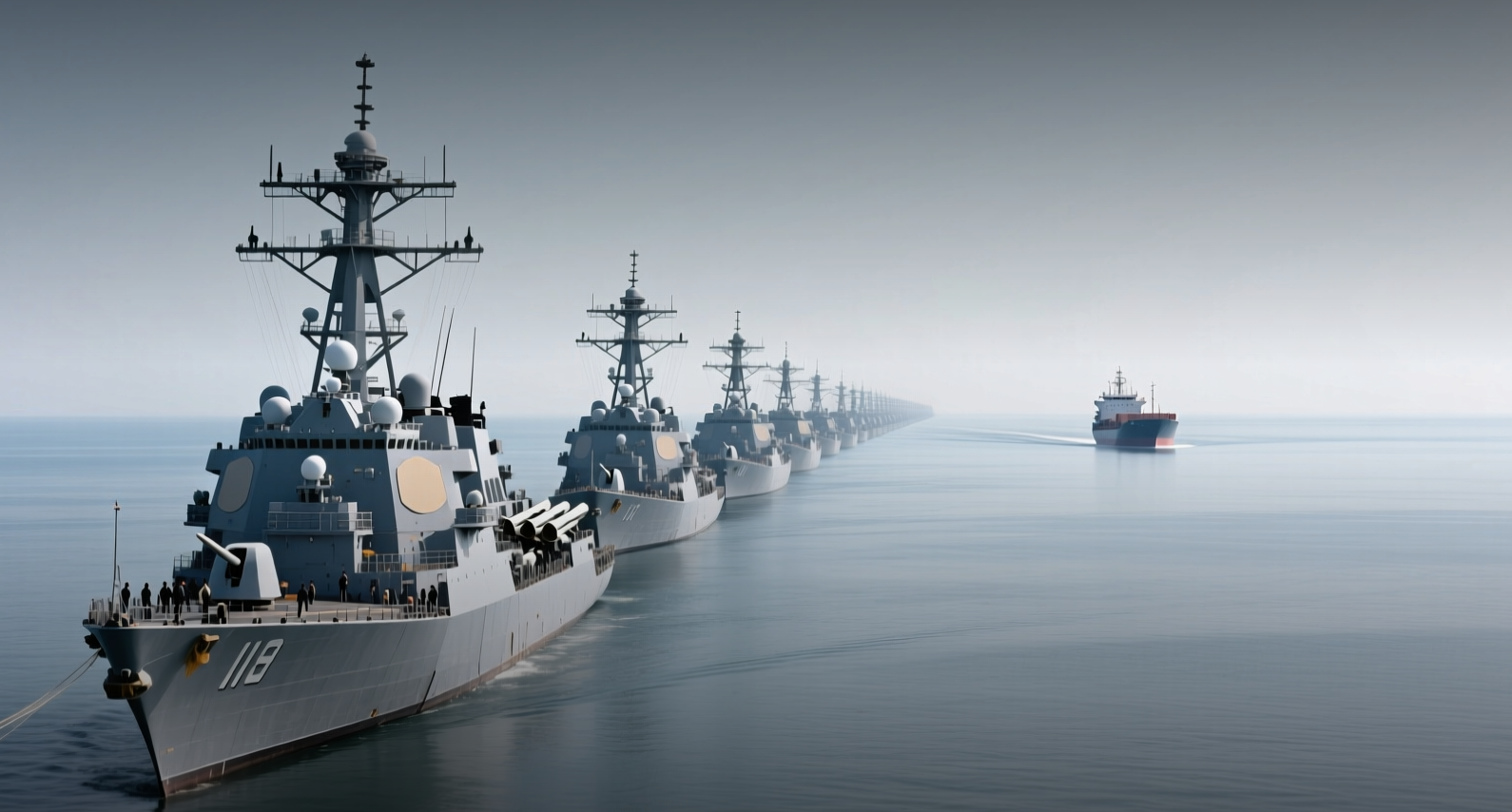
The Pentagon is quietly extending Middle East troop deployments into 2027, keeping 50,000 servicemembers and 19 warships in the region as President Donald Trump bets an economic blockade will collapse Iran's economy before a wider war becomes necessary.
"They're setting it up to be sustained over the long haul, meaning well into next year," said Bryan Clark, a former senior US Navy official and now a senior fellow at the Hudson Institute. "But to sustain it at this level, it means you're giving up presence in other regions."
Air defenders have seen standard deployments stretch from nine to 12 months, while the USS Gerald R. Ford spent 11 months at sea before returning in May, the longest carrier deployment since the collapse of the Soviet Union. The fighting has forced the Navy to rely on the remote Indian Ocean base of Diego Garcia for resupply, cutting mail and shore leave for crews aboard the guided-missile destroyers enforcing the blockade of Iranian ports.
The open-ended posture keeps the Strait of Hormuz — which carried about a fifth of the world's traded oil before the war began Feb. 28 — at the center of global energy risk. Brent crude has climbed to about $95 a barrel, up more than 30 percent since the conflict started, even as the standoff has shifted in Washington's favor with Iran's currency plumbing record lows.
Trump has told aides he favors declaring the war over, yet last month received briefings on fresh options including stepped-up airstrikes, ground forces to seize Iranian islands near Hormuz and a strike on a fortified site called Pickaxe Mountain that could be used for covert nuclear work, according to people familiar with the matter. The mixed signals leave traders guessing whether the conflict is winding down or about to widen, a dynamic that kept the oil risk premium elevated through a monthlong lull that collapsed this week.
Fighting resumed over the weekend after the US military hit Iranian rocket launchers on an island in the strait, saying Tehran planned to use them to lay mines. Iran retaliated by firing missiles at American bases in Jordan, then struck US allies Kuwait and Bahrain early Wednesday after a night of bombardment that Iranian state media said killed four people, including two children, at a wedding in the coastal town of Kuhestak.
The renewed exchanges came as the standoff appeared to tilt toward Washington. Brent fell to about $80 a barrel last month before the latest flare-up, and Iran's rial hit a record low of 2.2 million to the dollar Wednesday, a 10 percent drop from last week's record, as sanctions and the naval blockade bite. The US Navy has helped nearly 1,500 commercial vessels carrying 750 million barrels of oil transit the strait in recent months, though traffic remains far below prewar levels.
"At some point, one of the sides may see a need to escalate in order to break this cycle," said Hamidreza Azizi, senior Iran analyst at the Crisis Group. "So that could bring the two sides to a point that they have been trying to avoid until now, which is a full-scale war."
The last time the US and Iran traded blows at this intensity was the opening weeks of the conflict, when a US missile strike on a primary school in Minab killed more than 100 children and sent Brent surging past $100 before a ceasefire deal reached in June quickly fell apart. Mediator Pakistan has been working to restart talks, but Trump said Tuesday he would not force Iran to the bargaining table.
"I couldn't care less if they sign a worthless, to them, agreement," Trump wrote on social media. "I like our position now much better, with almost total control of the Hormuz Strait, and their economy totally collapsing."
For markets, the question is how long Washington can sustain the posture. Extended deployments risk wearing out troops and delaying maintenance, with elements of the 82nd Airborne Division potentially staying in the region well into 2027, according to a letter military leaders sent to families. Defense contractors stand to benefit from sustained operations, but a prolonged conflict keeps upward pressure on oil prices and shipping insurance costs that feed into global inflation just as the Federal Reserve weighs rate policy ahead of November midterm elections.
This article is for informational purposes only and does not constitute investment advice.
