
Oil prices are testing key support as tanker traffic resumes through the Strait of Hormuz while Washington tightens its economic campaign against Iran.
Oil prices are testing key support as tanker traffic resumes through the Strait of Hormuz while Washington tightens its economic campaign against Iran.
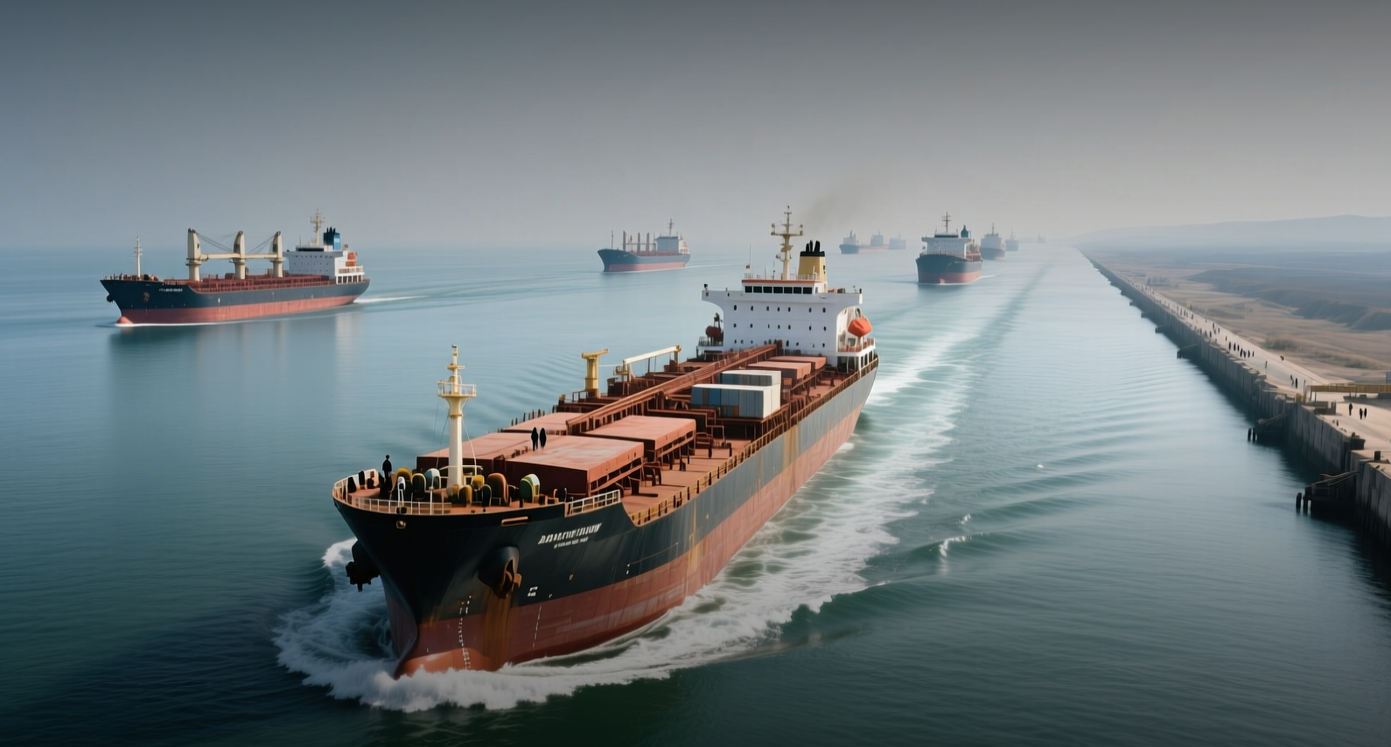
WTI crude fell 2.4% to $83 a barrel Tuesday as roughly 40 tankers carrying 16 million barrels transited the Strait of Hormuz, easing supply fears even as the US threatened sanctions on Iran's trading partners. Brent declined 2% to $90 a barrel, while October RBOB gasoline settled down 2.56% on Monday.
"There were no concrete new steps other than sanctioning 60 Iran-linked entities and individuals," Deutsche Bank analysts wrote in a Tuesday note, adding that oil markets remained in a wait-and-see mode without material escalation and with continuing grey flows through the strait.
The Joint Maritime Information Center cut the threat level for shipping in the Gulf of Oman to "moderate," one step below its prior assessment, meaning attacks off the Omani coast are possible but not likely. US Treasury Secretary Scott Bessent on Monday vowed an "economic D-Day" for countries that buy Iranian oil, warning that nations refusing to sever ties face unilateral action. Iran's Supreme National Security Council responded that any country supporting the US campaign would face an act of war and that "not a single drop of oil" would be exported through the strait.
The resumption of tanker movements has taken the edge off prices that remain more than 5 percent above last week's levels. Vortexa reported crude stored on tankers stationary for at least seven days fell 11 percent week-over-week to 97.71 million barrels in the week ended Aug. 21. The International Energy Agency said in its Aug. 12 monthly report that global oil inventories will fall in Q3 at twice the previously estimated rate because of disruptions from the US-Iran war.
Supply-side support persists. Ukraine struck Russian refineries, tankers, and pipeline infrastructure at least 30 times in July, the second-highest monthly count since 2022, according to EA Analytics. Russian crude-processing rates averaged 3.51 million barrels a day in July, the lowest in 24 years, while production fell to 8.89 million barrels a day, the lowest in six years. OPEC delegates approved a final increase of 188,000 barrels a day for September, restoring all of the 1.65 million barrels a day cut in 2023, though renewed military attacks may complicate the ramp.
US inventories remain tight. EIA data for the week ended Aug. 14 showed crude stocks 0.3 percent above the seasonal five-year average, gasoline 5.3 percent below, and distillates 12.7 percent below. Baker Hughes reported the active US oil rig count fell by three to 452 in the week ended Aug. 21, retreating from a 1.25-year high.
US natural gas has not shared oil's geopolitical premium. Domestic supply remains well stocked, keeping the fuel insulated from the Hormuz disruption that has dominated crude trading. The divergence leaves energy traders balancing a tight crude market against a well-supplied gas complex.
The Strait of Hormuz carries roughly 20 percent of global oil supplies, and China — which buys the bulk of Iranian crude — transits 38 percent of its oil through the waterway. The last time Washington imposed secondary sanctions on Iran's oil buyers, in 2018, exports fell from roughly 2.5 million barrels a day to under 500,000 within a year. If Iran follows through on its threat to halt exports, prices could spike sharply; if tanker traffic continues to normalize, the geopolitical premium erodes further. Washington has not named affected countries or set a timeline for sanctions, leaving traders to price the risk day by day.
This article is for informational purposes only and does not constitute investment advice.
