

Nvidia is extending its AI dominance from data centers to factory floors, signing eight of Japan's largest industrial companies into its Physical AI coalition.
Nvidia is extending its AI dominance from data centers to factory floors, signing eight of Japan's largest industrial companies into its Physical AI coalition.
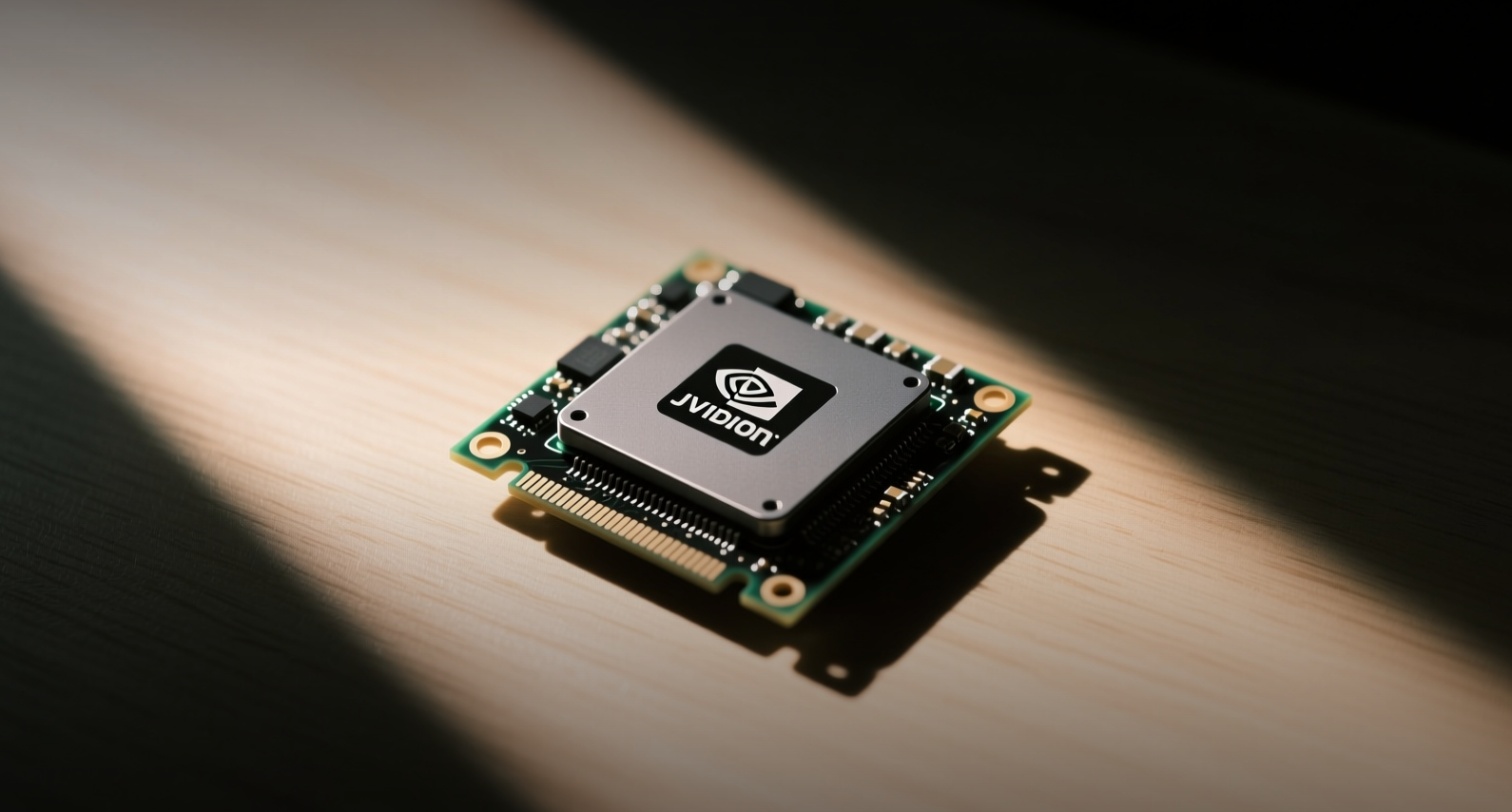
Nvidia is extending its AI dominance from data centers to factory floors, signing eight of Japan's largest industrial companies into its Physical AI coalition.
Nvidia's push into physical AI gained momentum this week as Chief Executive Officer Jensen Huang signed Toyota, Fanuc, and six other Japanese industrial giants into the company's robotics coalition, extending its chip dominance beyond the $1 trillion data center pipeline through 2027.
"The next frontier of AI is in the physical world, and this is a once-in-a-generation opportunity for Japan," Huang said after meeting with leaders of Toyota, Fujitsu, Kawasaki Heavy Industries, Fanuc, and Kioxia.
Three Japanese robotics players — Kawasaki, Fanuc, and Yaskawa — are already using Nvidia's technology. The company's edge computing segment, which includes robotics and automotive platforms, generated $6.4 billion in revenue last quarter, up 29 percent from a year earlier. That remains small relative to the data center business, which reported $75 billion in revenue, up 92 percent year over year.
The Japan partnerships position Nvidia for the next wave of AI adoption as competitors Advanced Micro Devices and Broadcom try to erode its data center lead. Nvidia has assembled a full-stack offering for physical AI that includes its DGX computing systems, the Jetson robotics platform, and Cosmos software for simulating real-world environments. The shares trade at 23 times forward earnings, with analysts projecting roughly 44 percent annualized earnings growth over the next several years.
Japan's Factory Floors Become AI's Next Battleground
Nvidia's strategy mirrors its data center playbook: provide the full computing stack rather than just chips. The Jetson platform handles on-device AI processing for robots, while Cosmos lets developers train machines in simulated environments before deploying them on factory floors. Kawasaki Heavy Industries, Fanuc, and Yaskawa — three of Japan's largest automation companies — have already integrated Nvidia's technology into their robotics lines.
The timing aligns with a broader push by Japanese manufacturers to automate as labor shortages persist. Toyota, the world's largest automaker by volume, has been investing in AI-powered manufacturing systems. Fujitsu brings expertise in industrial computing, while Kioxia, the memory chipmaker, represents a potential customer for Nvidia's data center products as well.
Sovereign AI Infrastructure Expands Beyond Data Centers
The Japan news came alongside a separate announcement that Nvidia, NAVER, and Brookfield are expanding Korea's sovereign AI factory infrastructure. The partners plan to grow the initial 55-megawatt deployment to 200 megawatts, with a long-term path to 1 gigawatt. Brookfield will fund up to $9 billion, Nvidia will invest $1 billion, and NAVER will cover the remainder of the $10 billion project.
The expanded facility at NAVER's GAK Sejong hyperscale data center will feature Nvidia's Vera Rubin and Blackwell platforms. NAVER, Korea's largest internet company, is also developing a Seoul World Model using Nvidia's Cosmos foundation models and plans to launch an AI agent platform in the second half of the year.
For investors, the near-term story remains the data center business. Management expects to book $1 trillion in revenue from its Blackwell and Rubin chips from 2025 through calendar 2027. The physical AI opportunity, while smaller today, represents a long-term growth vector that the market may not be fully pricing in. Nvidia shares trade at 23 times forward earnings, a discount to the 44 percent annualized earnings growth analysts project, suggesting the market has yet to assign significant value to the robotics and edge computing pipeline.
This article is for informational purposes only and does not constitute investment advice.
