

Key Takeaways: Nvidia's Vera Rubin platform is now shipping, with the CFO quantifying each gigawatt of deployed compute as a $40 billion revenue opportunity.
Key Takeaways: Nvidia's Vera Rubin platform is now shipping, with the CFO quantifying each gigawatt of deployed compute as a $40 billion revenue opportunity.
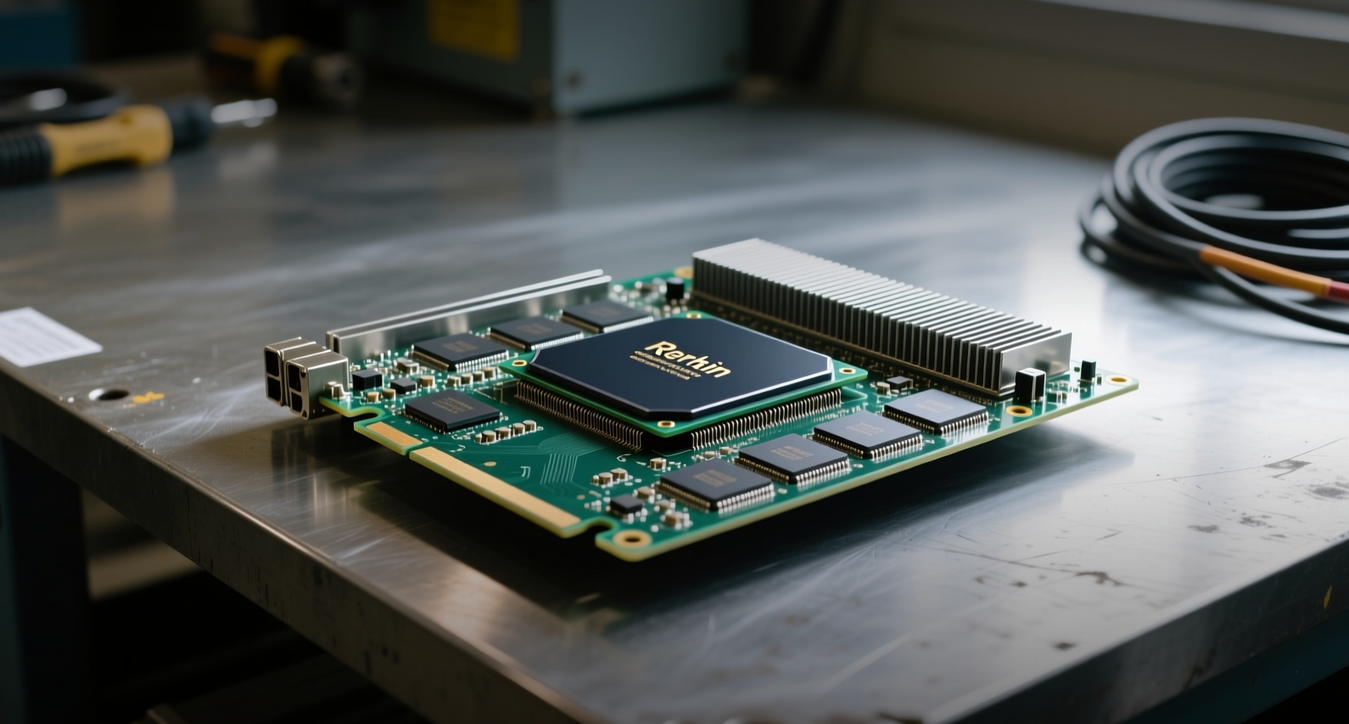
Nvidia has begun shipping its Vera Rubin compute platform, with Chief Financial Officer Colette Kress quantifying each gigawatt of deployed AI infrastructure as a $40 billion revenue opportunity for the company.
"Vera Rubin shipments started earlier this month," Kress said during the company's fiscal second-quarter earnings call. "Each gigawatt of deployed compute corresponds to approximately $40 billion in revenue opportunity."
The milestone arrives as Nvidia reported revenue of $96.22 billion for the quarter ended July, more than doubling from $46.7 billion a year earlier and beating the $92.17 billion consensus estimate. Net income rose to $53.95 billion, or $2.22 per share, from $24.76 billion a year earlier. Kress guided fiscal 2028 revenue growth of 70 percent, well above the 44 percent analysts had modeled, while noting that supply constraints would temper near-term growth.
The Vera Rubin ramp puts Nvidia in position to capture the next wave of AI infrastructure spending. Morgan Stanley estimates Rubin will contribute nearly $9 billion in revenue in the quarter ending October. The platform claims up to 10 times lower inference cost per token than the prior Blackwell generation, a metric that could accelerate adoption as AI workloads shift from training to inference.
The $40 billion-per-gigawatt figure shows the scale of monetization Nvidia expects from AI infrastructure. A single gigawatt of compute capacity is roughly equivalent to a large-scale data center campus, and the revenue opportunity spans GPU sales, networking, software, and services. India's first Vera Rubin cluster, a 9,000-GPU deployment announced this month, offers an early reference point for how sovereign and enterprise customers are adopting the platform.
The transition from Blackwell to Rubin carries execution risk. Nvidia's own filings warn that product transitions can "result in revenue volatility" as customers may postpone purchases of existing architectures. The company is managing this by framing Rubin as a complement rather than a replacement, with claims of up to 10 times lower inference cost per token creating a compelling upgrade case for hyperscalers running large-scale inference workloads.
The inference economics matter because the mix of AI workloads is shifting. As agentic AI use cases become more common, consumption increases, but the chip demand mix changes from specialized GPUs toward traditional CPUs where Intel, Arm, and AMD compete. Groq's LPU line, optimized for inference workloads, offers an alternative reference point for the cost curve Nvidia is targeting with Rubin.
Nvidia's role has expanded beyond chip supplier to financier of the AI buildout. Earlier this month, the company announced a financing platform with Apollo, BlackRock, Blackstone, Brookfield, Goldman Sachs, and KKR designed to channel more than $500 billion into AI infrastructure. Jensen Huang, Nvidia's chief executive, framed the strategy succinctly: "In AI, compute is revenue. NVIDIA compute is uniquely suited for this role."
The financing structure spreads risk across private markets, but it also concentrates Nvidia at the center of the AI capital cycle. Three customers accounted for 21 percent, 17 percent, and 16 percent of revenue in the latest quarter, and 64 percent of accounts receivable. That concentration exposes Nvidia if any large customer faces financial strain, a risk that grows as OpenAI and Anthropic prepare for public listings and data center operators like Oracle carry significant debt loads.
The capital cycle is also showing signs of strain. Alphabet announced an $80 billion equity raise in June as massive capital expenditures drove its first negative cash flow quarter since going public. Soaring memory costs from a worldwide shortage add further pressure to the supply chain. Nvidia's vendor-supported financing makes it harder to assess the true nature and size of demand, a concern that Wharton professor João Gomes has flagged as "financial vulnerabilities can remain hidden until they become crises."
Nvidia shares, up roughly 13 percent this year, trade at a premium to the broader semiconductor sector as investors price in the Rubin ramp. The company faces competitive pressure from AMD, Google's TPU line, and custom silicon from hyperscalers, but the Vera Rubin shipment milestone and the $40 billion-per-gigawatt revenue framework give the market a concrete metric to track the AI infrastructure buildout through 2027.
This article is for informational purposes only and does not constitute investment advice.
