


Hyperscalers are signing decade-long nuclear power purchase agreements as AI workloads pull forward a decade of electricity demand growth.
Hyperscalers are signing decade-long nuclear power purchase agreements as AI workloads pull forward a decade of electricity demand growth.
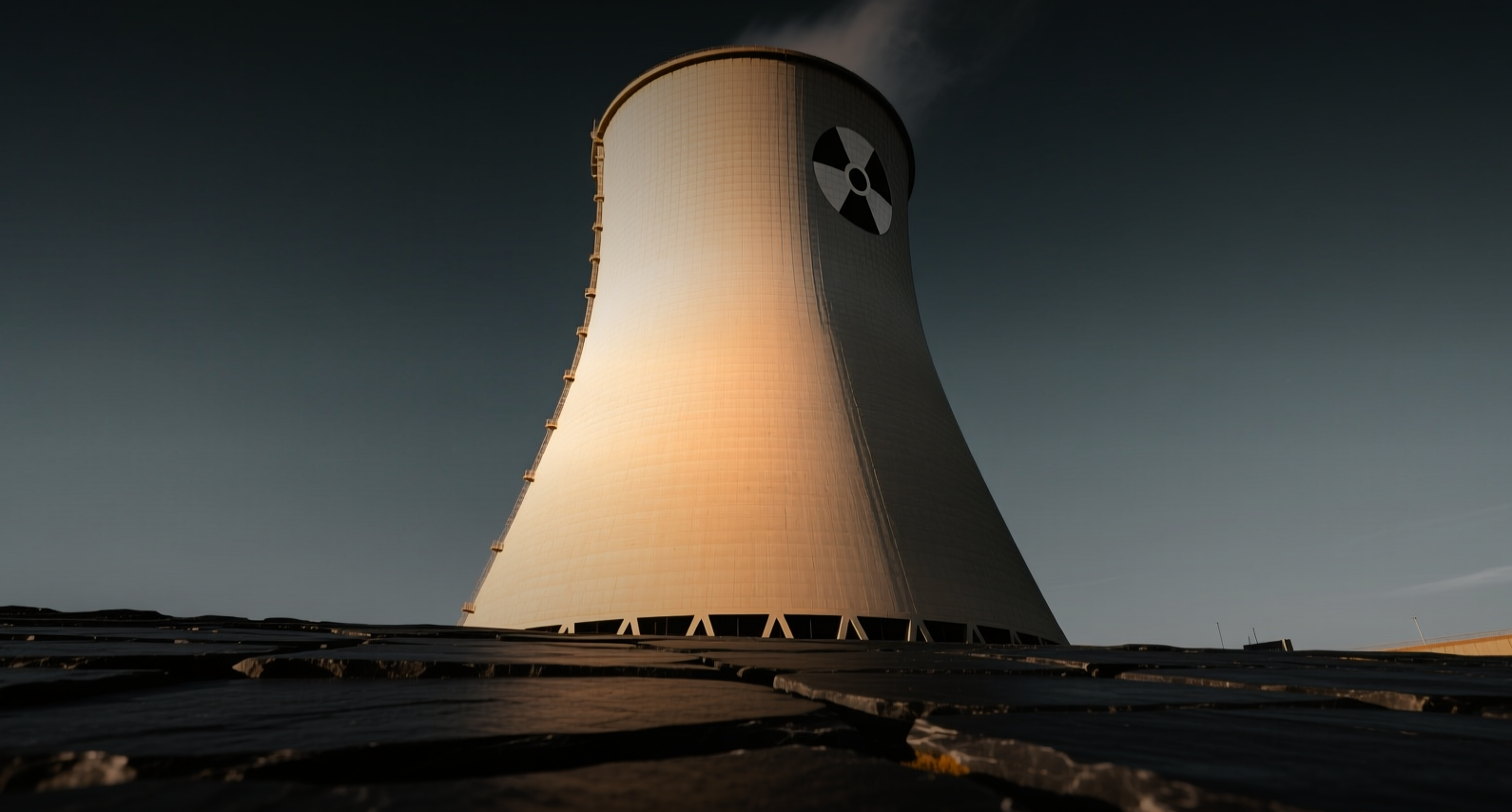
Artificial intelligence workloads are pulling forward a decade of electricity demand growth, and nuclear operators Constellation Energy, Vistra, and NextEra Energy are signing multi-decade power purchase agreements with hyperscalers to monetize the surge. The Department of Energy projects data centers will account for up to 12 percent of U.S. electrical demand by 2028, up from roughly 4 percent today.
"Projected spending levels for 2026 are nearly 75 percent higher than last year and continue to be revised upward," Constellation's chief executive told investors on the company's Q2 earnings call, referring to hyperscaler customer commitments.
Constellation signed 920 MW of long-term nuclear power purchase agreements — 15 to 20-year contracts with investment-grade customers beginning 2029 to 2032 — and raised its FY2026 adjusted EPS guidance to $11.50 to $12.50 after posting Q2 adjusted EPS of $2.55 versus a $2.33 estimate. Vistra locked in up to $1.0 billion through its Helix Digital Infrastructure joint venture with NVIDIA, KKR, and the Kuwait Investment Authority, while NextEra's Florida Power & Light unit has 12 GW of large-load demand in advanced discussions.
The three operators collectively control most of the U.S. nuclear fleet, and their ability to convert AI-driven power demand into contracted revenue will determine whether the sector's premium valuations hold. Constellation trades at 23x forward earnings with a $98.7 billion market cap; Vistra trades at 16x forward earnings; NextEra carries a $179.4 billion market cap with a 2.77 percent dividend yield.
Constellation, the largest U.S. nuclear fleet operator, delivered 44,160 GWh at a 93 percent capacity factor in Q2. The company's Crane Clean Energy Center restart is targeting 2027, and it has signed agreements with Walmart — the retailer's first nuclear deal, covering approximately 176 MW from the Dresden Clean Energy Center across two 15-year terms — building on earlier contracts with Microsoft and Meta Platforms. Wall Street is aligned, with 20 buy or strong buy ratings against three holds and an average price target of $349.96, implying roughly 24 percent upside from the Aug. 14 close of $282.50.
The refueling schedule is a near-term drag: Q2 ran 86 outage days versus 41 a year earlier, cutting operating income 39 percent year over year. Illinois' zero-emission credit program also ends in May 2027, and PJM's capacity market framework remains unsettled.
Vistra's Helix joint venture designates the company as preferred power provider for data center customers, with an initial commitment of up to $1.0 billion. The company's Q2 Ongoing Operations Adjusted EBITDA reached $1.77 billion, up more than 30 percent year over year, and its fleet hit 97 percent-plus commercial availability during extreme summer heat. Vistra is hedged roughly 100 percent for 2026 and 94 percent for 2027, locking in economics while the AI load ramp arrives. The company has 19 buy or strong buy ratings and zero holds, with an average target of $221.74 versus a $148.13 close.
NextEra brings the largest customer pipeline. FPL has about 21 GW of large-load interest, with 12 GW in advanced discussions. "Every gigawatt of large load under FPL's approved tariff is equivalent to roughly $2 billion of capex," CEO John Ketchum told investors. The Duane Arnold nuclear restart is on track for no later than Q1 2029, and the proposed $67 billion Dominion Energy merger is targeted to close in H2 2027, subject to approvals in Virginia, North Carolina, South Carolina, and from FERC and the NRC. Q2 revenue of $7.53 billion missed the $8.15 billion consensus, a reminder that top-line lumpiness persists even when adjusted EPS beats.
The nuclear-plus-AI trade is no longer a speculative thesis — it is showing up in signed contracts and raised guidance. Constellation's 920 MW of new PPAs, Vistra's Helix structure with NVIDIA on the cap table, and NextEra's 12 GW of advanced discussions give investors three distinct ways to play the same structural demand shift. Watch PJM's capacity framework, the ERCOT queue, and NextEra's promised year-end large-load contract announcement for the next events.
This article is for informational purposes only and does not constitute investment advice.
