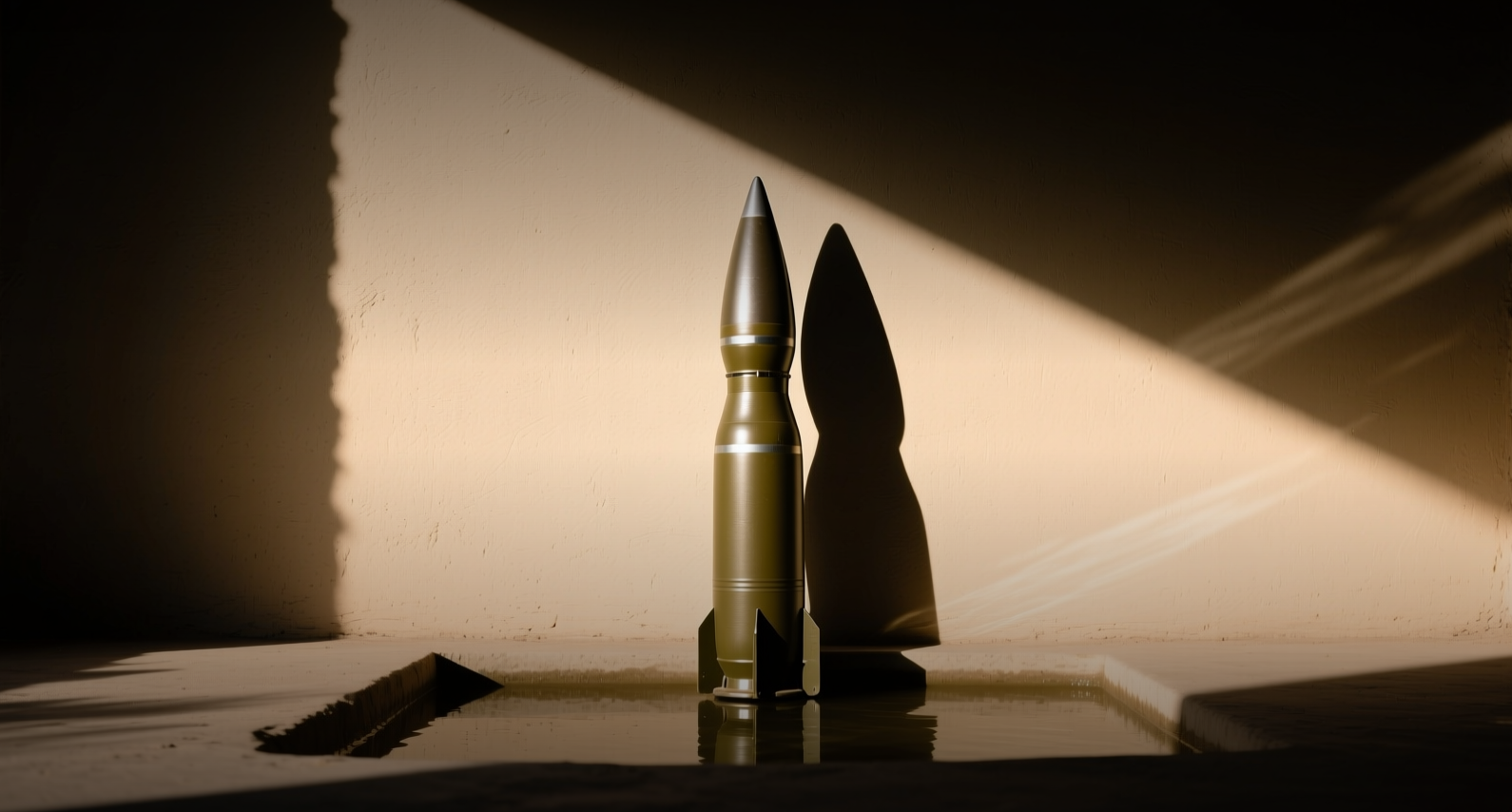
Russia's 2022 invasion of Ukraine exposed a critical vulnerability: the West had outsourced its explosives supply chain so thoroughly that Europe now operates a single TNT plant and the US relies on one World War II-era propellant factory.
NATO countries have launched at least 24 projects to rebuild domestic production of explosives and propellants, a four-year effort triggered by Russia's invasion that revealed how deeply the West had outsourced its ammunition supply chain.
"The US and Europe don't have that supply chain, meaning they don't have sovereignty over their own ammunition — and reversing that won't be easy," said Will Somerindyke, chairman of Regulus Global, a defense manufacturing and logistics company that aims to start building a triple-base propellant factory this year, the first US facility for that variant since 1986.
The US currently operates a single propellant plant, a World War II-era facility in southern Virginia, and has not built a new one since the early 1970s. Europe's sole remaining TNT manufacturer is Poland's Nitro-Chem, which warned US customers in 2024 it could not guarantee shipments because of the Ukraine war. Since then, TNT prices have risen almost fourfold, according to Clark Mica, president of the Institute of Makers of Explosives. The US had 32 government-owned ammunition plants in 1978; it now has 11. Europe had seven TNT plants and now has one.
The Trump administration has proposed allocating almost $50 billion of its $1.45 trillion defense budget to develop domestic sources of critical minerals, chemicals and energetics essential for weapons production. But new capacity will take years to materialize: a US Army effort to boost RDX and IMX production has slipped from 2025 to around 2030, while Sweden's Swebal spent two years and more than $2 million on permits alone and expects no output before late 2028. Until then, the West remains dependent on a fragile global supply chain for the chemicals that feed its artillery shells, missiles and drones.
Three new factories are planned for just Arkansas, a traditional hub for US weapons production. D&M Holding is already building a propellant plant there and is in talks with the Pentagon to help finance it, according to a person familiar with the matter. South Korea's Hanwha Defense also plans a propellant facility in the state. The UK, meanwhile, aims to complete at least six new energetics factories by 2030.
The production push extends beyond NATO. India's Kalyani Strategic Systems, which produces 60,000 artillery shells monthly, is seeking to expand its capacity for the chemicals that go into them. "Everyone is looking for surge capacity," said Neelesh Tungar, the company's chief executive. But India itself is not self-sufficient in TNT, underscoring the depth of the global shortfall.
Regulatory Hurdles Slow the Build-Out
Building explosives plants in Western democracies carries risks and costs that competitors in Russia and China do not face. A blast at Accurate Energetic Systems, a Tennessee manufacturer, killed 16 workers last year. Russia relaxed planning regulations for explosive-makers after its 2022 invasion, allowing new plants to come online in one to two years. In Sweden, Swebal's Joakim Sjöblom spent two years navigating environmental analyses, archaeological surveys and seismic-risk assessments before receiving approval in January — only to face appeals from local residents. "They can do it in one to two years," Sjöblom said of Russian producers.
The last time the West faced a comparable munitions supply crisis was during the Korean War, when the US rapidly expanded its government-owned ammunition plant network to 32 facilities. That network has since shrunk by two-thirds, and rebuilding it will require sustained investment through multiple budget cycles — a test of political will as much as industrial capacity.
This article is for informational purposes only and does not constitute investment advice.