


Micron shares have fallen a quarter from their 2026 peak, but Nvidia's blowout earnings may reset the memory trade.
Micron shares have fallen a quarter from their 2026 peak, but Nvidia's blowout earnings may reset the memory trade.
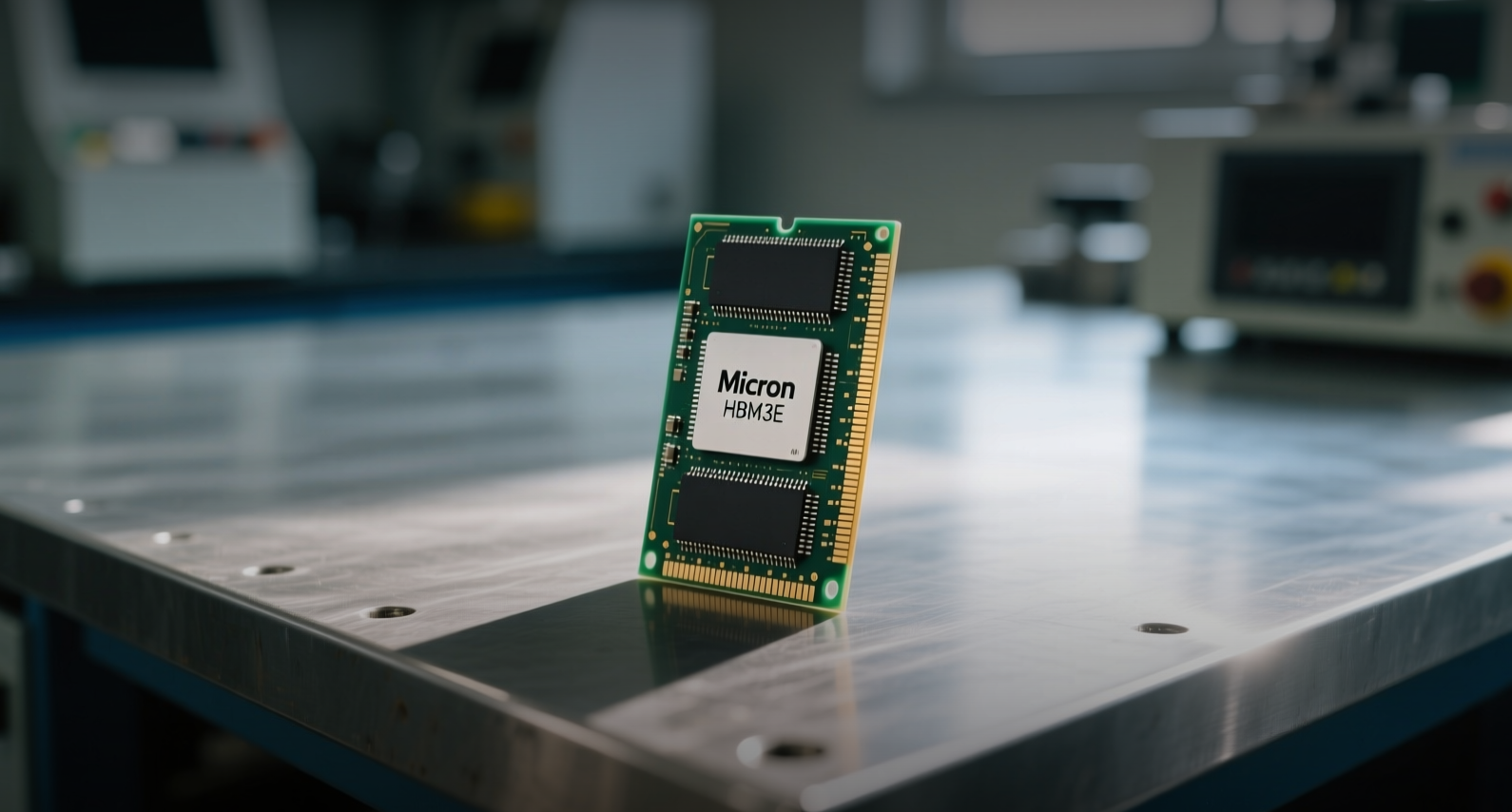
Micron shares, down 25 percent from their year-to-date high, are expected to rebound after Nvidia's earnings beat confirmed sustained demand for high-bandwidth memory that powers AI accelerators.
Nvidia reported $96.2 billion in revenue for the quarter ended July, beating the $91.9 billion consensus, and guided to $108 billion for the current period, according to the company's earnings release Wednesday.
Micron traded at $936 before Nvidia's report, down from a year-to-date high of $1,253. The stock fell 5.5 percent in the prior session as investors trimmed chip exposure ahead of the earnings. In pre-market trading Thursday, MU rose 3.3 percent to $969.
The rebound hinges on high-bandwidth memory, or HBM, the stacked DRAM that sits beside Nvidia's accelerators. Nvidia's rare 70 percent FY28 growth outlook implies continued orders for HBM, where Micron competes with SK Hynix and Samsung. Bloomberg reported potential price increases exceeding 15 percent on servers equipped with AI chips, which would flow through to memory pricing.
Nvidia's $108 billion next-quarter guidance, up from $96.2 billion, shows data-center buildouts are accelerating rather than plateauing. Each Nvidia accelerator ships with HBM, and the 70 percent FY28 growth outlook — a rare long-range figure — suggests memory content per server keeps climbing. Nvidia generated more revenue in a single quarter than Taiwan Semiconductor Manufacturing Company, the foundry that manufactures its chips, produced in a year, according to deVere Group's Nigel Green.
Micron's drawdown from $1,253 to $936 came as investors rotated out of memory names on pricing concerns and the broader chip selloff. Intel, Advanced Micro Devices, and Taiwan Semiconductor Manufacturing Company each fell 3 to 5 percent in the session before Nvidia's report. The 30-year Treasury yield hitting a 19-year high added pressure, lifting the discount rate applied to future earnings and raising the cost of financing data-center buildouts. Deutsche Bank's Jim Reid wrote that with little sign of a U.S.-Iran deal, investors priced in a longer stretch of higher oil, a double hit for chip stocks that raises both discount rates and financing costs.
High-bandwidth memory is the tightest part of the memory supply chain. SK Hynix leads HBM supply, followed by Samsung and Micron, and the three suppliers are racing to add capacity as AI accelerators consume more stacked DRAM per unit. Bloomberg reported potential price increases exceeding 15 percent on servers equipped with AI chips, which would flow through to memory pricing.
Micron's HBM3E is qualified in Nvidia's platforms, giving it a direct line into the AI buildout, according to the company's published specifications. The data-center revenue mix and HBM share gains will be the key metrics when Micron reports fiscal fourth-quarter results in late September.
The memory selloff extended beyond Micron. Seagate fell 5.7 percent and Western Digital dropped 5.5 percent in the session before Nvidia's report, and Seagate rose 4 percent in pre-market trading Thursday as the earnings read-through lifted storage names.
Micron shares, trading well below their 2026 high, offer a leveraged play on the AI memory cycle. The stock's 25 percent drawdown from highs reflects de-risking rather than a demand collapse, and Nvidia's guidance suggests the HBM order book remains full. Investors will watch Micron's September quarter for HBM revenue disclosure and pricing commentary to confirm the rebound thesis.
This article is for informational purposes only and does not constitute investment advice.
