
Key Takeaways: Japan's Defense Ministry requested a record ¥8.9 trillion ($55.6 billion) for fiscal 2027, prioritizing drones, AI and long-range strike capabilities.
Key Takeaways: Japan's Defense Ministry requested a record ¥8.9 trillion ($55.6 billion) for fiscal 2027, prioritizing drones, AI and long-range strike capabilities.
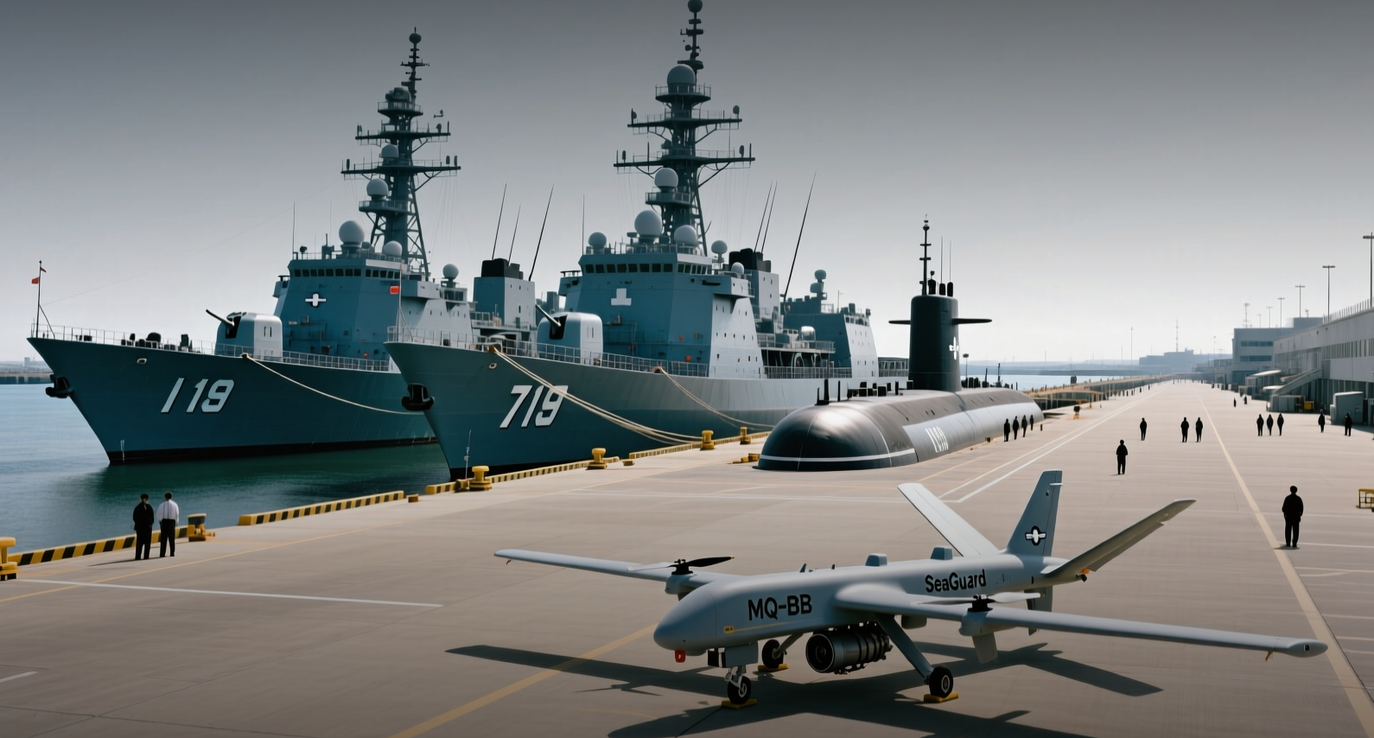
Japan's Defense Ministry requested a record ¥8.9 trillion ($55.6 billion) for fiscal 2027, prioritizing drones, AI and long-range missiles as officials describe the security environment as the most severe since World War II.
"Preventing conflicts before they arise, as well as withstanding a protracted conflict, are essential for strengthening Japan's defense capabilities," the ministry said in its budget request, citing lessons from Ukraine.
The request is 0.9 percent above the ¥8.8 trillion sought for the current fiscal year and in line with the five-year, ¥43 trillion buildup plan that began in fiscal 2023. The figure does not include extra spending related to the U.S. military presence in Japan, which would push the total beyond the record ¥9 trillion budgeted for the current fiscal year. The final amount could reach about ¥10 trillion during year-end negotiations, according to government and ruling Liberal Democratic Party officials, because roughly 160 projects tied to a planned revision of Japan's three key security documents were listed without specific amounts.
The request lands as Prime Minister Sanae Takaichi has pledged to accelerate Japan's military buildup, bringing defense spending to 2 percent of GDP two years ahead of schedule. That still trails Taiwan's proposed 2027 defense budget of nearly 4 percent of GDP and South Korea's target of 3.5 percent by 2035 — a gap that may frustrate Trump administration officials pressing allies toward 3.5 to 5 percent of GDP.
The ministry's request emphasizes what it calls "new ways of warfare," allocating ¥292.2 billion ($1.83 billion) for 17 General Atomics MQ-9B SeaGuardian drones for the Japan Maritime Self-Defense Force, plus ¥7.6 billion ($47.5 million) for interceptor drones, potentially including the TerraDrone Terra B1 selected under a rapid acquisition program last month. At a briefing for reporters, one defense official cited U.S. firm Anduril's Barracuda system — a low-cost flying drone that acts as a kind of cruise missile — as an example of the affordable weapons Japan is considering.
Drones, AI and the "AI Orchestrator"
The ministry plans to develop a next-generation "AI orchestrator" platform that would integrate and operate multiple AI systems autonomously, alongside a "Defense Ministry cloud" for transmitting highly sensitive data during emergencies. A tactical AI satellite designed to analyze space-collected information and help guide missiles is also under consideration.
On the missile front, Japan is seeking its first dedicated anti-radar missile — Northrop Grumman's AGM-88G Advanced Anti-Radiation Guided Missile-Extended Range — and plans to develop its ASM-3 supersonic anti-ship missile into a longer-range air-to-air weapon capable of targeting high-value aircraft such as airborne early warning and tanker planes. The ministry also plans to begin developing a submarine-launched hypersonic missile and study equipping unmanned underwater vehicles with long-range missile launch capabilities.
To counter drone swarms, Japan will develop a short-range air defense system combining missiles, guns and lasers. The maritime component includes additional upgraded Mogami-class frigates and Taigei-class submarines.
Regional Arms Race Intensifies
The budget request comes as the U.S., South Korea and Japan prepare to hold joint Freedom Edge military drills next week, a show of regional unity after President Trump scaled back bilateral exercises with South Korea in August. North Korea's Foreign Ministry called the exercise a threat to the region in a statement Monday.
Japanese defense officials point to the growing frequency of Chinese and Russian ships sailing close to Japanese territorial waters and warplanes skirting Japan's airspace. The last time Japan faced a comparable security challenge was during the Cold War, when the country's defense spending peaked at roughly 1 percent of GDP — half the current level.
The ministry also requested funding to create a system allowing defense equipment factories to be nationalized and operated by private companies during prolonged conflict, while providing financial support to defense contractors and promoting restructuring of the domestic defense industry. Measures to improve pay, food, housing and working conditions for Self-Defense Forces personnel were included as Japan struggles to recruit and retain service members.
The Finance Ministry will review the request before the government finalizes the fiscal 2027 budget by the end of the year.
This article is for informational purposes only and does not constitute investment advice.
