
The benchmark JGB yield's first breach of 3 percent since 1996 has traders pricing a near-certain BOJ hike this month and weighing the global fallout of a yen carry-trade unwind.
The benchmark JGB yield's first breach of 3 percent since 1996 has traders pricing a near-certain BOJ hike this month and weighing the global fallout of a yen carry-trade unwind.
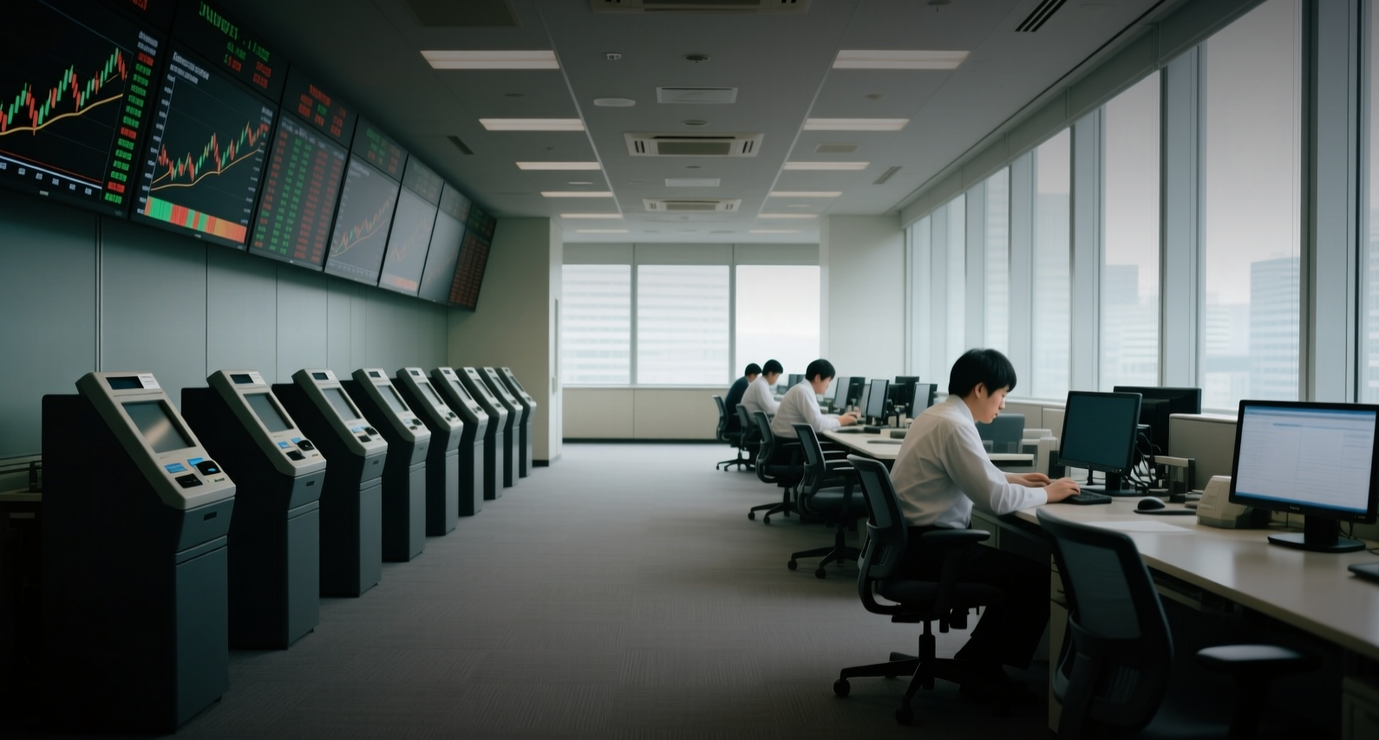
Japan's benchmark 10-year government bond yield broke above 3% for the first time since September 1996, cementing bets on a Bank of Japan rate increase this month and reviving concern that yen carry-trade unwinding could ripple through global markets.
"It's a genuine regime change. JGBs were the anchor for global fixed income for a long time. Now it has flipped," Prashant Newnaha, senior rates strategist at TD Securities in Singapore, said.
The 10-year yield rose 6.5 basis points to 3.005% on Tuesday, while the five-year rate touched a record 2.265% and the two-year yield reached 1.795%, its highest in 31 years. Overnight index swaps price a greater than 90 percent probability that the BOJ lifts its policy rate from 1 percent at the Sept. 17-18 meeting, a faster path than the central bank outlined at the start of the year.
The stakes extend beyond Tokyo. Japan is the largest foreign holder of US Treasuries at more than $1 trillion, and a sustained rise in domestic yields could push pension funds and life insurers to repatriate capital, lifting borrowing costs for US households and companies.
The yen's slide to the low-160 range against the dollar has retraced more than half of the gains from the joint US-Japan intervention in July and August, keeping pressure on the BOJ to act. Hawkish board members have reinforced that view. Hajime Takata said a 25-basis-point increase is "not set in stone" and that "the environment has changed," while Governor Kazuo Ueda said the board would discuss rates at every future meeting.
The positioning that makes a sharp unwind dangerous has been building since the BOJ ended its ultra-loose policy. Two years ago, when the central bank raised its rate to 0.25 percent, markets convulsed in a selloff widely attributed to the sudden unwinding of carry trades. Japanese resident loans to overseas borrowers exceeded their 2024 peak in early August, and lending by non-Japanese bank branches in Tokyo to their headquarters reached the highest level since the global financial crisis, according to Capital Economics. Citi's Osamu Takashima said hedge funds and other short-term investors have been shorting the yen against the dollar while buying high-yield currencies such as the Mexican peso.
US Treasury Secretary Scott Bessent has publicly warned that disorderly yen movement could trigger forced liquidations that hit global markets and raise US borrowing costs. He told Governor Ueda on Aug. 30 that Washington "strongly supports Japan taking decisive market and currency policy measures," and said in a CNBC interview that he expects the Japanese government and the BOJ to act in ways that lead to yen appreciation.
The bigger question is whether higher domestic yields pull Japanese capital home. Life insurers, sitting on hundreds of billions of dollars in book losses from bond holdings, have waited for the 20-year yield to reach 2.5 percent to 3 percent before entering in scale, according to Takashima. "If they think the downside risk is capped, we could see larger flows," he said.
Thursday's 30-year JGB auction offers an early test. "If life insurers participate actively, it will easily invite speculation that some funds are returning from overseas assets to Japan," Naka Matsuzawa, rates strategist at Nomura, said.
Not all analysts expect a sudden reversal. Goldman's Kamakshya Trivedi said yen-funded carry trades this year are more resilient than during the 2024 intervention, and that a structural unwind would require Japanese investors to repatriate overseas assets at scale. "There is almost no sign in official portfolio flow data that this rotation has happened," he said. Morgan Stanley's James Lord added that Japanese investors are still "buying US assets heavily."
The government's fiscal 2026 budget assumed a 3 percent long-term rate for debt servicing, so any sustained move above that level would strain public finances as Prime Minister Sanae Takaichi pushes expanded spending on semiconductors and artificial intelligence. With the BOJ meeting two weeks away and the 30-year auction on Thursday, the direction of yields — and the yen — hinges on whether the central bank delivers the hike markets already expect.
This article is for informational purposes only and does not constitute investment advice.
