

IonQ's $3 billion vertical integration bet has pushed shares down 7.7 percent as investors question a 46x revenue valuation.
IonQ's $3 billion vertical integration bet has pushed shares down 7.7 percent as investors question a 46x revenue valuation.
IonQ shares fell 7.7 percent to $39.20 as investors weighed the company's $3 billion vertical integration strategy against a valuation near 46 times next-twelve-month revenue, leaving little room for execution errors. The decline on August 28 followed a 6.07 percent gain the prior day when the broader quantum sector caught a bid, but the company-specific story centers on whether owning its chip fabrication can justify the premium.
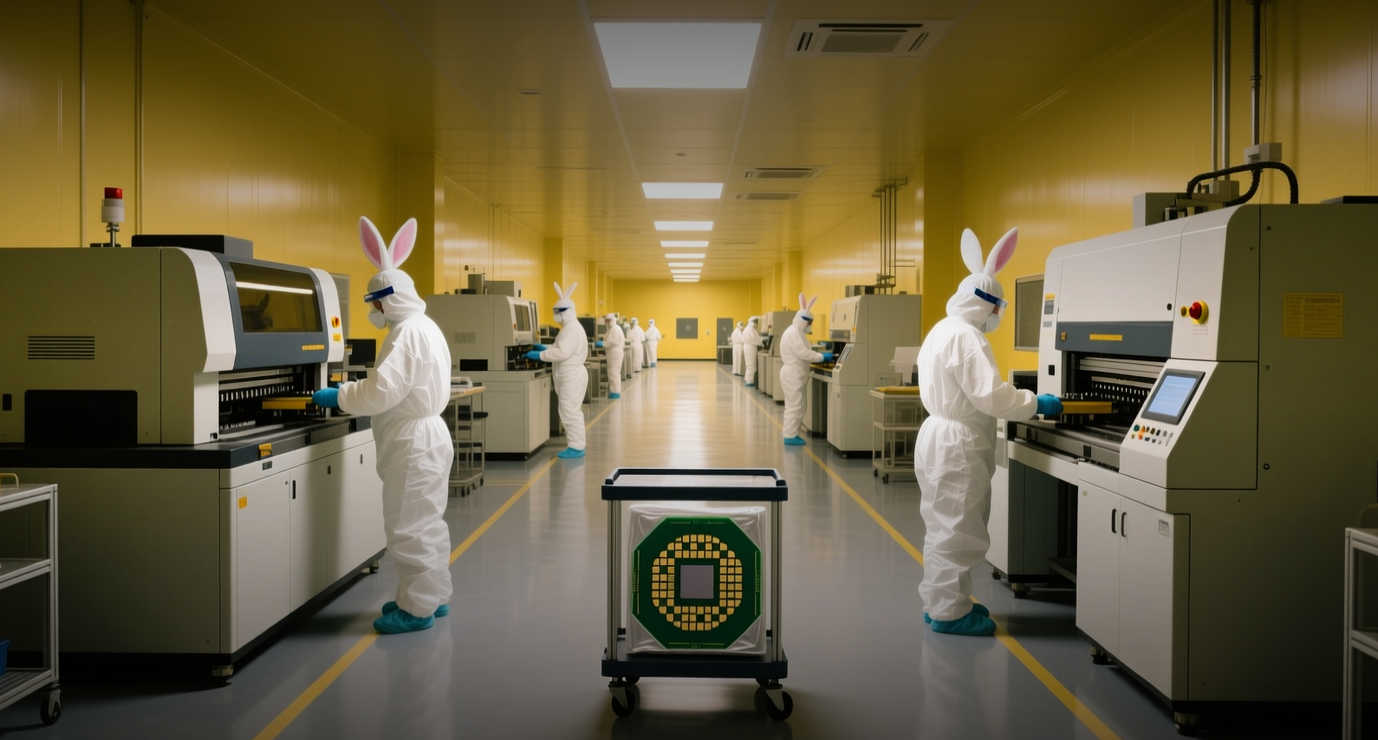
CEO Niccolo de Masi called the next phase "the leap to rapid scalability in quantum computing manufacturing," as the company closes its $1.8 billion SkyWater acquisition to bring chip design, fabrication and testing in-house. The deal, completed July 31, gives IonQ the only U.S.-based quantum foundry under its own roof, and de Masi expects it to lower total development costs for quantum hardware over time.
IonQ reported Q2 revenue of $80.05 million, up 287 percent year over year and beating the $66.42 million consensus by 20.52 percent. Organic revenue grew 132 percent. Management raised full-year 2026 guidance to $280 million to $290 million from $260 million to $270 million, and remaining performance obligations rose to $485 million from $122 million a year earlier. The company also received its first fully integrated quantum processing units back from SkyWater for testing, with 256-qubit systems slated to begin commissioning in 2027.
Free cash flow ran negative $113.97 million in Q2, and full-year 2026 free cash flow is forecast near negative $515 million before losses begin narrowing. The reported $1.9 billion GAAP net loss is mostly a roughly $1.6 billion non-cash warrant remeasurement, but cash burn stays heavy for years. IonQ's gross margin of 30.9 percent is thin for a company priced like a software compounder, and the vertical integration thesis is partly a promise to fix that.
Board Adds Capital Markets Firepower After $3 Billion Spend
IonQ added two directors on August 25 whose backgrounds point to where the company is heading. Dr. Eric Ball, former Oracle treasurer who arranged $52 billion in financing and sat on M&A teams for more than 100 acquisitions, joins alongside Timothy Baxter, former chairman of SkyWater Technology and a veteran operator who rose to CEO of Samsung North America. Together they add capital markets and integration experience, not quantum engineering expertise, which tells what management thinks the next phase demands.
COO and CFO Inder Singh said on the Q2 call, "Between those two, just to remind investors, we've spent $3 billion to make this happen, more than most countries, frankly," referring to the Oxford Ionics and SkyWater acquisitions. The logic is vertical integration: closing the $1.8 billion SkyWater deal gave IonQ the only U.S.-based quantum foundry under its own roof, letting it design, fabricate and test chips onshore and sell foundry capacity to rivals.
Valuation at 46x Revenue Leaves No Room for Error
IonQ trades near 46 times next-twelve-month revenue and 60 times trailing revenue. Intel trades around 8 times NTM revenue, and fellow quantum pure-play Rigetti Computing sits near 175 times on a far smaller base. The Street's mean target sits at $68, with 13 covering analysts split 10 buys, one outperform and two holds. TIKR's mid-case model points to a target near $188 by end of 2030, implying a total return of about 343 percent, driven by continued hyper-growth in fifth-generation Tempo systems and the ramp of semiconductor-based 256-qubit and 10,000-qubit machines built at SkyWater from 2027.
The near-term test is IonQ's Investor Day on September 8 at the New York Stock Exchange. Management has to start framing combined-company guidance now that SkyWater's roughly $120 million in intercompany revenue must be eliminated on consolidation. If the manufacturing ramp arrives without a step-change in the funding gap, the board's capital-raising firepower reads as preparation. If the combined numbers reveal a wider cash need than expected, the $3 billion already spent looks like a down payment rather than the full cost.
The quantum sector context matters too. D-Wave Quantum fell 8 percent on August 26 after its CFO announced retirement, dragging IonQ down 3 percent in sympathy. Rigetti Computing slid 5 percent and Quantum Computing Inc. fell 1 percent the same day. The Defiance Quantum ETF barely moved, down 0.4 percent, framing the D-Wave decline as name-specific. IonQ's stronger fundamental profile — Q2 revenue beat and raised guidance — explains why its sympathy move was smaller than D-Wave's primary reaction.
For investors, the question is whether IonQ's manufacturing bet turns a premium multiple into something durable. If cost per qubit falls and SkyWater becomes a revenue engine serving the whole sector, the multiple has a path to grow into. If integration drags or the foundry needs more capital than planned, the same multiple turns against holders fast. September 8 is when investors find out which.
This article is for informational purposes only and does not constitute investment advice.
