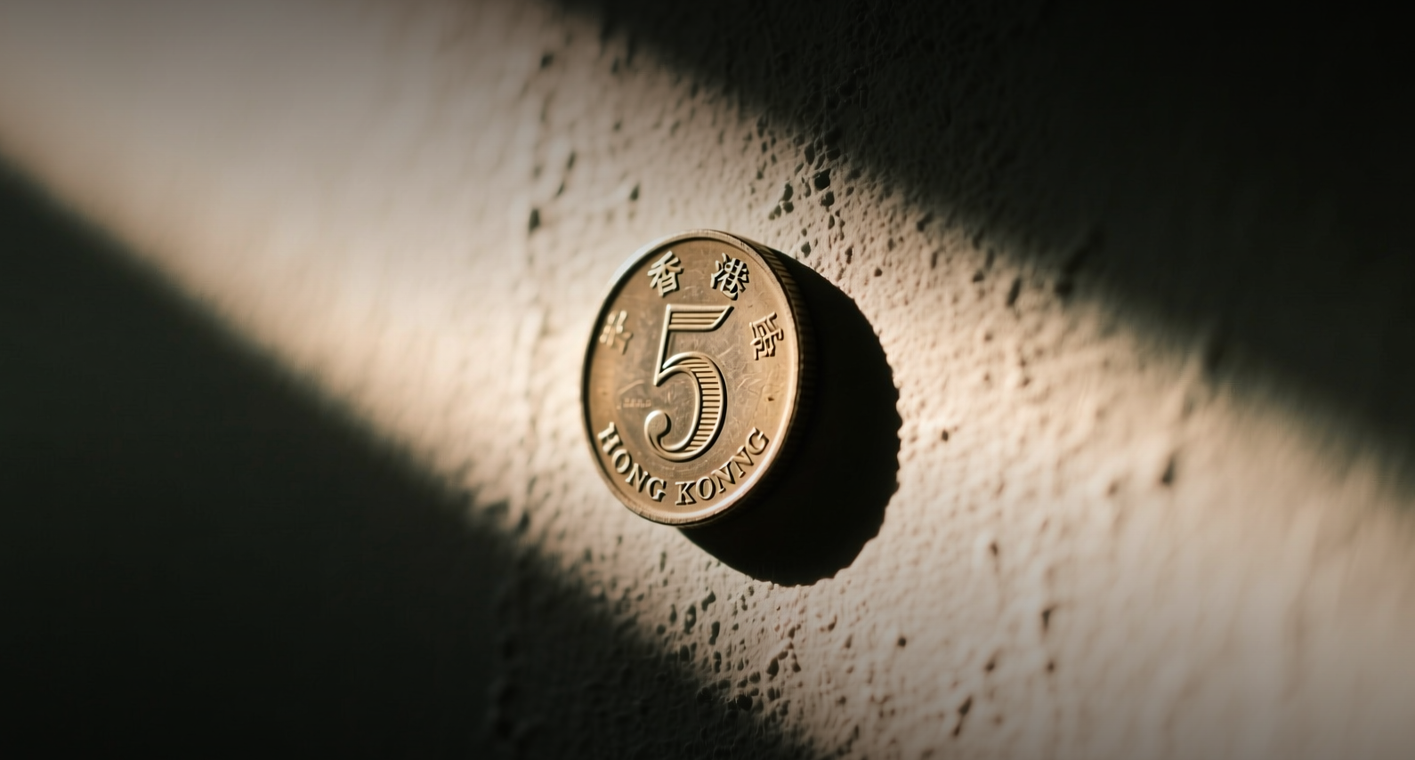
Hong Kong's monetary policy remains locked in lockstep with the Federal Reserve as the HKMA held its base rate at 4%, mirroring the US central bank's sixth consecutive pause.
The Hong Kong Monetary Authority kept its base rate unchanged at 4% on Wednesday, tracking the Federal Reserve's decision to hold the fed funds rate at 3.50%-3.75% for a sixth straight meeting. The move was widely expected given Hong Kong's currency peg to the US dollar, which forces the city's monetary policy to shadow the Fed's.
"The HKMA's decision was a mechanical consequence of the Fed's hold, but the implications for Hong Kong's banking system are significant," said James Okafor, central bank analyst at Edgen. "With the 1-month HIBOR hovering near 4.2%, the spread between the base rate and interbank lending rates remains tight, squeezing bank margins."
The HKMA last adjusted its base rate in July 2025, when it followed the Fed's 25-basis-point cut. Since then, both central banks have held steady through six policy meetings, maintaining the longest sustained pause since the 2006-2007 tightening cycle. The Fed's decision Wednesday came with a 9-3 vote, with three dissenters favoring a quarter-point hike — the most dissents in a single meeting since December 2014.
For Hong Kong, the rate hold carries distinct local implications. Residential mortgage rates, typically priced off 1-month HIBOR, have remained elevated near 4.5%, adding pressure on a property market already grappling with declining transaction volumes. Hong Kong home prices fell 1.2% in June from a month earlier, according to the Rating and Valuation Department, extending a slide that has erased roughly 20% from peak levels since 2021. The city's banking sector, which holds roughly HK$1.8 trillion in residential mortgage loans, faces rising credit risk as borrowers adjust to higher-for-longer rates.
The HKMA's decision also affects the city's exchange rate mechanism. Under the linked exchange rate system, the base rate is set at either 50 basis points above the lower end of the Hong Kong dollar trading band or the prevailing US fed funds rate — whichever is higher. With the fed funds rate at 3.50%-3.75%, the HKMA's 4% base rate ensures the currency peg remains credible. The Hong Kong dollar has traded near the weak end of its 7.75-7.85 band in recent weeks, triggering repeated intervention by the HKMA to defend the peg.
Market participants now turn to the next Fed meeting in September for clues on the policy path. Fed Chair Kevin Warsh has been openly critical of forward guidance, and investors are watching for any shift in communication strategy that could signal a change in the rate trajectory. Overnight-indexed swap markets currently price a 55% probability of a hold in September and 45% odds of a cut, according to data compiled by Bloomberg.
The extended pause creates a diverging dynamic for Asian central banks. While the HKMA is bound to follow the Fed, other regional monetary authorities — including the Bank of Korea and the Reserve Bank of India — have more flexibility to ease if domestic conditions warrant. That divergence could drive capital flows out of Hong Kong dollar-denominated assets toward higher-yielding regional markets, adding another headwind for the city's financial markets.
This article is for informational purposes only and does not constitute investment advice.