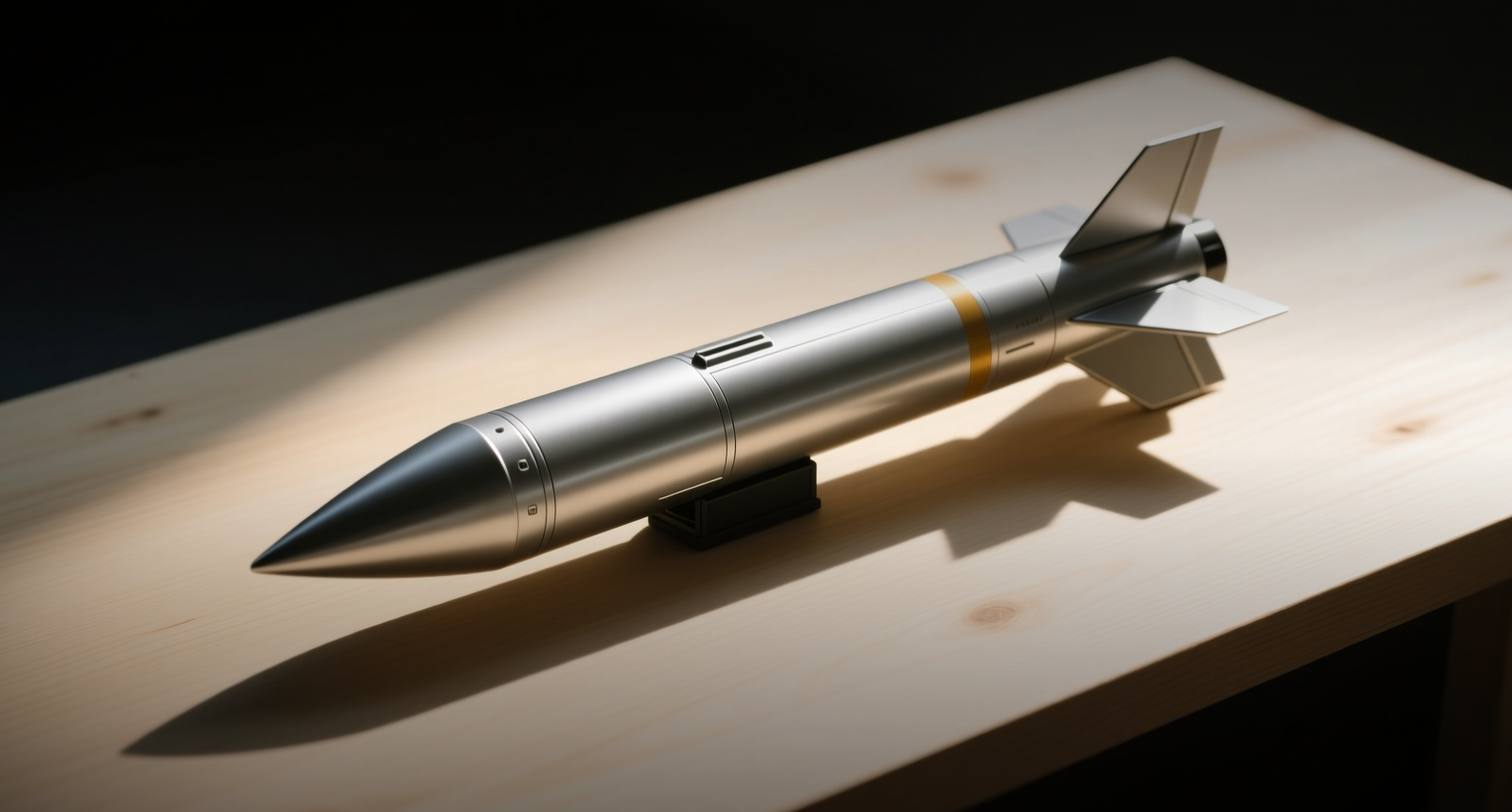
Five European defense companies have joined forces to develop an exoatmospheric interceptor system designed to destroy medium- and intermediate-range ballistic missiles in space, addressing what officials describe as a critical gap in the continent's air defense architecture.
Destinus, MBDA, Safran, Airbus and Thales signed a letter of intent July 14 to establish the Bliksem EXO Consortium — "bliksem" meaning "lightning" in Dutch — with plans to enter a binding agreement within three months. Engineering work is scheduled to begin in August, and the consortium aims to conduct a space-based test of the kill vehicle in 2027.
"Europe has strong lower-layer missile defenses, but it still lacks a sovereign European upper layer against medium- and intermediate-range ballistic missiles. Bliksem EXO is designed to close that gap through direct hit-to-kill interception above the atmosphere," Mikhail Kokorich, chief executive of Destinus, said.
The consortium structure assigns specific responsibilities across the five members. Destinus, which specializes in strike and air-defense systems, will lead the consortium and develop the kill vehicle — the component that destroys ballistic missiles in space. MBDA Deutschland, the German division of the joint venture between Airbus, BAE Systems and Leonardo, will supply the interceptor booster, launcher and canister. Safran Electronics & Defense will provide the kill-vehicle seeker, while Airbus Defence and Space and Thales will handle command, control and radar systems.
The Bliksem EXO system is designed to intercept missiles during their midcourse phase above the atmosphere, targeting threats that current European lower-tier systems cannot reach. The consortium said the interceptor would be effective against Russia's nuclear-capable Oreshnik hypersonic missile, which Moscow deployed against Ukraine earlier this year. Russia's invasion of Ukraine has repeatedly seen missiles and drones cross into the airspace of NATO member states, accelerating European defense spending commitments.
The new system will complement existing programs including NATO's Integrated Air and Missile Defence and the European Sky Shield Initiative, adding an upper layer of protection that European capitals have identified as a priority since Russia's full-scale invasion of Ukraine in February 2022. The consortium said it would draw on Ukraine's experience in countering mass aerial attacks during the system's design, testing and evaluation phases.
Defense Spending Accelerates
The Bliksem EXO consortium is the latest example of Europe's accelerating defense industrial consolidation. Since Russia's invasion, European governments have committed hundreds of billions of euros in additional defense spending. Germany alone announced a 100 billion euro ($109 billion) special defense fund in 2022 and has since committed to meeting NATO's 2 percent of GDP spending target. Rheinmetall, the German defense contractor, has seen its market capitalization surge more than 500 percent since February 2022 as European procurement budgets expanded.
For the companies involved, the consortium creates a multi-year revenue pipeline. Airbus Defence and Space and Thales gain a long-term role in radar and command systems, while Safran's seeker technology positions it for follow-on contracts. MBDA, already Europe's largest missile manufacturer, extends its product portfolio into the exoatmospheric domain. Destinus, a relative newcomer specializing in hypersonic technologies, secures a lead role in what could become a multibillion-euro program.
The development also signals potential upward pressure on defense budgets across NATO member states. The European Sky Shield Initiative, launched by Germany in 2022, now counts 21 participating nations. Bliksem EXO's upper-layer capability could encourage additional countries to join or expand their contributions, further boosting the European defense industrial base.
This article is for informational purposes only and does not constitute investment advice.