


Key Takeaways: The AI compute race has created a bottleneck no one saw coming: diesel generators that power data center backups are now booked through 2028.
Key Takeaways: The AI compute race has created a bottleneck no one saw coming: diesel generators that power data center backups are now booked through 2028.
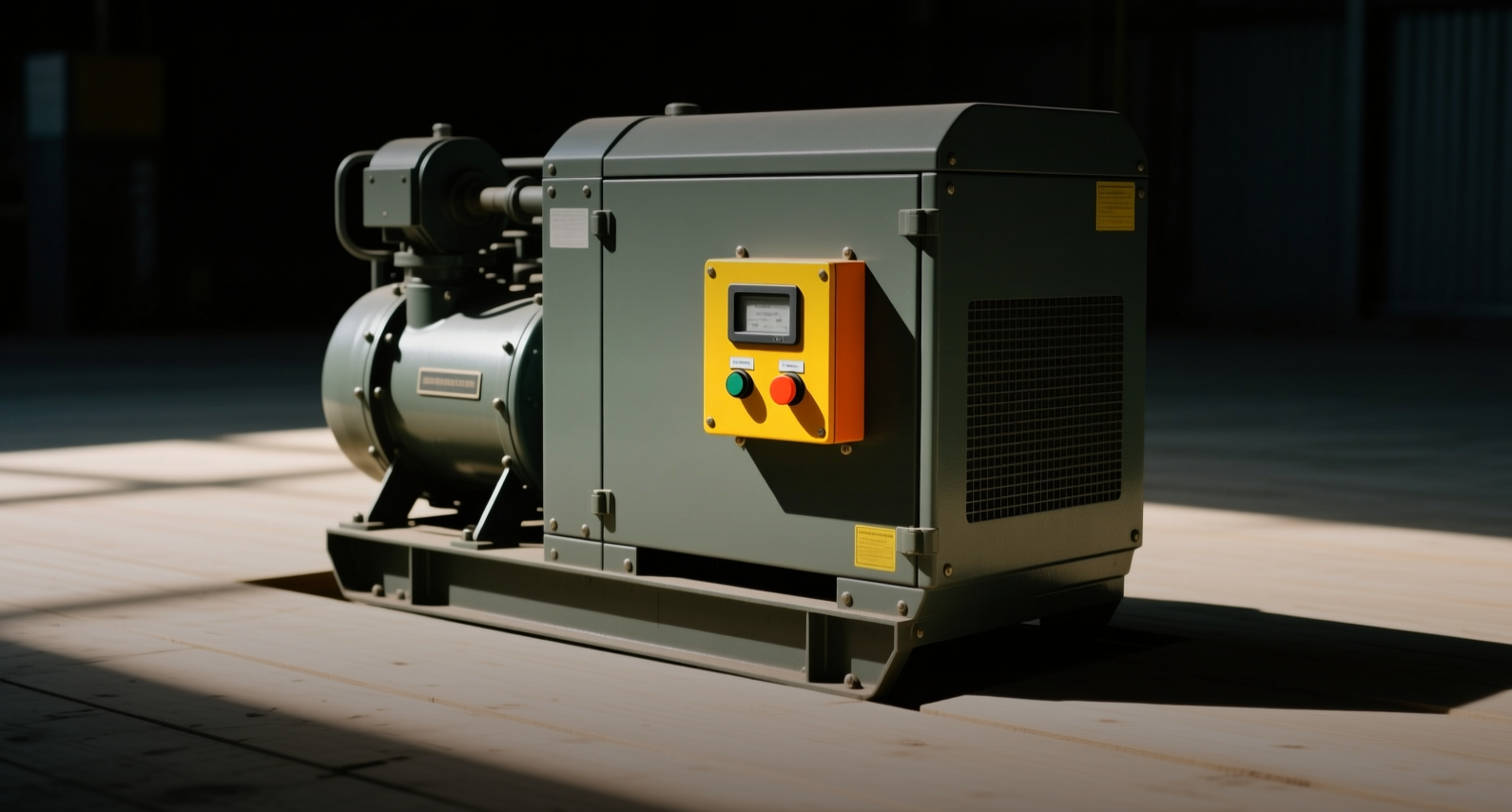
Diesel generator orders from Cummins, Caterpillar, and Rolls-Royce are booked through 2027 to 2028, with some framework agreements extending to 2030, as AI data center construction drives a global backup power crunch.
"Data center backup power is one of the fastest-growing business segments in global markets including China," Zhou Yahong, General Manager of Rolls-Royce Power Systems Greater China, said. The company's global data center business grew 35 percent in 2025, and roughly 25 percent of data centers worldwide rely on its mtu Series 4000 generators for emergency power.
The global diesel generator market is projected to reach $22.6 billion in 2026, corresponding to demand for roughly 42,000 units, according to Huayuan Securities. Prices have climbed about 20 percent since 2024, with fully imported foreign-brand units now exceeding $445,000 each. Delivery lead times for core diesel generators from major global brands have stretched to 8 to 12 months, up from the typical 5 to 6 months for mechanical and electrical implementation, according to Tan Jingwei, Executive General Manager of the Digital Technology Development Center at China Construction Third Engineering Bureau.
The shortage stems from an unprecedented surge in AI infrastructure investment. Alphabet, Amazon, Microsoft, and Meta disclosed combined full-year capex plans approaching $800 billion in July alone, while McKinsey projects global data center demand will nearly triple from 82 gigawatts in 2025 to roughly 220 gigawatts by 2030.
Alphabet was first to raise its full-year capital expenditure guidance to $195 billion to $205 billion in mid-July, with CFO Anat Ashkenazi saying on the earnings call that Google Cloud's order backlog has exceeded $514 billion and the compute shortage will persist for at least two years. Meta raised its full-year capex guidance from $125 billion to $130 billion to $145 billion, with CFO Susan Li saying the industry faces a long-term compute supply shortfall and the company will maximize data center construction speed in 2026-2027 while advancing its $14 billion Texas and $50 billion Louisiana supercomputing campus projects.
The domestic market in China is equally heated. Alibaba is advancing a 380 billion yuan (approximately $56.4 billion) AI infrastructure buildout; Tencent's capital expenditure reached 84.72 billion yuan (approximately $12.6 billion) in the first half of 2026, up 82 percent year-over-year, with Q2 alone seeing capex of 52.78 billion yuan (approximately $7.8 billion), primarily directed toward data centers, servers, and other AI infrastructure.
On the supply side, capacity expansion follows its own objective logic. Scaling up production of large generators requires coordination across upstream and downstream supply chains, including large crankshafts, cylinder blocks, fuel systems, and other core components — something engine manufacturers cannot solve unilaterally, industry insiders told Caijing. Rolls-Royce Power Systems plans to increase global power generation business capacity by 100 percent between 2022 and 2028, with major investments concentrated in Germany and the United States. The expansion of its Mankato, Minnesota plant was completed and brought online earlier in 2026, with 2026 capacity expected to be 120 percent higher than 2024 levels. Rolls-Royce has also raised its global power generation OEM revenue growth target from approximately 20 percent annually through 2028 to approximately 25 percent annually through 2030.
High-end diesel generators required for data centers have long been dominated by multinational corporations. Soochow Securities estimates that in 2024, foreign and joint-venture manufacturers accounted for 83 percent of China's diesel generator market, with domestic players holding just 17 percent. However, the supply-demand gap is opening a rare window of opportunity for domestic manufacturers. Statistics from the Data Center Committee of the China Communications Industry Association show that the domestic substitution rate for data center diesel generators has rapidly climbed from under 20 percent in 2024 to above 30 percent.
Weichai Power (000338.SZ, 2338.HK) is a prime example of domestic substitution. The company's Q1 2026 results show revenue of 62.56 billion yuan (approximately $9.3 billion), up 8.9 percent year-over-year, and net profit attributable to shareholders of 3.09 billion yuan (approximately $458.3 million), up 13.8 percent. Data center engine sales exceeded 500 units, surging more than 240 percent year-over-year, while large-bore engine sales surpassed 3,000 units, up 21 percent.
Goldman Sachs estimates that the data center generator business currently contributes approximately 10 percent of Weichai Power's net profit, but by 2030, the overall profit scale of this business could grow nearly tenfold, accounting for one-third of the company's net profit. Weichai Power is transforming from a traditional engine and heavy-duty truck cyclical company into an AI power infrastructure supplier.
However, the push for domestic substitution is not without friction. Xu Zhiyu, a data center architect at UCloud, acknowledged that customers' ingrained trust in century-old overseas brands remains the biggest obstacle: as backup diesel generator systems are just one subsystem within a data center, customers often don't scrutinize detailed performance specifications but instead focus on brand recognition. If a service provider is not on the bidding whitelist, it takes enormous effort to persuade customers.
As power density per cabinet in intelligent computing centers continues to rise, the industry's demand for high-power diesel generators is becoming increasingly urgent. Yang Wei, Deputy Dean of the Construction and Energy Division at Beijing Telecom Planning and Design Institute, pointed out that a 100-megawatt intelligent computing center requires over a hundred diesel generators, dramatically increasing steel platform space requirements and operational complexity. If individual diesel generators could be upgraded from the current 2,000 kilowatts to 3,000 or even 4,000 kilowatts, space and maintenance pressures could be partially alleviated.
Another noteworthy trend is the cross-category entry of gas generators. In North America, where grid interconnection bottlenecks are severe, an increasing number of data centers are incorporating self-owned independent power plants into their development plans. The North American Electric Reliability Corporation projects that U.S. data center electricity load will reach 70 gigawatts by 2030, with average annual peak power shortfalls exceeding 20 gigawatts from 2027 to 2030. Gas generators offer thermal efficiency above 50 percent (over 60 percent on a combined basis), fuel consumption 10 to 20 percent lower than traditional diesel generators, and delivery timelines that can match data center construction schedules. Rolls-Royce has launched gas generator sets and pure hydrogen gas generator sets as new products, and multiple North American projects have already deployed hundreds of megawatts of medium-speed gas generator solutions.
For investors, the diesel generator crunch is a direct beneficiary play on AI infrastructure. Caterpillar, trading at a market cap of roughly $394 billion with $67.6 billion in trailing revenue, has seen its Power and Energy segment become a growth engine as data center backup demand accelerates. Weichai Power's transformation from a cyclical engine maker to an AI power infrastructure supplier is reflected in Goldman Sachs' projection that its data center generator business could grow from 10 percent to one-third of company profits by 2030. The question is whether current valuations already price in this multi-year backlog — or whether the supply crunch, which industry participants expect to persist for years, still offers upside.
This article is for informational purposes only and does not constitute investment advice.
