
A $2 billion seller that has capped Bitcoin miner stocks for three weeks is nearly finished, Citadel's Ken Griffin told clients Friday.
A $2 billion seller that has capped Bitcoin miner stocks for three weeks is nearly finished, Citadel's Ken Griffin told clients Friday.
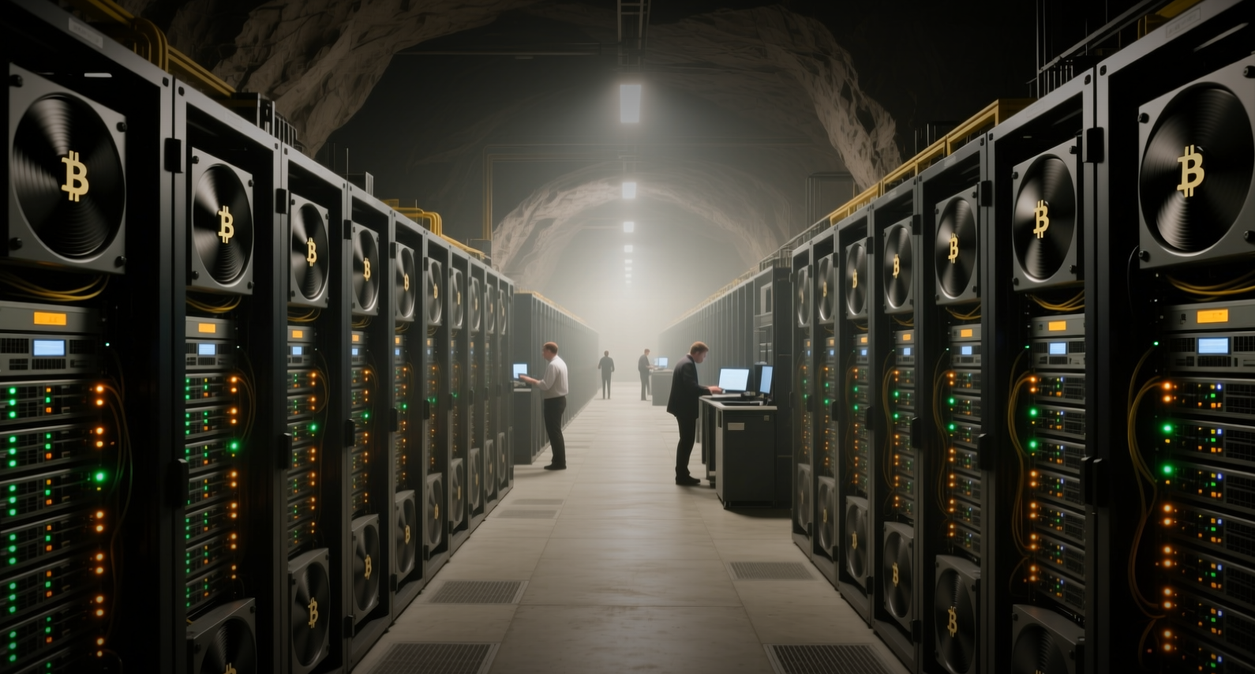
Citadel unwound more than 80 percent of the $2 billion Bitcoin miner book it absorbed from a failed AI fund, Griffin told clients Friday.
"Our ability to distribute this risk was central to our investment thesis," Ken Griffin, founder and chief executive of Citadel, said in a letter to clients, according to Reuters.
The seller was Situational Awareness, the artificial-intelligence fund run by former OpenAI researcher Leopold Aschenbrenner. It gained 439 percent in the first half of 2026, then lost 67 percent in July and handed roughly $10 billion of stock to Citadel on July 30. Its June 30 filing showed $1.99 billion in miner positions, led by Core Scientific at $666 million, Riot Platforms at $468 million, IREN at $433 million and CleanSpark at $179 million.
With the seller nearly out, the sector returns to its own fundamentals, from Riot's Anthropic hosting lease to heavy quarterly mining losses. Bitcoin's 7 percent daily gain lifted BTC to about $77,309, a market value of roughly $1.55 trillion.
Aschenbrenner was never buying Bitcoin — he was buying megawatts, betting miners' grid capacity would feed AI data centers. The danger sat in his hedges. In March the fund held $8.5 billion of put options against Nvidia, Oracle and Broadcom. By June 30 they were nearly gone, replaced by $12.5 billion of outright long bets, with Sandisk and Micron alone accounting for 55.6 percent of the book. When chip stocks slid in July, nothing cushioned the fall; miners were collateral damage in a memory-chip trade.
Citadel pushed through nearly 100 block trades worth more than $4 billion, including the largest intraday blocks of the year in 10 separate names. Three Citadel funds gained sharply afterward. A large seller with no reason to care about price is now mostly out, handing the sector back to its own numbers. One question remains: Aschenbrenner loaded up on miners because he saw hashrate as a claim on power. Whoever bought those blocks made the same bet, quietly, at a lower price.
This article is for informational purposes only and does not constitute investment advice.
