
Beijing is accelerating its push to dominate intelligent connected vehicles, with the industry ministry pledging to fast-track the 15th Five-Year Plan as China's NEV penetration surpasses 50 percent of new car sales.
Beijing is accelerating its push to dominate intelligent connected vehicles, with the industry ministry pledging to fast-track the 15th Five-Year Plan as China's NEV penetration surpasses 50 percent of new car sales.
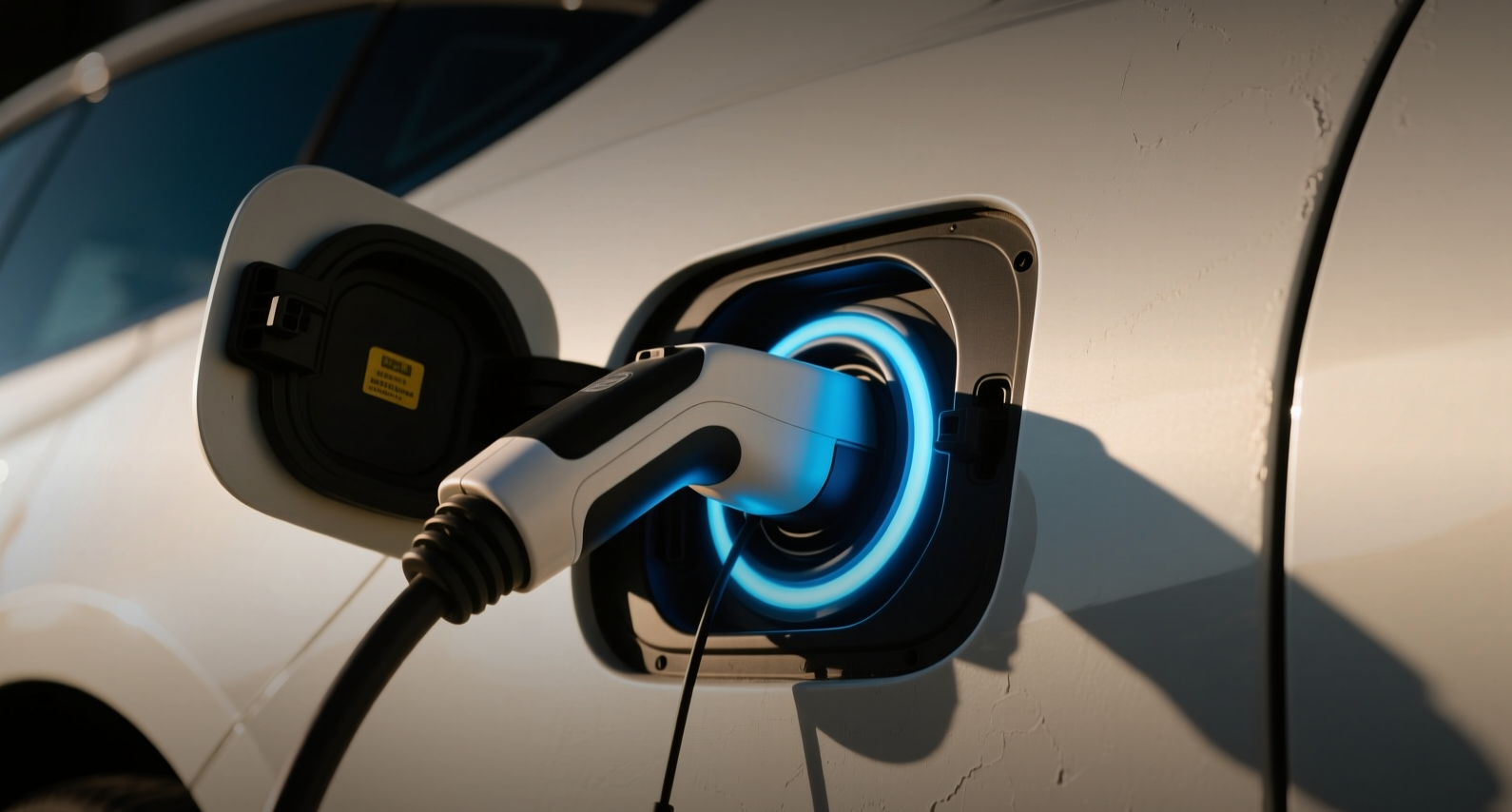
China's Ministry of Industry and Information Technology will accelerate the 15th Five-Year Plan for intelligent connected new energy vehicles, targeting breakthroughs in core technologies and expanding vehicle-road-cloud integration pilots, Director-General Guo Shougang said Monday.
"The intelligent connected vehicle industry is at a critical stage of large-scale development, with ensuring product quality and safety being the top priority," Guo, Director-General of the First Department of Equipment Industry Development at the MIIT, said at a media roundtable for the 2026 World Intelligent Connected Vehicles Conference.
The plan will speed up formulation of key standards, deepen pilot applications for vehicle-road-cloud integration, production access and road testing, and promote an ecosystem spanning the entire industry chain. Authorities have established a safety standards framework covering the full lifecycle — from research and development through manufacturing to operational monitoring — addressing product performance safety, cybersecurity, data security and functional safety.
The policy push comes as China's NEV penetration rate has surpassed 50 percent of new car sales, with intelligent driving features becoming a key differentiator for automakers including BYD Co., Geely Automobile Holdings Ltd., NIO Inc., XPeng Inc. and Li Auto Inc. The 15th Five-Year Plan period, running from 2026 through 2030, will determine whether Chinese automakers can translate their domestic EV dominance into global leadership in software-defined vehicles.
Standards and Safety Framework Take Center Stage
The MIIT's emphasis on standardization reflects a recognition that China's fragmented regulatory environment has slowed deployment of autonomous driving technologies. The safety framework covers six domains — product performance, cybersecurity, data security, functional safety, safety of the intended functionality and operational monitoring — creating a unified compliance regime for automakers and technology suppliers.
Guo said the industry is at a "critical stage of large-scale development," indicating the government views mass adoption of intelligent connected vehicles as imminent rather than aspirational. The framework applies to all vehicles with advanced driver-assistance systems and higher levels of automation, effectively covering every new-energy vehicle sold in China. The MIIT's First Department of Equipment Industry Development, which Guo leads, oversees the automotive sector's industrial policy and has been the primary architect of China's NEV regulatory framework since 2020.
Vehicle-Road-Cloud Integration Expands Beyond Pilot Cities
The vehicle-road-cloud integration program, which connects vehicles with roadside infrastructure and cloud platforms through cellular vehicle-to-everything technology, has already been piloted in more than 20 Chinese cities including Beijing, Shanghai and Wuhan. The MIIT's commitment to deepening these pilots suggests the program will expand to additional cities and potentially become a national standard before the end of the decade.
CaoCao Mobility, a ride-hailing platform backed by Geely, launched driverless robotaxi services in Hangzhou this year, demonstrating the commercial viability of the technology the MIIT aims to scale. The integration of vehicle, road and cloud systems is seen as critical to achieving Level 4 autonomous driving — where the vehicle handles all driving tasks in specific conditions — at a national scale. China's Ministry of Transport has also been testing autonomous buses and freight vehicles under separate pilot programs, creating a multi-agency push toward intelligent transportation.
Investor Implications
The policy announcement is expected to boost sentiment for Chinese NEV and intelligent connected vehicle stocks. Citi recently noted that Geely's purchase of a 34 percent stake in Ford's Spanish plant would aid the company's European market expansion, with analysts expecting a positive market reaction. The MIIT's accelerated timeline for the 15th Five-Year Plan provides a regulatory tailwind for the entire sector, potentially driving capital inflows into companies with strong autonomous driving capabilities.
The last time Beijing issued a comprehensive industrial policy for intelligent vehicles — the 14th Five-Year Plan period — China's NEV sales surged from 3.5 million units in 2021 to more than 12 million units in 2025, according to the China Association of Automobile Manufacturers. If the trajectory holds, the 15th Five-Year Plan could push China's intelligent connected vehicle market past 20 million units annually by 2030. For investors, the key question is which companies will capture the software and services revenue that intelligent vehicles generate — a market that Goldman Sachs estimates could reach $150 billion globally by 2030.
This article is for informational purposes only and does not constitute investment advice.
