
Cerebras Systems' $25.4 billion backlog, anchored by a December agreement with OpenAI valued at more than $20 billion, will shape the AI chipmaker's revenue recognition over the next several years as it challenges NVIDIA's accelerator dominance.
Cerebras Systems' $25.4 billion backlog, anchored by a December agreement with OpenAI valued at more than $20 billion, will shape the AI chipmaker's revenue recognition over the next several years as it challenges NVIDIA's accelerator dominance.
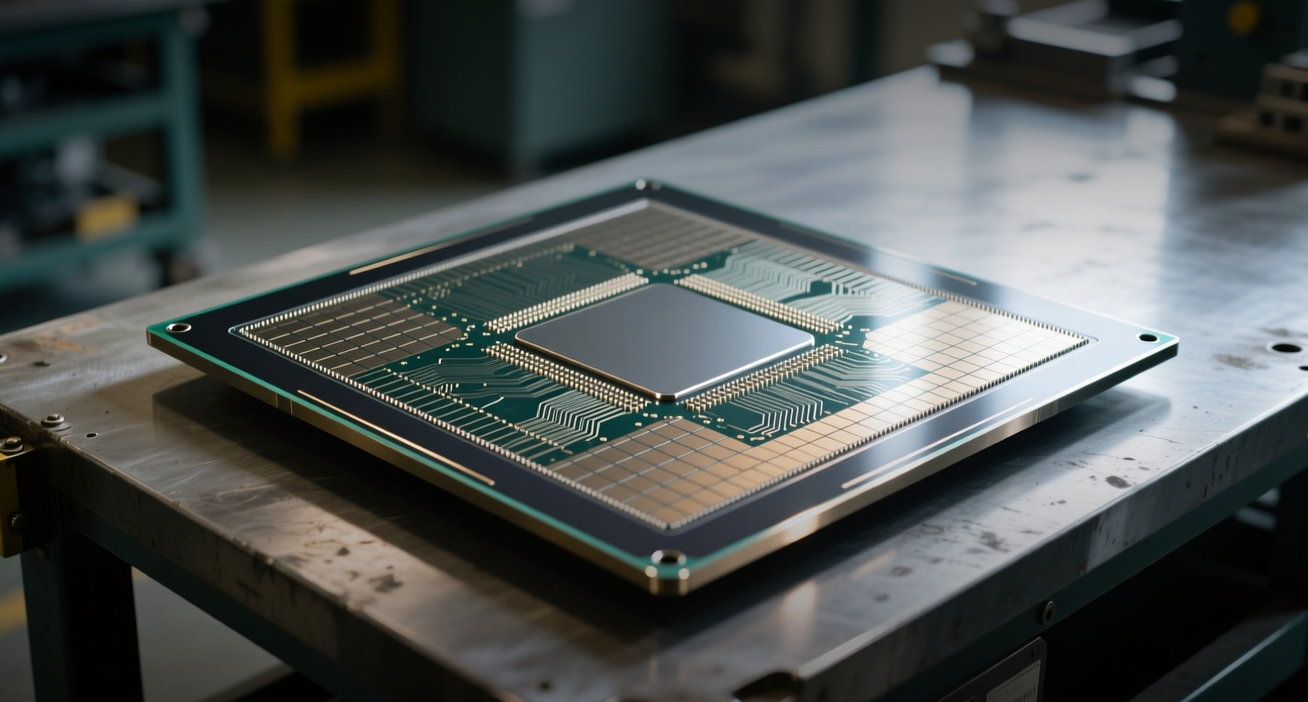
Cerebras Systems' $25.4 billion backlog — nearly 29 times the adjusted revenue it expects for all of 2026 — traces largely to a single December agreement with OpenAI, making the wafer-scale chipmaker a credible challenger to NVIDIA's AI accelerator dominance.
Cerebras said in its second-quarter filing that a significant amount of the balance is attributable to obligations under the OpenAI agreement, under which the ChatGPT maker committed to buy 750 megawatts of computing capacity for AI inference in a deal valued at more than $20 billion. OpenAI also holds an option to purchase an additional 1.25 gigawatts of capacity by the end of 2030.
The company grew adjusted revenue 103 percent year over year to $209.9 million in the second quarter, with its inference cloud business nearly quadrupling. Management raised its full-year outlook to a range of $880 million to $890 million in adjusted revenue. Remaining performance obligations stood at $24.6 billion at the close of 2025, edged up to $25.0 billion in March and $25.4 billion in June — growth of only about 3 percent over the first half of 2026, meaning nearly all of it was booked before the year began.
The backlog converts slowly, by design. Cerebras expects to recognize only about 22 percent of the $25.4 billion — roughly $5.6 billion — over the 24 months ending June 30, 2028, with another 43 percent arriving between months 25 and 48. Capacity for OpenAI deploys in stages from 2026 through 2028, and Cerebras says more than 600 megawatts of data center capacity is live or under contract for delivery by the end of 2027, with manufacturing capacity set to grow more than tenfold in 2026. OpenAI is helping to finance the build-out, advancing Cerebras a $1 billion working capital loan in January.
Customer concentration is not new for Cerebras. In 2025, Mohamed bin Zayed University of Artificial Intelligence accounted for 62 percent of revenue and Group 42 another 24 percent. The pattern held in the second quarter, when three customers each accounted for at least 10 percent of revenue, or 76 percent combined. Cerebras does not disclose exactly how much of the $25.4 billion sits with OpenAI.
That concentration matters against the stock's valuation. With shares near $215, down about 44 percent from a 52-week high of $386.34, the company is valued near $51 billion — roughly 58 times the adjusted revenue expected this year, for a business still posting operating losses. Even if revenue more than triples in 2027 as management plans, the stock would trade at about 19 times those expected sales.
The backlog is evidence of extraordinary demand for Cerebras' wafer-scale architecture, in which a single silicon wafer serves as one processor — an alternative to the GPU-based systems that anchor most large AI workloads at NVIDIA, AMD and hyperscalers such as Microsoft and Amazon. Landing OpenAI, the most prominent buyer of AI compute, gives Cerebras a marquee enterprise customer and a proof point that its design can handle inference at scale.
Yet the revenue recognition timeline stretches past mid-2028, and much of it depends on one buyer whose needs could change. Adjusted gross margin improved about nine percentage points from a year ago, and Cerebras holds about $8.6 billion in cash and investments after May's initial public offering. The business is executing, but the $25.4 billion headline is a multiyear commitment, not revenue in hand — and the market will want to see OpenAI-related revenue step up for several more quarters before paying roughly 58 times this year's expected sales.
This article is for informational purposes only and does not constitute investment advice.
