
Cerebras Systems is betting on American manufacturing and European data centers to turn its wafer-scale AI chips into a global infrastructure business.
Cerebras Systems is betting on American manufacturing and European data centers to turn its wafer-scale AI chips into a global infrastructure business.
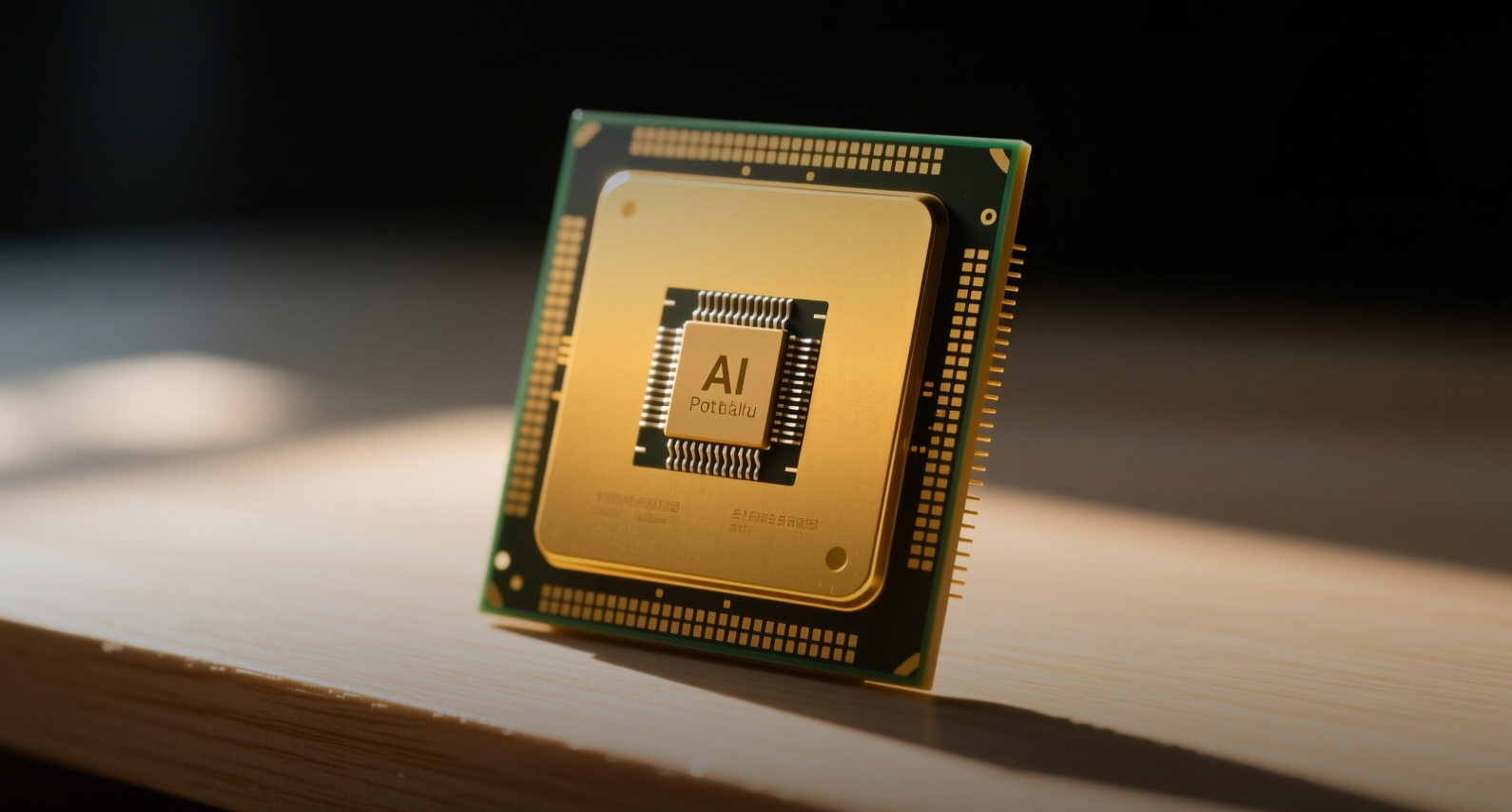
Cerebras Systems is expanding U.S. manufacturing capacity for its CS-3 AI supercomputer by 7x through 2026, adding production lines and test infrastructure at Flex facilities in Milpitas, California, as demand for high-speed inference accelerates.
"The CS-3 is unlike any computer system ever built, and scaling its production requires an extraordinary manufacturing partner," Dhiraj Mallick, chief operating officer of Cerebras, said. "People often think the entire AI manufacturing and packaging supply chain lives overseas, but everyday across the U.S., teams of American engineers and technicians are building state-of-the-art AI systems."
The expanded operation will add multiple assembly and integration lines, enhanced burn-in and validation areas, and automated test infrastructure at the Milpitas site. The CS-3 is built on Cerebras' wafer-scale engine architecture, featuring a processor 58 times larger than a leading GPU chip, according to the company. Each system requires liquid cooling installation, high-density power delivery, and optical networking validation — processes that Flex engineers developed custom tooling and assembly flows to handle.
The manufacturing ramp comes as Cerebras pushes into Europe, planning 200 megawatts of AI compute capacity across France and the Nordic region by the end of 2027, with the first data center online by late 2026. The company has a multiyear agreement to supply OpenAI with 750 megawatts of inference capacity, with an option for an additional 1.25 gigawatts, representing $25 billion in remaining performance obligations as of March 31.
Wafer-Scale Manufacturing Poses Unique Challenges
The CS-3 does not resemble a conventional server or rack-scale compute platform, Rob Campbell, president of Communication, Enterprise and Cloud at Flex, said. "Every stage of the manufacturing process — from mechanical integration to thermal validation and final system qualification — required deep collaboration between our engineering teams."
To support the ramp, Flex is expanding dedicated manufacturing operations in Milpitas with parallel integration lines that allow multiple CS-3 systems to move through assembly and testing simultaneously. The site now handles precision mechanical assembly, high-power electrical integration, liquid cooling installation, optical networking validation, and full-rack system qualification. The expansion is also creating high-skilled manufacturing roles across the region in systems integration, quality, supply chain, and testing.
European Expansion and the OpenAI Connection
Cerebras' European build-out addresses growing demand for sovereign AI infrastructure, with enterprises and governments seeking locally hosted compute as an alternative to capacity concentrated in the U.S. and Asia. Andrew Feldman, Cerebras' chief executive, said the company is deploying billions of dollars of capital in data center development, with much of the capacity intended to meet OpenAI's needs.
OpenAI's Phi-6 model will run on Cerebras at 750 tokens per second, which Sachin Katti, OpenAI's head of industrial compute, described as "probably an order of magnitude faster than anything else that's out there." The speed advantage is central to Cerebras' competitive positioning against Nvidia, whose H100 and Blackwell GPUs dominate the AI training market, and CoreWeave, which is building more than 5 gigawatts of AI factory capacity by 2030 in partnership with Nvidia.
Cerebras reported cloud and services revenue of $79.8 million in the first quarter of 2026, up 167 percent from a year earlier, driven by the OpenAI deployment and higher utilization of the Cerebras Cloud platform. The company expects cloud revenue growth to accelerate further as additional infrastructure comes online.
Cerebras shares trade on the Nasdaq under the ticker CBRS. Short interest stands at 23.6 percent of float, according to data as of mid-June, implying that shifts in sentiment could translate into sharper price swings as positions are adjusted.
This article is for informational purposes only and does not constitute investment advice.
