
Brent crude and WTI each surged about 6% after Houthi forces seized Yemen's port city of Mocha and advanced toward the Bab el-Mandeb Strait, threatening a second major transit corridor for Middle East crude.
Brent crude and WTI each surged about 6% after Houthi forces seized Yemen's port city of Mocha and advanced toward the Bab el-Mandeb Strait, threatening a second major transit corridor for Middle East crude.
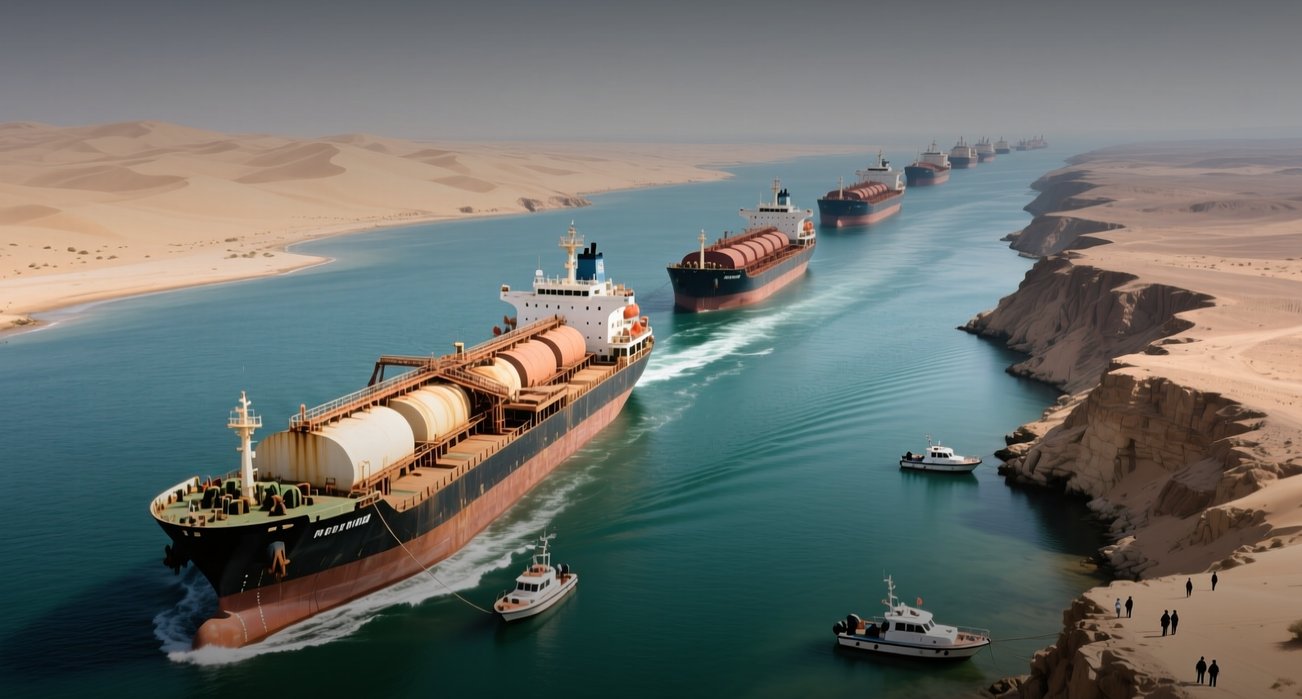
Crude benchmarks posted their sharpest single-session advance in months after Iran-aligned Houthi forces took the Yemeni port city of Mocha and pushed down the Red Sea coast toward the Bab el-Mandeb Strait, adding a second chokepoint to a supply map already strained by the closure of Hormuz. Brent crude and WTI each climbed about 6% as traders repriced the odds of a physical interruption to Middle East barrels rather than a purely financial one.
"The market is no longer trading the probability of a disruption, it is trading the mechanics of one," Omar Tariq, head of commodities research at a London-based brokerage, said. "When a single militia can threaten two of the three corridors that move Gulf crude, the risk premium stops being a sentiment trade and becomes a freight and insurance calculation."
The move extends a rally that began with the Houthi declaration of a naval blockade against Saudi Arabia in July and accelerated this month as attacks on the kingdom's south intensified. Brent had already touched $105 a barrel on Thursday, up as much as 4% intraday, before the port seizure added a further leg. Saudi Arabia, the world's largest oil exporter, has leaned on the Red Sea route since the Iran conflict effectively shut the Strait of Hormuz, which carried roughly a fifth of global oil supplies before the war.
Transit data shows how thin that alternative has become. Just seven vessels passed through Hormuz on Wednesday, half the 10-day average, according to preliminary ship-tracking figures — a reading that undercuts Washington's recent claims of progress guiding tankers through the strait. Yemeni government, Iranian and regional sources said the Houthi coastal advance was directed by Iran's Revolutionary Guards, a link that turns a local Yemeni campaign into a direct test of how far Tehran will push its proxy network while absorbing U.S. and Israeli strikes.
The immediate transmission runs through shipping economics before it runs through barrels. War-risk insurance premiums for Red Sea transits and Suez Canal routings rise first, widening the cost gap between Gulf-loaded cargoes and delivered crude in Europe and Asia. That spread feeds directly into refinery margins and, with a lag of weeks, into diesel and jet fuel prices — the refined products that carry the heaviest weight in headline inflation baskets.
Mocha itself matters less than the geography behind it. Yemeni government military sources said their forces and allies are relocating south along the coast to Dhubab, which sits directly on the strait across from Perim island, and that control of Dhubab and the island is the key to holding Bab el-Mandeb. The Houthis have already reached the Hanish islands. Bab el-Mandeb — the Gate of Tears — is the southern outlet of the Red Sea and the funnel for crude and fuel moving from the Gulf to the Mediterranean via the Suez Canal or the Suez-Mediterranean pipeline, as well as for commodities bound for Asia, including Russian oil.
The Houthi-run humanitarian operations coordination centre said Red Sea navigation remains safe for all shipping companies except Saudi vessels, a carve-out that reads as an attempt to keep the disruption targeted and avoid drawing a broader naval response. Houthi spokesperson Mohammed Abdulsalam said the group's operations were defensive and would stop once attacks on Yemen stopped. Saudi civil defense authorities issued emergency alerts in the southwestern city of Khamis Mushait for the fourth time in 24 hours, and Saudi officials said there was no danger following the alert.
Diplomacy has produced little. Pakistan delivered a Saudi warning to Iran urging it to rein in the Houthis, according to Saudi, Pakistani and Iranian sources. A senior Iranian official's response was blunt: "Iran does not control the Houthis." The Wall Street Journal reported Thursday, citing U.S. and Middle East officials, that Iran has resumed producing ballistic missiles from existing components while working in underground facilities.
The last time Bab el-Mandeb traffic was seriously threatened, in the Red Sea shipping campaign of 2023-24, container lines rerouted around the Cape of Good Hope, adding roughly 10 to 14 days to Asia-Europe voyages and pushing spot freight rates on the route up several multiples within weeks. Crude tankers proved more resilient because the Suez-Mediterranean pipeline and the SUMED terminal offered a partial bypass — but that bypass only works if the northern Red Sea stays open, which is precisely what a Houthi position at Dhubab would put in question.
For energy-importing economies, the arithmetic is uncomfortable. A sustained $5 to $10 premium on Brent feeds through to pump prices and headline CPI within one to two months, complicating rate paths for central banks that had been preparing to ease. For producers, the same premium lifts realized prices and free cash flow, which is why energy equities typically outperform in the first weeks of a supply shock before demand destruction arguments take over.
The near-term catalyst is political. President Donald Trump said Wednesday he expects the war to end immediately after the November midterm elections, telling reporters Iran is "desperate to try and affect the election." He has set similar deadlines before, and the resumption of fighting this month has set back any gradual reopening of Hormuz. Traders will watch two things: whether Houthi forces reach Dhubab, and whether the daily Hormuz transit count recovers above its 10-day average. Until one of those changes, the risk premium has a floor under it.
This article is for informational purposes only and does not constitute investment advice.
