


Key Takeaways: Agentic AI is rewriting data center economics, and the server CPU is no longer a supporting player.
Key Takeaways: Agentic AI is rewriting data center economics, and the server CPU is no longer a supporting player.
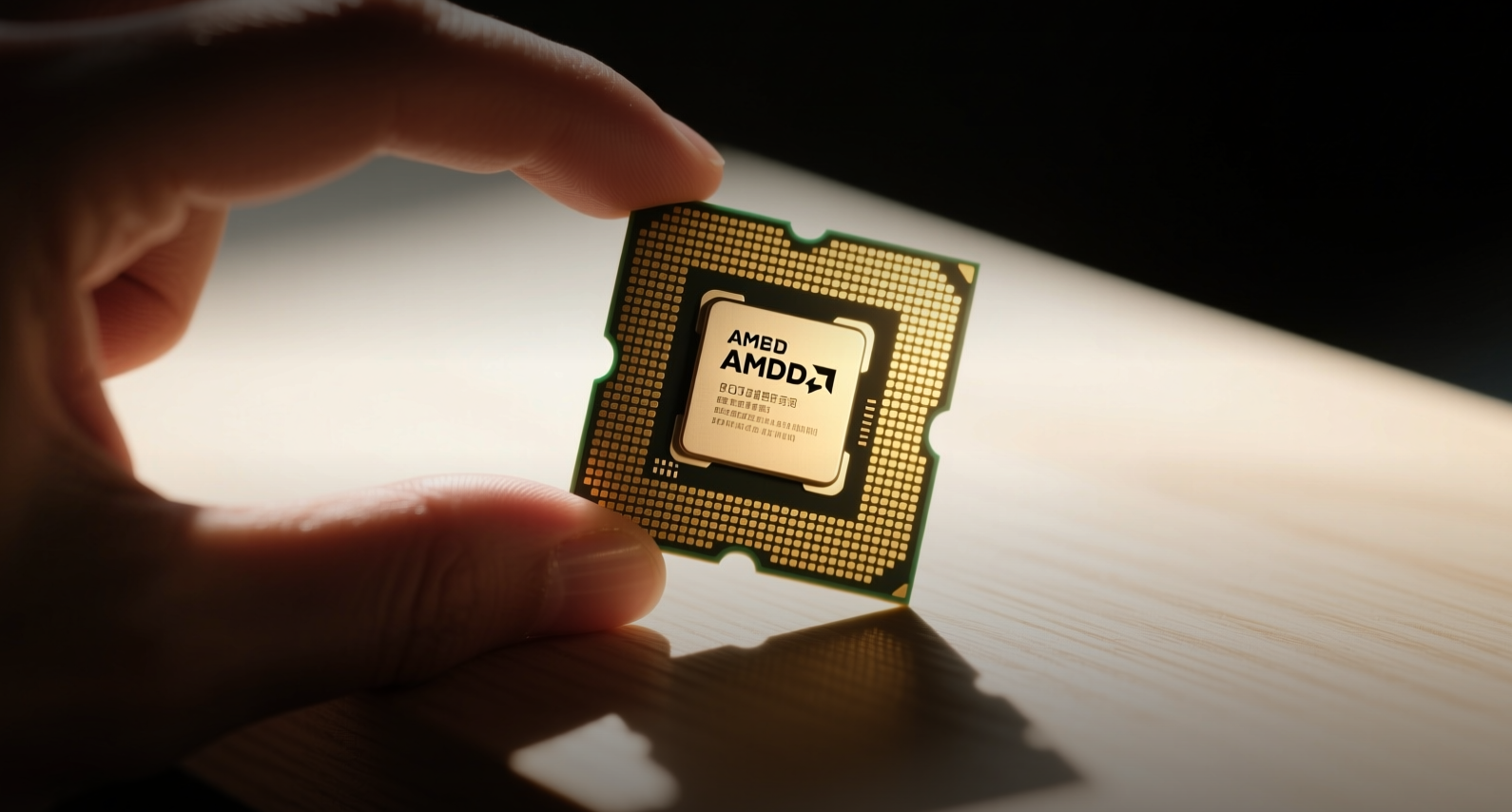
Bank of America Securities raised its 2030 server CPU market forecast to more than $210 billion, arguing agentic AI turns the processor from a GPU accessory into the control plane of AI inference.
The BofA team led by Vivek Arya said the CPU-to-GPU ratio will tighten from about 1:4 in the training era to roughly 1:1 as agentic workloads scale, with CPU demand expanding alongside accelerators rather than replacing them.
The revision lifts the annual growth rate to 36 percent from 30 percent and implies CPUs will account for about 10 percent of the roughly $2.2 trillion data center systems market by 2030, up from under 7 percent in the 2024-2025 training era. BofA splits the 2030 market into about $30 billion of traditional infrastructure, $90 billion of AI compute and head nodes, and $90 billion of standalone agentic AI nodes.
The call favors AMD, maintained as the top CPU pick with a $620 price target, and Nvidia, kept as the sector's overall top pick at $350. It also projects Arm-based silicon — from Nvidia's Vera, Arm's own AGI chip, Qualcomm's Dragonfly, and hyperscaler designs — to capture roughly 47 percent of server CPU value by 2030, while Intel's share slips from about 34 percent to 22 percent.
Agentic AI workloads are sequential by nature — planning, retrieving context, calling tools, executing code, and verifying outputs — tasks that run on CPU cores rather than the parallel matrix math GPUs handle. BofA estimates AI accelerators grew at a 139 percent compound annual rate from 2022 to 2025 while server CPUs grew just 14 percent, leaving accelerators with 85 percent of data center compute spending by 2025, up from 74 percent in 2021. The agentic shift reverses that imbalance.
Nvidia's Vera Rubin platform, shipping in the second half of 2026, illustrates the new architecture. A full 40-rack Vera Rubin SuperPOD pairs 1,152 Rubin GPUs with 576 Vera CPUs inside compute racks plus up to 512 more Vera CPUs in standalone liquid-cooled racks, pushing the CPU-to-GPU ratio toward 1:1. Those standalone racks handle retrieval-augmented generation pipelines, vector databases, API execution, and smaller model inference — workloads too fragmented for expensive GPU racks.
AMD's sixth-generation EPYC Venice, entering production at TSMC on 2nm and available through OEMs in the fourth quarter, supports up to 256 cores and 512 threads, versus Nvidia's Vera at 88 cores and Intel's Diamond Rapids at up to 192. BofA calculates AMD's EPYC 9965 (Turin, 192 cores) delivers 2.37 times the rack-level performance of Vera on agentic workloads, a gap Venice could widen to 3.30 times. AMD also leads on clock speed, with Turin peaking at 5.0 GHz versus Granite Rapids' 4.3 GHz and Grace's 3.35 GHz.
Nvidia, meanwhile, is pushing Vera into the merchant channel as a standalone CPU after shipping 2.5 million Grace units bundled inside GPU systems. CoreWeave, Oracle, and ByteDance are first customers, with Dell, HPE, Lenovo, and Supermicro offering configurations. Arm entered the merchant market directly with its AGI chip co-designed with Meta, and Qualcomm announced the Dragonfly C1000 with Meta as anchor customer. The merchant server CPU market grows from two vendors today to at least five by 2028.
For investors, the question is whether the CPU supercycle is priced in. AMD trades as the best-positioned merchant vendor on both core count and frequency, while Intel's value-share erosion — despite absolute revenue growth of about 22 percent annually — pressures its re-rating. Arm carries the highest valuation multiple, pricing its dual role as IP licensor and merchant entrant, though only 10-13 percent of its shares trade outside SoftBank. Nvidia's August 26 earnings will offer the first read on standalone Vera volumes.
This article is for informational purposes only and does not constitute investment advice.
