
Bloom Energy has become the default supplier of onsite power for AI data centers, with shares up 135% this year as hyperscalers race to bypass grid delays.
Bloom Energy has become the default supplier of onsite power for AI data centers, with shares up 135% this year as hyperscalers race to bypass grid delays.
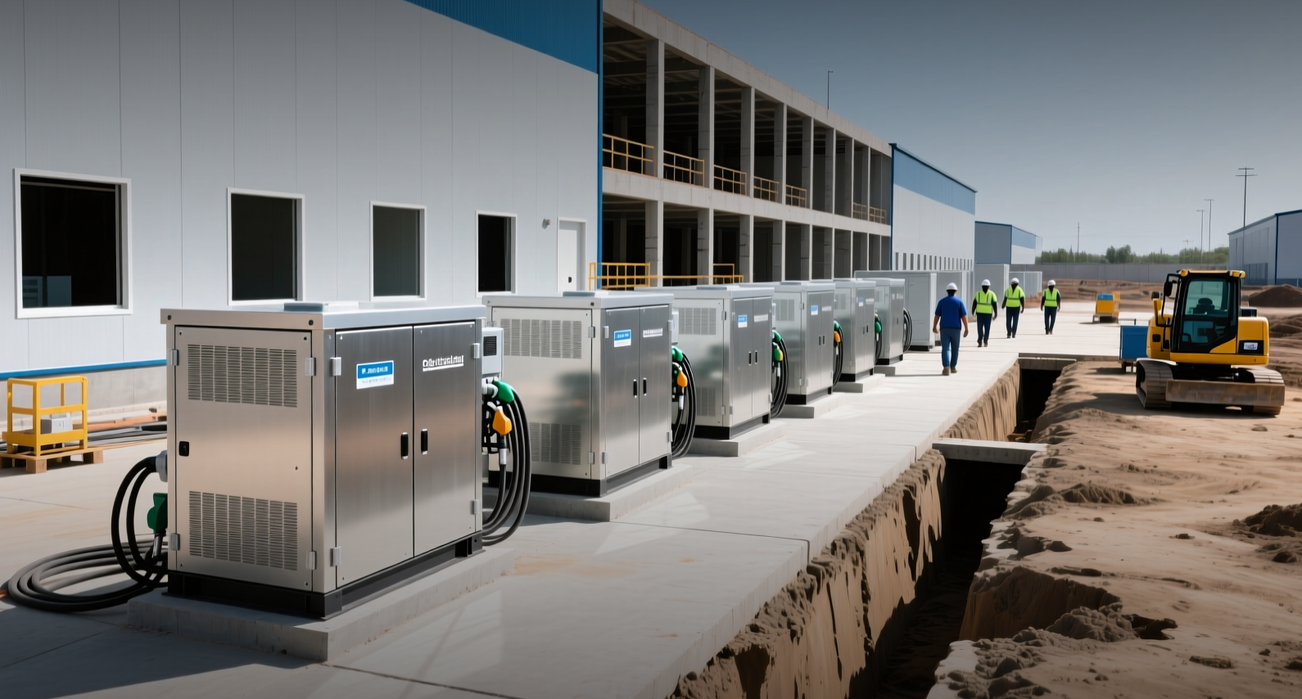
Bloom Energy has become the default supplier of onsite power for AI data centers, with shares up 135% this year as hyperscalers race to bypass grid delays.
Bloom Energy Corp. (NYSE:BE) has emerged as the clearest beneficiary of the AI power crunch, its solid-oxide fuel cells now approved by all major U.S. hyperscalers. The stock closed at $204.02 on Aug. 24, up roughly 135% in 2026 even after pulling back about 40% from its June record of $351.28, as data center operators turn to factory-built generation to sidestep utility bottlenecks.
"The demand for Bloom Energy's solutions keeps accelerating every quarter as customers who traditionally defaulted to combustion technologies are now proactively choosing Bloom as a superior power solution," Chief Executive Officer KR Sridhar said on the company's second-quarter earnings call.
The numbers back the narrative. Revenue crossed $1 billion for the first time in the quarter, up 165.5% year over year to $1.07 billion, with product revenue jumping 215%. Bloom swung to $182.2 million in operating income and raised its full-year 2026 revenue guidance to $3.9 billion to $4.2 billion, while EPS of $0.78 beat the $0.39 consensus by a wide margin.
The stakes are large. Wall Street carries a "Moderate Buy" consensus with an average price target of $248.05, though targets range from Truist's $218 to Bernstein's $282. But the stock trades at roughly 273 times trailing earnings, a valuation that leaves little room for execution slips — and a securities class action alleging misrepresentation of China supply-chain exposure adds overhang, with a lead-plaintiff deadline of Sept. 28.
Deals and capacity build the pipeline
Bloom's order book has expanded rapidly through 2026. Nvidia-backed Nebius selected Bloom technology to power a planned 300-megawatt AI data center in New Jersey, announced Aug. 13. An expanded partnership with MiTAC brought Bloom's AI infrastructure segment to nearly two dozen customers and roughly 250 MW of capacity. In June, Brookfield widened its AI infrastructure financing framework fivefold to $25 billion to fund larger Bloom deployments, and Oracle has committed multigigawatt-scale capacity.
The company's Power Connect product, launched Aug. 19, moves electrical integration work from the field into the factory, cutting onsite installation time by more than 40 percent. That matters because data center construction schedules are increasingly gated by power availability, not server supply.
Valuation is the open question
Bloom's fuel-cell economics face a crowded field. Plug Power, a rival in the hydrogen and fuel-cell space, has diverged sharply from Bloom this year as investors differentiate on execution and near-term power demand rather than trading the sector uniformly. Bloom's move into the Russell 1000 in the latest reconstitution reflects its $60 billion market cap and large-cap status.
For the stock to reclaim its June highs, investors will want evidence that the AI pipeline converts into sustained revenue, profit and cash flow. If the data center power shortage persists — and most hyperscaler capex plans suggest it will — Bloom sits directly in the path of one of the sector's biggest infrastructure bottlenecks.
This article is for informational purposes only and does not constitute investment advice.
