


Key Takeaways: Multi-decade power purchase agreements between hyperscalers and small modular reactor developers are converting nuclear from a speculative bet into a contracted revenue stream.
Key Takeaways: Multi-decade power purchase agreements between hyperscalers and small modular reactor developers are converting nuclear from a speculative bet into a contracted revenue stream.
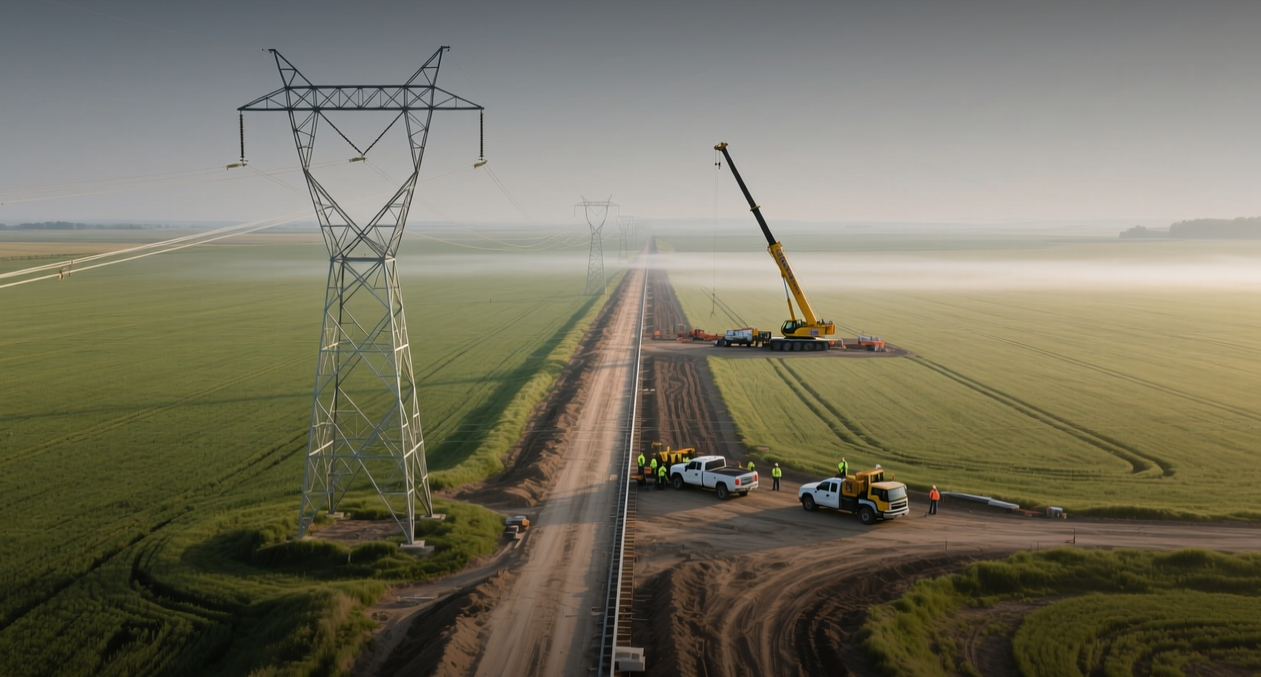
Big Tech's multi-decade power purchase agreements with small modular reactor developers are locking in revenue for nuclear startups, as US data center electricity requests top 700 gigawatts across the Midwest, Mid-Atlantic and South.
"The reality is that the load is showing up, and generation is not at the pace we need it to," Jeff Shields, a spokesman for PJM Interconnection, the nation's largest grid covering 13 states, said.
Texas data center electricity requests have soared from about 48 gigawatts in 2023 to more than 474 gigawatts, according to ERCOT documents. Big Tech's planned AI data center spending tops $700 billion this year, Reuters reported. SMRs — typically under 300 megawatts and factory-built — offer a faster deployment path than the gigawatt-scale reactors that took decades to build, such as Southern Company's Vogtle units in Georgia.
For SMR developers including NuScale Power, Oklo and X-energy, these contracts convert speculative technology into bankable revenue. For hyperscalers like Amazon, Google and Microsoft, they secure firm, carbon-free baseload power that renewables cannot guarantee around the clock.
Data centers have requested roughly as much electricity across the middle swath of the United States as it takes to power every home in the country, according to a Reuters review of utility and grid data. Electricity requests from very large power users exceed 700 gigawatts — more than 10 times industry estimates of current US data center power use.
But much of that demand may be an illusion. Texas recently became the first major data center hub to freeze new grid connections and investigate their plans. Pennsylvania and Ohio have enacted similar rules to filter out projects that could drive up prices without ever getting built.
"When you don't know what is real, you really don't know how to build the infrastructure for it," Thomas Gleeson, chairman of the Texas Public Utility Commission, said at an industry conference in March.
The uncertainty has led utilities to cut their demand forecasts. Chicago-based Exelon cut its tally of high-probability data center demand by about 40 percent to 11 gigawatts after imposing stricter collateral requirements. In Ohio, AEP Ohio's data center power demand pipeline dropped by more than half following state rules that included grid connection study fees of up to $100,000.
Even after these reductions, the remaining demand is enough to overwhelm grids. PJM capacity costs increased $29.4 billion over roughly four auctions, according to grid monitor Monitoring Analytics.
Small modular reactors are designed to be built in factories and assembled on-site, with each unit typically generating under 300 megawatts. This contrasts with conventional gigawatt-scale reactors like Southern Company's Vogtle units, which took more than a decade and billions in cost overruns to complete. SMRs also use HALEU — uranium enriched to 19.75 percent, versus 3-5 percent for conventional reactors — which allows for more compact cores and longer refueling cycles.
The multi-decade PPAs give SMR developers the revenue certainty needed to finance construction. For NuScale, the first company to receive US Nuclear Regulatory Commission design certification for an SMR, these contracts represent a path from development to commercial operation. Oklo, backed by OpenAI's Sam Altman, and X-energy, which has backing from Amazon, are pursuing similar strategies. The Inflation Reduction Act's production tax credits for nuclear power add another layer of financial support.
Southern Company, which operates the newly completed Vogtle nuclear units, trades at $88.45 and has positioned itself as a bellwether for how utilities will serve surging data center demand with firm, carbon-free baseload power.
The question now is whether the SMR pipeline can deliver on its promises. The technology has yet to achieve commercial operation at scale in the United States, and the timeline from design certification to grid connection remains uncertain. But with hyperscalers committing to multi-decade contracts, the financial foundation for that buildout is taking shape.
This article is for informational purposes only and does not constitute investment advice.
