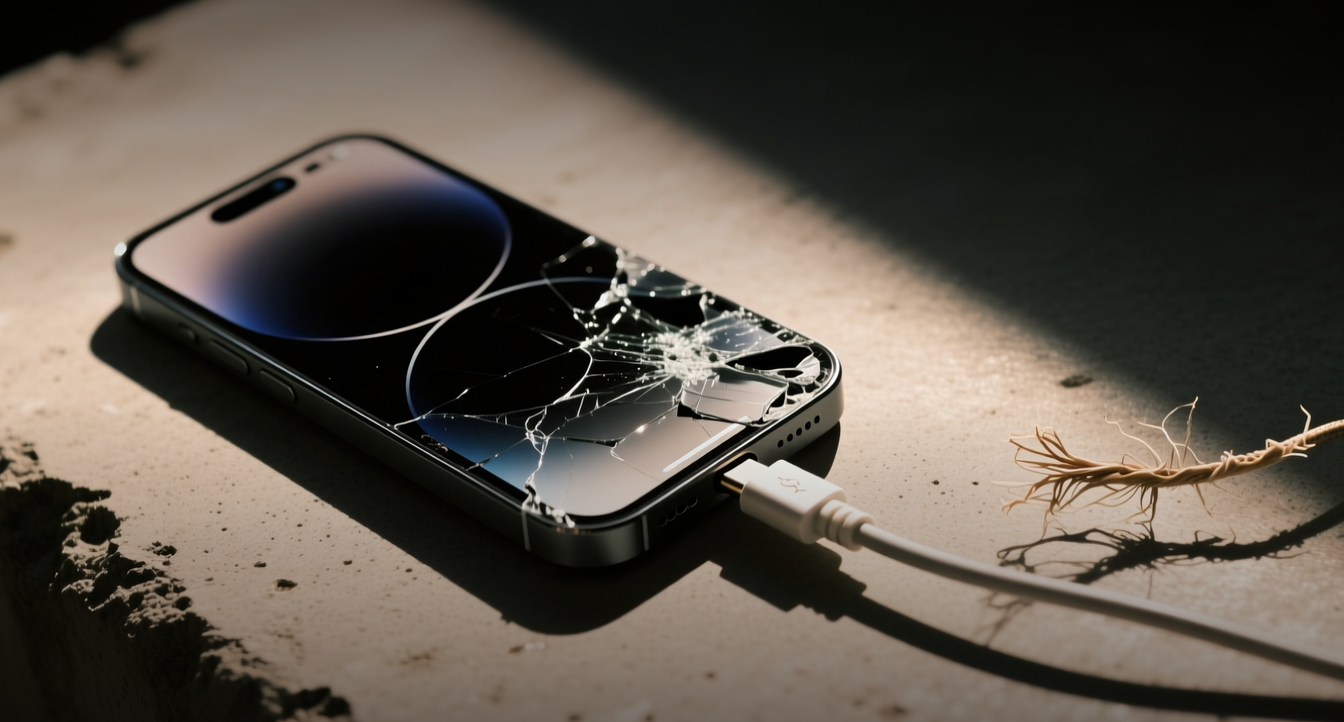
A $5 charging cable can destroy a $1,000 iPhone — and repair shops report the problem is accelerating.
The shift to USB-C on Apple's iPhone 15 and iPhone 16 lines has opened the door to cheap, uncertified cables, and repair shops report a surge in devices with fried motherboards. Jessa Jones, who has run iPad Rehab Microsoldering for 14 years, said she has never handled so many iPhones that appear intact but won't turn on or take a charge.
"Nobody wants to buy a $20 white cable when you can get a $5 one," Jones said.
The iPhone 15 and iPhone 16 models crossing her desk show no broken screens or scorch marks, but a shoddy cable bought online, picked up at a gas station, or bundled with cheap electronics is often the culprit. Apple's support pages warn that devices and cables not compliant with the USB-C standard "might not work as expected."
A faulty charging brick can blast 20 volts into a device expecting 5 volts, overwhelming its circuitry, said Bunnie Huang, a hardware researcher and electrical engineer based in Singapore. The USB Implementers Forum maintains a certification process requiring 50 cable samples submitted for evaluation across 25 independent labs, but counterfeit USB logos are easy to print on product listings, said Jeff Ravencraft, USB-IF's president and chief operations officer.
A safe USB-C cable contains wires that enable communication with the phone's battery management system, which monitors temperature, tracks voltage and detects short circuits. When that communication fails, the device can overheat or spark fires, said Michael Pecht, a mechanical-engineering professor at the University of Maryland.
High-quality cables are marked with power ratings: 60 watts for smaller devices, 100 watts or 240 watts for laptops and larger products. Length also matters — longer cables must be thicker to compensate for current over distance, said Ken Shirriff, a former Google software engineer. Shorter cords charge faster and more efficiently, he added.
The Wall Street Journal's personal-tech team has long recommended cables from Anker and Belkin, though other reputable brands exist. Ravencraft advises buying from a known brand and inspecting products for the Certified USB logo after delivery. "When a consumer is buying a cable at a convenience store and that cable costs less than the can of soda they're buying with it, they need to really think about that," he said.
Huang recommends buying "overrated" power bricks — a 100-watt adapter to charge a 66-watt device, for instance. He is skeptical of suspiciously lightweight adapters, as quality products require ample metal for temperature regulation. Gallium nitride chargers offer a lighter option but still need heft for thermal management, he said.
Apple shares face limited direct financial risk from third-party accessory damage since the company does not sell replacement cables beyond the unit included in the box. But the trend could benefit certified accessory makers such as Anker and Belkin if consumers shift buying behavior. Anker, which sells USB-C cables ranging from $10 to $25, could capture market share from uncertified competitors as awareness of the risks grows.
This article is for informational purposes only and does not constitute investment advice.