
Eighteen major shipping nations warned that conflicts, trade restrictions and chokepoints are driving a structural shift in global trade, raising costs across supply chains as Brent crude tops $100 a barrel.
Eighteen major shipping nations warned that conflicts, trade restrictions and chokepoints are driving a structural shift in global trade, raising costs across supply chains as Brent crude tops $100 a barrel.
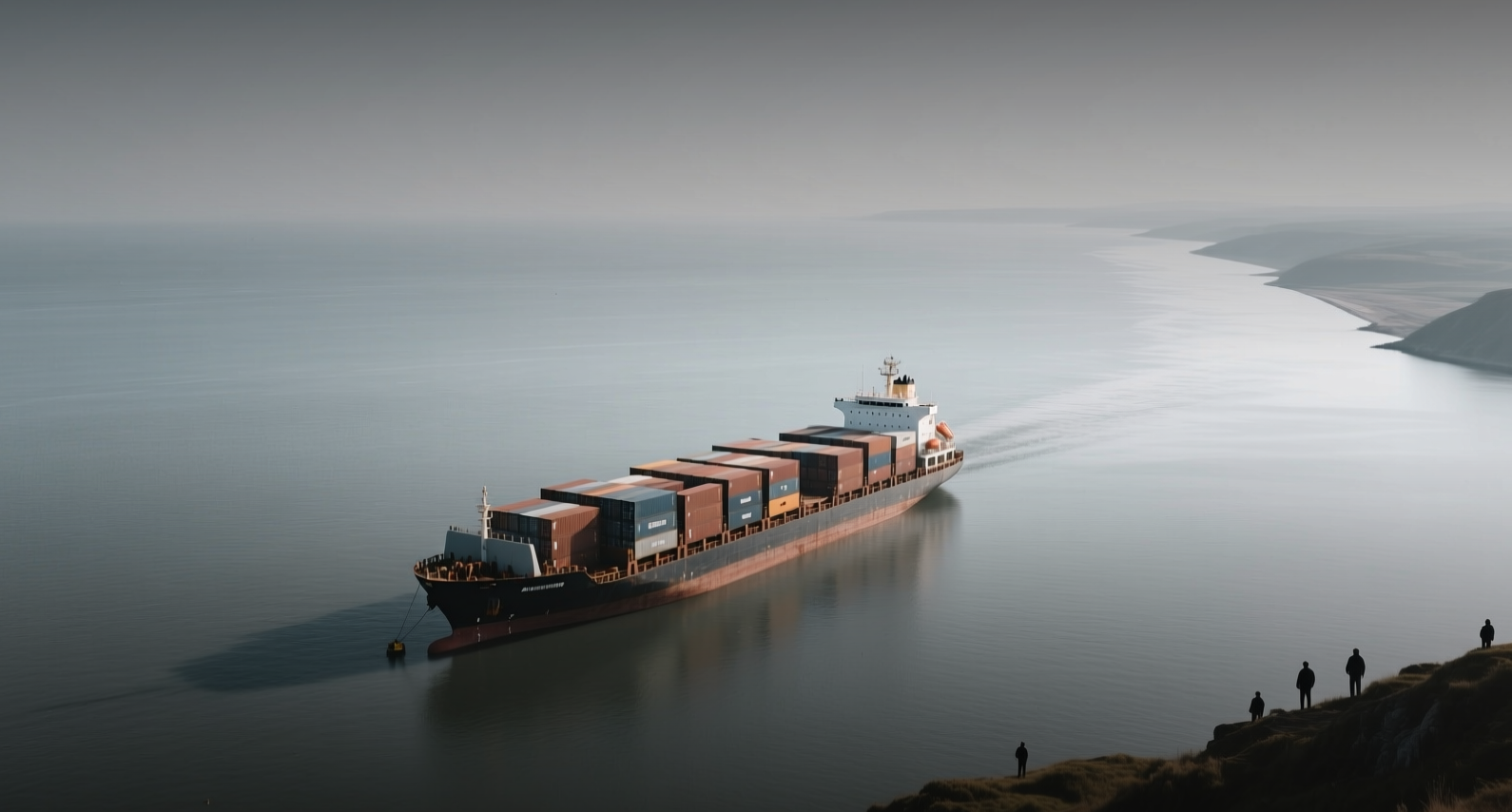
Eighteen shipping nations warned Tuesday that attacks on vessels in the Strait of Hormuz and the Black Sea mark a structural shift in global trade, not isolated shocks, as Brent crude topped $100 a barrel.
The Consultative Shipping Group — an informal alliance of maritime powers including Germany, Denmark, Japan, South Korea and the U.K. — said the disruptions were raising costs and spreading uncertainty across global supply chains, according to a Wall Street Journal report. The group described the attacks as "a signal of a structural shift in the operating environment of global trade."
The warning lands as evidence of supply chain stress accumulates across commodities and currencies. Brent crude futures rose above $100 a barrel for the first time since late July after Iran's Revolutionary Guard fired ballistic missiles at a U.S. base in Jordan and attacked 10 ships, while Washington said it had destroyed five Iranian oil tankers. India's rupee slumped past 95 per dollar, prompting likely central bank intervention, and the Sensex fell 1.08 percent to 74,764.23. South Africa's economy contracted in the second quarter for the first time in nearly two years, hit by Iran-war effects and weak mining and manufacturing output.
The most acute transmission runs through agriculture. Wheat prices climbed 24 percent from January to July, rice 14 percent and soybeans 8 percent, according to analysis published by the Council on Foreign Relations. Urea, the most widely used nitrogen fertilizer, spiked 82 percent when the Iran war partially closed the Strait of Hormuz — a chokepoint that handles roughly a fifth of global oil trade and a substantial share of fertilizer shipments. Phosphate prices, reflecting structural supply constraints rather than temporary shocks, climbed steadily from $619 a ton in January to $781 in July.
Ukraine's grain exports fell to about a third of pre-strike levels in early August, with overland alternatives costing $50 to $70 more per ton and low water on the Danube River limiting that corridor's capacity. The Kremlin targeted cargo vessels in Odesa port, while Ukraine responded with missile strikes on Russia's port of Novorossiysk, damaging two grain export terminals there. For hundreds of millions of people across North Africa, the Middle East and the Horn of Africa, wheat from Russia and Ukraine determines whether there is bread on the table.
The last comparable convergence of chokepoint disruptions came in 2022, when Russia's invasion of Ukraine triggered a global food price shock that forced import-dependent economies from Egypt to Indonesia to scramble for alternative suppliers. That episode eased after the Black Sea Grain Initiative restored partial flows. The Consultative Shipping Group's framing suggests this disruption is not a supply interruption to be managed but a permanent feature of the operating environment.
The compounding risks are most acute for the 2027 and 2028 growing seasons. Farmers in the Northern Hemisphere and Brazil make second-crop input decisions between September and December, and with urea cheap relative to phosphate, many could skip phosphate application — a choice soil reserves can absorb for one season but not two. Phosphate depletion can damage soil and draw down yield potential in seasons to come. The World Meteorological Organization expects the 2026 El Niño to be among the most significant since 1950, with NOAA's Climate Prediction Center estimating a 90 percent chance of a very strong event from November 2026 to January 2027.
For policymakers, the shipping group's warning carries a direct implication: supply chain resilience now demands the same strategic investment as defense systems. The Hormuz closure demonstrated that a single chokepoint can create global shocks within weeks, and the weaponization of food — from Russia's attacks on Ukrainian grain infrastructure to Iran's disruption of fertilizer flows — has become an integral part of modern conflict strategy. Shipping costs are likely to remain elevated as carriers reroute around conflict zones, and the 18-nation warning indicates governments expect this to persist.
This article is for informational purposes only and does not constitute investment advice.
